For centuries, sailors whispered of monstrous tentacles, shadowy leviathans, and creatures too strange to be real. Dismissed as drunken tales or folklore run wild, these sea monsters haunted maps and minds alike. But what if some of those stories weren’t just myths?
Actually, some of these monsters have turned out to be real: in this article, we will introduce these animals to you to be responsible for myths of ocean monsters and wondering what else is still out there, waiting for you to discover.
3 Sea Monsters That Weren’t Just Stories
They were once dismissed as sailor’s tales—creatures too bizarre to be real. But beneath the waves, truth has a way of surfacing. The three sea monsters we will talk about today are:
- The Kraken
- The Sea Serpent
- Procopius’ Sea Monster
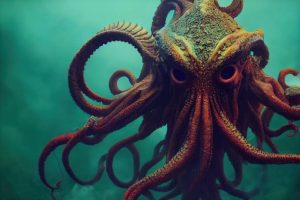
The Kraken
Once seen as an impossible Norse myth, the kraken’s tentacled form defied scientific belief for years. Imagine their shock when, in 1861, French sailors found a 43-foot squid with eyes as large as dinner plates.
Now, scientists have studied this former sea monster extensively, and athough its very elusive behavior because it lives in the darkest depths of the sea, they are slowly discovering more facts about its habits and biology.
In summer 2012, a Japanese team captured the first live footage of a giant squid in its natural habitat.
The Sea Serpent
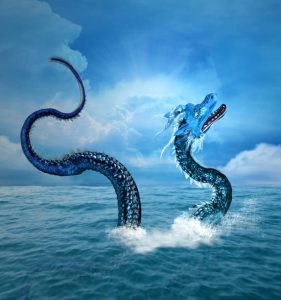
The sea serpent is also known as the archetypal sea monster. Now, Scientists believe that old stories about sea serpents came from seeing the Giant Oarfish which is a long, strange-looking fish that’s hard to find and full of mystery.
Oarfish are long, thin fish (like stretched-out herrings) and can grow over 50 feet. When they wash up on shore, people still think they’re sea monsters. Ironically, these massive animals only prey on oceanic krill, making many biologists wonder about the reason behind their evolution to be so breathtakingly large.
Procopius’ Sea Monster
For hundreds of years, scholars thought that the giant, ship-sinking, man-eating monster which is described by the Byzantine historian Procopius was just a made-up story.
Recently, scientists found that sperm whales sometimes get stuck in shallow seas, such as the Eastern Mediterranean, and may attack ships and eat sailors.
Moby Dick mirrors reality more than most think: Sperm whales can grow up to 85 feet long and weigh 63 tons heavy, so it’s easy to see how people once thought they were sea monsters.