Scuba diving never fails to capture attention. As a PADI certified diver, you’ll often find your non-diving friends fascinated by the idea of breathing underwater and exploring a world so few truly experience.
Their curiosity usually comes with plenty of questions—sometimes based on myths, sometimes just pure wonder. From concerns about sharks to whether diving means traveling across the globe, these questions open the door to fun conversations and maybe even inspire them to take the plunge themselves. In this article, we’ll dive into seven of the most common questions only non-divers would ask.
How Deep Do You Go?
Your non-diving friends may imagine you diving into the ocean’s deepest depths, but the reality is less dramatic. Recreational divers who completed the PADI Deep Diver specialty course can dive to 40 meters (130 feet), on the other hand, Tec 100 CCR divers can dive to 100meters (330 feet).
Even the scuba divers who broke the record have only reached 332 meters (1,090 feet) deep beneath the surface. That leaves much of the ocean out of scuba divers’ reach, but with plenty to discover in shallower waters, we’re not too bothered.
Is There Much to See?
The simple answer is—a lot! Over 200,000 marine species have been discovered in the ocean, and as scuba divers, we have the chance to experience a unique side of our planet that few others see.
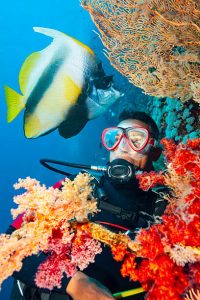
There are various marine ecosystems, from mysterious shipwrecks and fascinating coral reefs, to magical kelp forests and breathtaking underwater scenery.
Divers can see marine life that find a shelter in these ecosystems up close, from parrotfish and manta rays to octopuses and sea lions.
Isn’t It Expensive?
Many non-divers would ask how their friends from scuba diver can afford such an expensive hobby, but scuba diving doesn’t have to be costly.
Check with your local PADI Dive Shop, PADI Travel, or PADI eLearning for great offers on trips, courses, and gear. In addition to this, you also don’t have to purchase all your dive gear at once. Rent the needed scuba equipment at first the choose what gear works best for you to purchase them.
Is It Tiring Carrying All That Gear?
It’s understandable that friends think we have super strength, because scuba equipment like cylinders, weights, and thick wetsuits all look quite heavy. Actually, like any sport, scuba diving needs a degree of fitness. Scuba divers should d a few exercises to build up core muscles in their arms, legs and back in order to make carrying gear a little easier. But once you are in the water with neutral buoyancy, we feel weightless and relaxed.
Is It Difficult to Learn?
Nope! Like any hobby or profession, scuba diving comes with its own skills, knowledge, and safety practices. PADI provie scuba divers with tools that are suitable for every style of learning, from books and DVDs, to classrooms and online eLearning.
In in-water practice sessions, PADI Instructors move at each student’s pace, ensuring they feel confident and capable before moving to the next lesson.
The best way to answer your non-diving friend’s curiosity is to get them to experience diving by themselves! They can begin the PADI Open Water Diver course anytime from home through PADI eLearning. Or they can reach out to their local PADI Dive Center or Resort to ask about available courses and details.
Is Breathing Underwater Hard?
Breathing underwater is as simple as on land, you can take breaths freely whenever you like while scuba diving. The air should be tasteless, except for a slight hint from the rubber mouthpiece.
Will Diving Make My Ears Hurt?
Most people asking this question have experienced swimming to the bottom of the deep end of a pool, then suffered from the accompanying ear discomfort.
This earache happens because of a pressure imbalance between the middle ear and the surrounding water. You lean how to deal and prevent this imbalance in any diving course.
Balancing pressure and preventing ear discomfort (due to varying pressure) is simple and usually done by equalizing your ears often during descent or using the Valsalva maneuver exercise. Once you know how to do it in the correct way, this issue should rarely happen to you while diving.
What about Sharks?
Shark incidents can happen, but they are extremely rare. Spearfishing or feeding sharks may elevate the feeding behavior of sharks. If you spot a shark, it is usually just passing by and is considered a rare sight to enjoy.