Imagine being in a moment in which every second counts—a loved one, a friend, or even a stranger who suddenly collapses. What if the difference between life and death rested in your hands? That’s where CPR (Which referred to Cardiopulmonary Resuscitation) comes in.
The good news? Learning CPR isn’t only for doctors or paramedics, it’s a skill that ordinary people can master quickly, and it could make you a hero in someone’s story.
In this article, we’ll explore just how simple CPR can be to learn, why it matters, and how you can gain the confidence to step in when it truly counts.
Is Learning CPR Easy?
The answer is yes, anyone can easily learn CPR. CPR is designed to be simple for anyone to learn. And you will find the courses that teach it very simple and straight-forward.
Yet one of the most commonly held myths surrounding CPR persists: Many think CPR is hard, but the fact is that anyone can learn how to perform CPR. In fact, both adults and children can master this life-saving skill in a few hours .
Still doubt how simple CPR is to learn? Here are these 3 simple and easy steps that make up adult CPR:
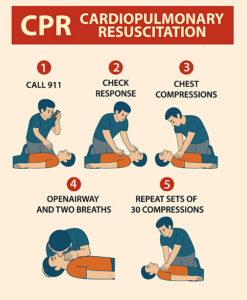
- Scene Assessment: Make sure the area around you is safe for both you and the patient before you start CPR.
- Chest Compressions: Perform 30 chest compressions at 100-120 compressions per minute.
- Rescue Breaths: Give 2 rescue breaths after every 30 compressions.
The non-professional-level courses rarely involve exams or pass/fail questions. This means you don’t need to be afraid of failure and stop attending a class.
Actually, the question you should ask isn’t really whether learning CPR basics is easy or not, but how different learning CPR could potentially make to a friend, family member or any victim in an emergency situation.
Is CPR Hard?
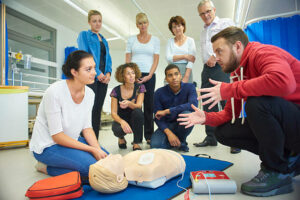
CPR is a skill which anyone can perform, including both adults and children. Chest compressions are considered the most important key element from the three steps of CPR (Scene Assessment/Chest Compressions/Rescue Breaths) because they maintain blood flow to vital organs.
Unfortunately, most people find them the most difficult. In typical adult CPR, press straight down on the chest with the heel of your hand(s), about 2 inches deep, at 100–120 compressions per minute.
Is Bad CPR Better Than No CPR?
You should understand that CPR isn’t meant to restart the heart, even if it sometimes does. The importance of CPR lies in bridging the gap between the onset of the emergency and heart-restarting treatment.
Performing incorrect CPR won’t do more harm than cardiac arrest to the patient, except for the physical harm from compressions. The ugly truth is that with the absence of CPR or medical treatment, death would be the most likely scenario.
Remember: Any proficiency of CPR performed to a victim requiring CPR is better than no CPR at all.
How Long Does It Take to Learn CPR?
If your goal is to learn CPR as quickly as possible and only cover the CPR basics with no additional first aid skills, you only need 2 and a half hours to complete an in-person CPR certification.
The Emergency First Response CPR & AED Course is the recommended course to cover both CPR and AED use.
Can You Teach Yourself CPR?
Yes, you can learn CPR basics theoretically by yourself from the online videos and books that cover the basics of CPR (How to perform it, why it works, and when to use it). However, watching videos or reading books won’t replace in-person, hands-on training.
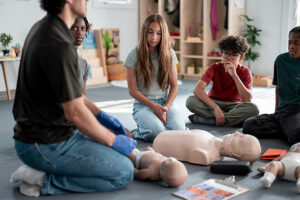
During a CPR or First Aid class, you will perform and refine the proper technique of CPR under the suprevision of a qualified professional. Many CPR courses also use advanced, life-like mannequin to give students a more realistic scene of the requirements if their CPR skills are needed in an emergency situation.
You must know that any online learning should be done along with in-person, physical practice. Always remember that good CPR technique can be a difference from life and death.
What is the Best Way to Learn CPR?
To learn CPR basics, your best option is to sign up for a CPR course or a first aid course which covers the basics of CPR. There are organizations around the world in which you can learn in-person CPR, including Emergency First Response® (EFR®).
EFR Courses that cover CPR include:
- Emergency First Response Secondary Care (First Aid) Course Content.
- Emergency First Response Primary Care (CPR) Course.
- Emergency First Response Refresher Course.
- Emergency First Response Care for Children Course
- Emergency First Response CPR & AED Course.
- Emergency First Response Workplace Courses.
Ready to Learn CPR with DRAR?
If you’re ready to become a key link in the chain of survival and collect the sufficient knowledge and skills required to take the proper actions in an emergency situation, it’s time to sign up for a CPR course. You can discover more when you enroll in the Emergency First Response Course with DRAR DIVING Center.