One moment the water become warm and inviting—then suddenly, you glide through a cool, almost invisible layer that changes everything. This is the magic of a thermocline.
Beneath the surface, the ocean is not one uniform body of water but a world of shifting temperatures, hidden layers, and fascinating science that every diver experiences sooner or later.
In this guide, we’ll break down what thermoclines are, what causes them, how to recognize them underwater, and most importantly, how they can affect your comfort, buoyancy, and overall dive experience.
What are Thermoclines?
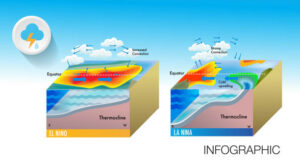
A thermocline is considered a distinct layer in a body of water in which the temperature changes quickly with depth. Water is warmer and more mixed above the thermocline. While below, the water is significantly more stable and colder.
In simple terms, a thermocline is the layer where warm surface water meets colder, deeper water. This shift in temperature can happen over just a few feet.
As a scuba diver, a thermocline can make you feel as if you are swimming through an invisible curtain. Now, the water is comfortable, and in one moment it turns to be colder. This sudden shift in temperature can surprise you, especially on your first dives, however, it’s a completely natural phenomenon and usually refers to healthy water stratification.
Thermoclines is considered a common phenomenon in oceans but can also occur in lakes that are deeper than 10 meters (33 feet). In addition to that, thermoclines can move around. If you dive for several times in the same site in different times through the year, you may feel the thermocline at different depths depending on the season. In winter, it may completely disappear.
What Causes a Thermocline?
You need to how degree the water absorbs heat to completely understand what causes a thermocline. Sunlight warms the outer surface of a lake or ocean, and that results in a warmer, less dense layer of water. This surface layer is called the epipelagic zone.
Under this layer, water absorbs less sunlight and remains much colder than the outer layer (which is from 1 to 4°C (34 and 39°F) in the ocean. Cold water is denser than warm water, so it stays below the surface layer rather than mixing easily with it.
We can define the thermocline as the boundary between these two layers.
Waves, wind, currents and seasonal changes all affect on the degree of the strength or shallowness a thermocline becomes. Thermoclines become well-defined during calm, warm months. In colder weather or during storms, the water mixes more, so the thermocline can fade or even disappear.
Thermoclines can occur both in large ocean and lakes. All it needs is an enough deep and calm body of water to maintain a layer of dense, cool water at depth.
What Does a Thermocline Look Like?
It isn’t always easy to sea Thermoclines, but scuba divers usually describe them as shimmering or slightly distorted layers in the water. On the other hand, they can resemble a hazy band in the ocean.
In lakes, thermoclines often bring a clear drop in visibility because colder water holds more particles. A sudden change in buoyancy or air consumption may be noticed when you pass through a thermocline, because colder water is denser and this has negative impacts on your body as it have to work harder to stay warm.
As a result of this, proper exposure protection in addition to good buoyancy control are very crucial when practice diving in areas dive sites in which thermoclines are common.
How Do Thermoclines Affect on Scuba Divers?
As a scuba diver, when you understand what a thermocline is, this helps you to plan safer and more comfortable dives. Knowing the specific places of temperature changes can help you choose the right wetsuit or drysuit, manage air consumption and deal with changing conditions while descending and ascending.
Thermoclines also play an essential role in ecosystems beneath the waves. They affect on the movement of nutrient, the distribution of marine life and even visibility. Many species like certain temperature ranges, so crossing a thermocline can feel like entering a different underwater environment.
Some factors, such as waves, wind, tides, latitude, time of year and other environmental factors have an impact on the size, depth, and strength of a thermocline. PADI Oraganisation has designed the PADI Underwater Naturalist Specialty course for scuba divers who want to learn more about underwater ecosystems
Not a certified scuba diver yet? Start NOW with DRAR DIVING Center.