Are you dreaming of being the next Captain Jack Sparrow? Well, you have reached your destination. Wreck diving training in the wreck diver course is the desired training for all history enthusiasts and adventure seekers.
After this course, you will be able to investigate the hidden shipwrecks deep underwater and handle all dangers that may face you with the various skills you have experienced.
Why Wreck Diving Training is Important
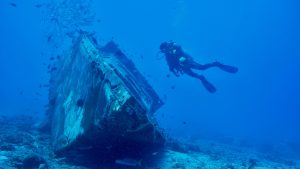
Exploring the wrecks underwater is one of the big draws for many people to go scuba diving. The attraction of this type of diving lies in touching a piece of history or finding artifacts that have monetary value.
A PADI Open Water certified divers can’t directly go wreck diving without another training, as if you want to enjoy seeing inside shipwrecks, you must first pass the specialized wreck diving training after getting PADI Open Water Diving certification.
There is more than the depth to consider if you want a safe dive, as there are many dangers an inexperienced diver may face even while exploring shallow wrecks found within recreational depths.
You will need advanced training to be able to penetrate the interior parts of a wreck as you may face a lot of challenges, such as:
-
Losing Connection with Your Dive Buddy
Poking around inside a wreck for a few minutes seems very tempting, but you musn’t do that without telling your diving buddy to find him ready to help if anything has occurred.
If you haven’t informed him about your destination, he might think that it is a buddy separation situation and ascend back to the surface without you.
-
Losing Visibility
This point shows you the importance of having sufficient wreck diving training. The training won’t also make you handle low visibility inside shipwrecks, but will also teach you how to be equipped and act to prevent losing visibility by debris.
As an inexperienced diver, you may use wrong finning techniques that can cause the kicking up of debris from the bottom while scuba diving inside tight quarters.
-
Occurring of Obstacles and Entanglements
Based on the fact that you are diving into a wreck that sunk many years ago, many parts of the wreck have broken down which can make the passages seem narrow and any of your scuba diving equipment may stuck. Carrying a knife in this case is very important to cut any ropes that get in your way.
Any diver, who hasn’t adequately trained, may miss some things before going to a wreck dive that can put them in danger, such as:
- Forgetting important accessories like diving knives, scissors, and flashlights.
- Checking scuba tank pressure before entering the wreck.
The 7 Important Accessories for Wreck Diving
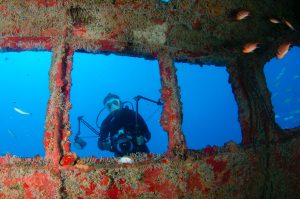
There are many accessories you can have to help you wreck diving safely, such as:
1)- Dive Light
A diving light is very important, as it won’t only help you have good visibility inside the wrecks, but it will also help you appreciate the wreck better when diving over it.
Next to the underwater flashlights, there are several other types that can survive in great depths and higher water pressure. Just ensure that you have spare batteries and lights to use them on running out.
2)- Dive Knife
The dive knife is an important tool for every diver, as it might be the only thing to save you if you get tangled in fishing nets. Choose a dive knife that comes with a protective sheath and doesn’t corrode in salt water.
3)- Wreck Line and Reel
The importance of this tool appears specifically in low visibility. Wreck reels are loaded with a penetration line to guide your way to the exit point.
It looks a lot like a fishing net. When the diver dives deeper from the starting point, the wreck reels release more lines.
4)- Underwater Slate
Underwater slates are writing surfaces that are used as a type of communication between dive partners. You can also use it to write some notes or draw a map of a wreck.
5)- Extra Breathing Gas
In wreck diving, you have a higher risk of getting stuck or lost in the wreck so, the presence of extra breathing gas will be a precautionary safety measure in case the oxygen runs out.
6)- Dive Table or Dive Computer
They are considered essential scuba diving accessories that are extremely helpful in avoiding decompression sickness.
The dive table is more traditional and the dive computer is much easier to use and has many options, as you can use it to log dives and geotag your location. It is recommended to have them both, as your computer may fail.
7)- Thick Gloves
Any wreck has many sharp edges and even more upon turning into reefs with hard corals covering them. The importance of gloves lies in keeping your hands warm, improving your grip, and keeping your hands protected.