There are a variety of different scuba diving training agencies that can certify your diving training. If you are one of the enthusiasts of scuba diving and want to become a certified scuba diver, you will know in this article the differences between the several scuba diving training agencies, so, follow along with us.
The Different Scuba Diving Training Agencies
The different scuba diving training agencies are responsible for many important factors to provide a good scuba diving course, including:
- Determining the performance standards that must be reached in a scuba diving course.
- Designing the syllabus of the course.
- Producing the materials of the diving study.
- Qualifying an instructor to teach.
There are many factors you should put into consideration before choosing a fittable certification course or a good scuba diving training agency, these factors are:
- Your long-term goal from diving.
- Your individual needs.
- Your beliefs about the importance of high quality training.
Generally, as the investment demanded by the training system of an agency increases, your comfort, confidence and competence after getting scuba certification increase.
In this article you will get informations about the following agencies:
- Mass market diving agencies.
- Technical diving agencies.
- DIR diving agencies.
- Club-based diving agencies.
Mass Market Diving Agencies
Mass market diving agencies include PADI, NAUI and SSI.
These agencies are considered very large ones that have a target to make scuba diving training more accessible for all who want to delve into the scuba world. With these agencies, the scuba diving course will be cheaper, easier to complete and much quicker.
Although the many facilities of these agencies, this high-volume and fast-track scuba training will have several drawbacks, such as:
- The diving courses tend to be less rigorous.
- The ratios of student-to-instructors may be high.
- The instructors themselves may be not experienced enough.
As a result, some divers realize the consequences of that after getting the certification, as they feel they are not comfortable, efficient and confident enough.
As a prospective student, you should know that the training quality is determined by the individual instructor, so, you need to be more selective about the instructor that is chosen to provide the diving course.
Technical Diving Agencies
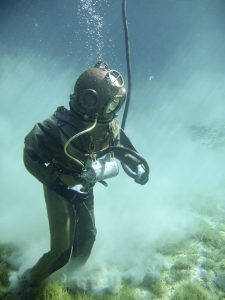
Technical diving agencies include IANTD, RAID and TDI/SDI.
These agencies are considered smaller ones which evolved from teaching higher levels of technical diving. They offer courses with more stringent performance standards and a syllabus that is more comprehensive in-depth.
In addition, They appoint qualified and highly experienced instructors for this level of diving proficiency.
As a result, the diving training with these agencies tends to be more robust and requires more cost, effort and time.
DIR Diving Agencies
DIR diving agencies include UTD, ISE and GUE.
DIR is an acronym for “Do It Right”. So, you will find these scuba diving training agencies have uncompromising training standards. They focus on creating very efficient and safe divers. So, the courses tend to be more comprehensive and longer in duration to provide trainees with sufficient time to train in diving skills and develop them more proficiently.
They don’t also have high standards for the diving equipment and protocols, but also have a strong emphasis on team diving. The training philosophy of these scuba diving training agencies is “beginning with the end in mind”. If we assume that you are progressing into technical or cave diving, you will find that each successive course prepares you for the next level of training. If you will take a dive training course from DIR agencies, ensure that it will need a high level of investment from you, as gaining qualification will be a challenge and the costs of both equipment and courses is more substantial.
Club-Based Diving Agencies
Club-based diving agencies include CMAS and BSAC.
The instructors in these scuba diving training agencies are often volunteers and provide the scuba diving certification courses for free as these agencies operate through paid for club membership.
If you want to learn scuba diving in your home area, the club-based agencies will be a great option, as you will only pay the costs of the certification card and learning materials. In addition, you will become part of an activity scuba diving social group.