With scuba diving, you can have a lot of fun. However, your adventure can be spoiled because you have to end your dive when you run low gas quickly. In this article, you will take a closer look at the several factors that affect positively on your air consumption while scuba diving. Keep reading to enjoy doing longer dives.
Factors That Affect Your Air Consumption While Scuba Diving
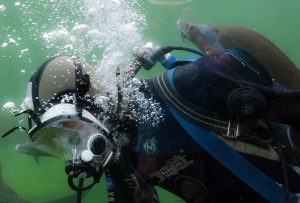
There are several factors that affect your air consumption while scuba diving, although you can’t change some of them such as, the volume of your lungs, you can do many things to improve your respiration rate, such as reducing your workload, managing your stress, etc…
The factors that affects your air consumption while scuba diving include:
- Exertion: your workout.
- Your depth underwater.
- Your cylinder capacity.
- Your respiration rate.
- Stress.
- Cardio-vascular fitness.
- Your lung volume.
Go with us through each of these factors to know how you handle them in order to make your air last longer while scuba diving.
Exertion: Your Workload
On putting exertion into your consideration. The first solution that first comes to your mind will be increasing cardiovascular fitness. But this solution only addresses the symptoms, not the root cause.
So, if you want to exploit this factor to make your air last longer while scuba diving, reduce the amount of exertion while scuba diving by improving your scuba diving skills.
As your diving skills improves, you will do more proficient dives with less physical effort, as when you reduce your muscular workload, oxygen demand reduces this causes a decrease in the respiration rate which in turn lowers your air consumption while scuba diving.
You can decrease your workload when you achieve better horizontal trim, buoyancy control and streamlining with a slower pace finning, as the more the speed, the more the water resistance which increases the workload.
To understand well, the traditional flutter kicks of diving require more exertion to dive for a given distance, you need to develop a suitable finning method, such as a relaxed “frog kick” which has a graceful “kick-and-glide” motion.
Your Depth Underwater
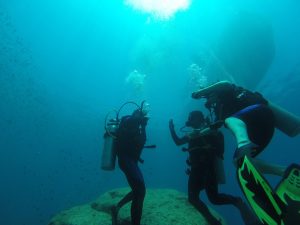
Your air consumption while scuba diving varies with depth. The deeper you go, the more air you use because the density of the air you breathe is related to the ambient pressure. For instance, at a depth of 10 meters, a diver consumes double the gas he would consume at the surface, so, if you want to extend the duration of your gas, just dive shallow.
You should calculate your gas consumption rate to be able to determine the duration that your gas will last for, at a specific depth by learning and understanding gas management techniques of scuba diving.
This will help you in realistic planning for your dive and whether you need an ordinary cylinder, a bigger one or even two cylinders.
Your Cylinder Capacity
Simply, the larger the gas cylinder, the longer the duration of the dive will be:
- Choosing a cylinder with a larger capacity or a higher pressure will compensate for your higher air consumption while scuba diving.
- Sidemount diving which is one of modern diving options offers a much larger air supplies as, a diver can carry two cylinders.
Your Respiration Rate
The respiration rate is the time required to inhale/exhale the air and is determined by the CO2 levels in your body. When you have high levels of CO2, you will have an increasing urge to breathe. In order to stay longer underwater, you should have a low respiration rate by avoiding building up CO2 inside your bloodstream. The following steps will help you:
- Breathe in a deep and slow pattern: when you breathe deeply and slowly, this will flush CO2 from your body.
- Reduce your exertion: when you reduce your physical workload, CO2 production decreases.
- Using lower gas density: at deeper depths, don’t use higher gas density because it reduces the removal of CO2 from your body. To stay with the limits of gas density that recommended by DAN, use Trimix gas below 31 meters.
Stress
The psycological state should be kept in considerations besides the physiological one, as it have the same importance.
In case of air consumption while scuba diving, tension can cause increasing in respiration rate and air consumption rate.
The more you gain experience, the more you be comfortable leading to less air consumption.
Some scuba divers may worry that he may be a gas guzzler and force his friends in the group to end the dive. This thinking can cause an increase in their gas consumption rate.
One of the best improvements that you should make as a novice diver, is to quite worrying about your gas consumption and just accept what it was, then you will notice that your air will last longer.
Cardio-Vascular Fitness.
The efficacy of metabolizing oxygen depends on your cardiovascular fitness which becomes more significant when your workload increases.
Improving your physical fitness can make you dive at harder workload levels with less increase in the rate of your respiration. But it is important to know that improving your cardio-vascular fitness will make a significant difference only if you are under physical exertion. It won’t make a difference in relaxed situations.
Your Lung Volume
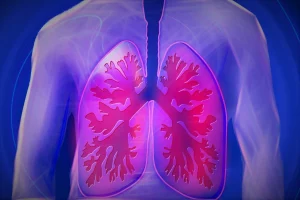
Your lung volume from the fixed factors that affect the air consumption while scuba diving that can vary from a person to other, but a person can’t change his own.
- Your lungs’ physical size dictate the amount of air consumption with each breathe you take.
- Each diver has his own lung sizes.
- Generally, We can say that women tend to better than men.
- In addition to that, the body size can be an indication of the size of your lung.