he diving tank is considered from the essential gear of scuba diving. This tank is responsible for giving you the high pressure breathing gas that you breathe underwater. Your breathing gas is stored in these tanks. so, we are not exaggerating when we say that the scuba tank is from the most important pieces of gear that you will take underwater.
In this article, you will find out about 5 things to consider before choosing your scuba tank and delving into your underwater adventure.
5 Things to Consider Before Choosing Your Scuba Tank

It is wrong to call them “oxygen tanks”, as these tanks contain an oxygen-rich air mix. Diving tanks aren’t only used underwater, but they may also be used for treating diving disorders or generally in first aid.
At first, almost all the divers tend to rent their tanks and other scuba diving equipment because owning your tank will be only useful when you want to dive far away from the nearest dive shop or or you will dive at a popular destination as renting a tank may be unavailable during tourist season.
When you decide to buy one, there are 5 things to consider before choosing your scuba tank, including:
- The material of the tank.
- The pressure.
- The tank size.
- DIN or Yoke.
The Material of The Tank
Almost all the scuba tanks are made of either from aluminum or steel with some of drawbacks and advantages to every type. Scuba tanks that made of steel are much heavier, more expensive and more prone to rust, so, they require some extra care. Although, they are much durable and can withstand about anything you will face underwater.
On the other hand, aluminum tanks which are found in most rental shops due to their price, are less expensive, a little lighter, larger and show up dents quickly.
Before choosing your scuba tank, You must keep in mind that every type will affect your weight needs differently, as, an empty steel tank is almost three pounds negative while the aluminum one weighs from two to four pounds positive. If your diving with an aluminum tank then you want to switch to a steel one, ensure to do the proper weighting test with the new one to get used to the change in weight needs.
The Pressure
If you are still confused about choosing your scuba tanks, the comparison between the aluminum tanks and the steel one will be in pressure, the low-pressure aluminum tank and the high pressure steel tank.
There are both advantages and disadvantages to every type. You will find low-pressure tanks contain less air and larger than high-pressure ones.
On using high-pressure tanks, to switch the Yoke stage to the DIN fist stage, you will need an adapter for your regulator. If you want to compare the two types, you find that the high-pressure tanks needs more maintenance and service because of the wear and tear resulting from the large pressure in side, You will have to replace such parts as the O-rings and valves more often. Another disadvantage in high-pressure tanks is that they fail hydro inspection at a more frequent rate than low-pressure tanks.
The Tank Size
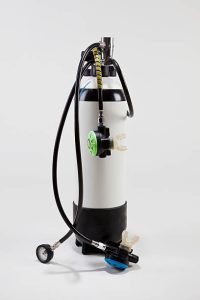
Tanks are measured in terms of holding capacity not of external size. The holding capacity is described in pressurized cubic feet. If you are do recreational dives, tanks which have 80 to 100 cubic feet of air will meet your needs.Most rented tanks is 80 cubic feet.
Keeping into considerations that diving tanks are your lungs, you should carry also a supplemental tank which called a spare tank or pony bottle. These supplemental tanks have 40 cubic feet of air and are designed to be used in emergencies.
DIN or Yoke
To make your tank work, you must attach it to the first stage of your regulator. DIN and Yoke are the types of coupling fittings although, Yoke coupling fittings is the most popular because they used on the aluminum tanks which are the most popular while DIN coupling fittings tends to be more safer and are suitable for high-pressure tanks.
You will need a yoke adapter in DIN coupling fittings to fill the tank easier and the Yoke coupling fittings should have a DIN adaptor for the same reason.