Can you imagine that you can make deep dives for long periods without using any breathing apparatus? Or you may wonder about the differences between freediving and snorkeling? Despite your knowledge of diving as a sport, you should know the answers to all the questions you have about freediving before you take the plunge into the world of PADI Freedivers.
In this article, you will know the answers of the most commonly asked questions about freediving.
What Is Freediving?
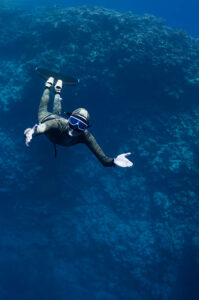
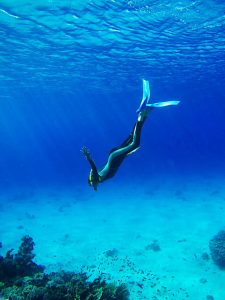
We can define Freediving as diving into deep depths in one breath without using any breathing apparatus. Freedivers only use discipline, inward control and power to delve into the ocean while they hold their breath until they return to the surface again.
Freediving is regarded as a competitive and recreational sport. You can find several freediving competitions being held around the world at regular manners.
What Is the Difference Between Snorkeling and Freediving?
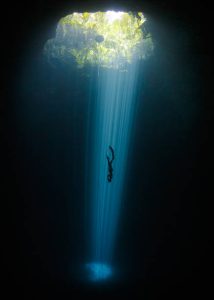
Although freedivers and snorkelers use almost similar equipment, the two activities are quietly different from each other. In snorkeling, you will remain on the surface of the water and just look down with your mask while you breathe through your snorkels.
Freediving is a quite different activity, you will dive deep beneath the surface of the ocean while holding your breath until you resurface. You will only use your snorkels while being at the surface, then they remove them before descending.
If I Can’t Hold My Breath for a Long Time Does That Mean I Can’t Freedive?
This is considered one of the most common questions about freediving. You don’t need to worry about that because in the Basic freediving course, you will get the proper training about the best breath-hold techniques. And after the course, you will be surprised by the amount of time that you can hold your breath for.
Do I Need to Know How to Swim?
You don’t need to be an Olympic swimmer to get your seat in a Freediving course, but it is important at least to feel comfortable and confident in the water.
Becoming a PADI Freediver requires from you to be able to swim for at least 200 meters. This will be an untimed swim and you can complete it with any type of stroke. During the Basic Freediving course, you will learn several breath-hold techniques.
How Old Do I Need to Be to Start Freediving?
You must be at least 15 years old to be able to get a seat in the PADI Freediver course. However, if you are younger than 15 years old and passionate about freediving, there are modified courses available.
The PADI Basic Freediver course is available for those who are aged 12 years or older. And the PADI Skin Diver course is for those aged 8 years.
How Long Does It Take to Get Certified?
In PADI courses, you will master the required skills of the course regardless of the time you will need for that. Some divers master these skills quickly while others may need more time to achieve that.
Despite your natural ability, you won’t finish your PADI Freediver course until the instructor makes sure that you have mastered the appropriate skills that are needed for safe freediving.
What Are the Course Requirements?
To become a PADI Freediver, there are three main phases that must be completed:
-
Knowledge Development
Knowledge development is the theory portion of the course that you must complete before starting your confined and open water sessions. This is an independent study that you can complete either through PADI classroom sessions with a PADI Freediver Instructor or Freediver eLearning.
-
Confined Water Sessions
During the section of the confined water sessions, you will be taught several multiple breath-hold techniques until you achieve a dynamic apnea of 80 feet (25 meters) and a static apnea of about 90 seconds.
-
Open Water Sessions
In this section, you will practice the breath-hold techniques while doing constant weight and free immersion freedivers to 10 meters. There are also a set of buddy and safety procedures that must be completed.
What Are the Different Types of Freediving?
We can categorize freediving into 4 different types. You shall practice all the types during the PADI Freediving course.
-
Static Apnea
In this type, you will be required to hold your breath for as long as possible. While you are floating with your face down in confined water. The water must submerge your respiratory tract during this activity.
-
Dynamic Apnea
In confined water, you will need to swim underwater in a horizontal position to cover as great distance as possible. You can perform this discipline either with or without fins.
-
Free Immersion
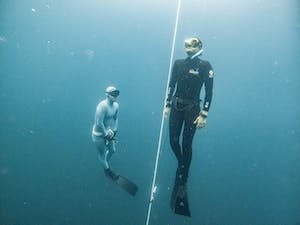
This discipline can also be performed with or without fins. In this type, you will use the guided rope to propel yourself down as far as you can and then back to the surface at the end of your dive.
-
Constant Weight
In this discipline, you will use power and control to push yourself down as far as you can near a guided rope. During this activity, you aren’t allowed to touch the guided rope. You will perform this discipline in open water. You can use fins, too.
Do I Need My Own Freediving Equipment?
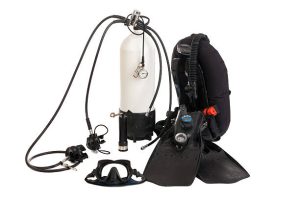
No, you don’t need to buy anything because freedivers only need few equipment which include:
- Mask.
- Snorkel.
- Fins.
- Weight belt (if required).
- Wet suits (depending on your location).
You can easily rent this gear from the nearest PADI Freediver centers. When your love for the freediving sport develops, you can then buy your own scuba diving equipment.
After reading this article and getting all this information, I think you are ready now to experience the underwater world in one breath. Look for the nearest local PADI Freediver Center to ask about Freediving Courses.