Scuba diving jobs offer fantastic opportunities for travelling and having a great life, especially when they pay well. If making the money from the explorations of the underwater world seems like a dream to you it’s time for you to become a professional scuba diver.
In this blog, you will get precious information about the high paying scuba diving jobs. Many of these careers that you will look at will require extra-training above the limits of recreational diving.
Military and Police Scuba Diving
Becoming a military scuba diver requires signing up for the armed forces and undergoing basic training first. Once you admitted to the armed forces, your leaders can ask you to make anything underwater, such as:
- Make search and rescue missions.
- Bomb diffusing underwater.
- Underwater demolition.
Military scuba diving is from the high paying scuba diving jobs, but your payment basically depends on the country and the armed forces you join.
On the other hand becoming a police diver requires undergoing initial police training first. Police divers are essential for searching crime scenes that are happening underwater. Looking for evidence, weapons and victims that have been disposed of is also considered from your job.
If you have any notes about whether this field isn’t suitable for you and want to make sure of that, join PADI public safety diver course.
Oil Rig Scuba Divers
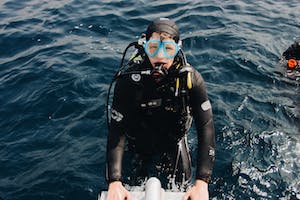
Saturation scuba divers play an important role on oil rigs that’s why this is considered one of the high paying scuba diving jobs. If you want to become a saturation diver, you should be in the rig for 28 days at a time after that you will enjoy a month of before the next mission.
Scuba divers are working on the rig on rig repairs, general maintenance and installations. The requirement for this job is undergoing saturation divert training because it helps you have additional skills from dealing with welding with welding to mechanical engineering.
HAZMAT Scuba Diving
If you have a faint heart, hazmat diving isn’t suitable for you. Divers on hazmat diving work on removing hazardous materials from underwater bodies. You may have to dive in the sea reservoirs, lakes or canals and handle oil sludge, wet cement, raw sewage or even radioactive material.
On hazmat diver training you will learn different types of seal the drysuits to make sure you are protected all the time. You may dive in limited visibility and variable conditions, that’s why you need the mental ability to remain calm under any condition.
Inland Commercial Scuba Diving
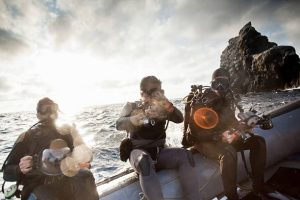
Unlike oil rig scuba divers who have to spend weeks at sea, inland commercial divers work in daily schedules and return home by the end of their day. Most of those divers are employed by the government or any company contracted by it. The inland commercial divers’ work can involve the following:
- Salvage work.
- Welding.
- Inspecting piers, bridges or the halls of ferries and public vessels.
Scientific Scuba Diving
Scientific diving isn’t only a high paying scuba diving job, but also the highest debate and scientific field. Scientific divers will have a degree in marine biology and play a crucial role in marine research. Much of their work involves monitoring, taking samples and compiling reports. If you want to become a highly based scientific diver look for a large organization to be employed in.
Aquatic Performing Arts
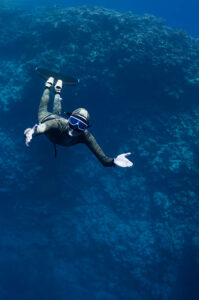
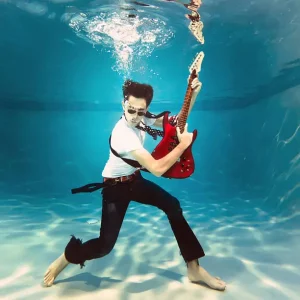
If performing arts interest you, then you should know that major life performances and shows can be highly paid for underwater performers who may be mermaids, scuba divers or freedivers. In this job you will be expected to work evenings and during your travels. These aquatic shows can be done on the road.
Safety Scuba Divers for Film and Television
Media companies must follow health and safety regulations while shooting footage underwater. As a result, safety divers are needed to be there to ensure the safety of the actors and the crew of the film. This job is considered one of the high paying scuba diving jobs, but unfortunately the work isn’t always consistent.
Go Pro!
Whatever you choose from those previous options, you will need to become a professional scuba diver at first. If you want to take a step now, a PADI Rescue Diver will be your first one and after you make 40 logged dives, you will be able to enroll in a PADI Divemaster Course.