Are you suffering from running out of air faster than anyone from your group? Do you spend more of your time worried about the length of the dive than enjoying the underwater world? Are you the type of divers who and the Dive before everyone else?
Well, this article was written specifically for you. We will provide you with several safe tips so you can extend your dives as possible.
8 Tips On How To Extend Your Dives
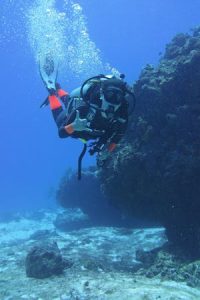
As a scuba diver, you must end your dive when you are running low on air (50 PSI Bar at least) so, your easiest way to extend your dive will be by focusing on the air consumption. Here are 8 top tips to follow to extend your dives and get the most out of your tank:
- Dive more often.
- Breathe more deeply.
- Stay shallow.
- Be well rested and well hydrated.
- Be physically fit.
- Take off any accessories.
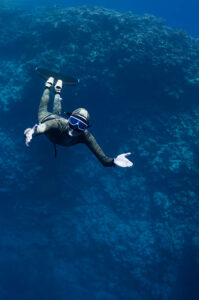
- Streamline yourself.
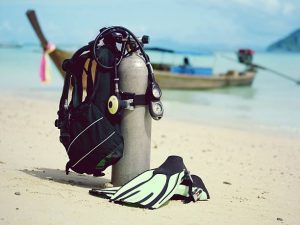
- Check your equipment regularly.
-
Dive More Often
I know this advice is difficult to apply especially with busy day-to-day lifestyles, but the simplest way to extend your dives by reducing your air consumption is by regularly practicing diving.
Regular diving isn’t only considered a good practice, but it can also help you to feel more comfortable in the water. That means you will relax and in turn will reduce your air consumption and extend your Dives.
-
Breathe More Deeply
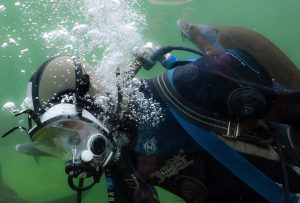
Breathing deeply is different from taking a big breath. It’s vital to remember that while scuba diving this can make a big difference in your consumption of air.
Breathing deeply doesn’t mean that you must take a big breath. When we breathe through the day our breath tends to be shallow as only our chests are moving, but while diving, it will be good to breathe by moving your stomach instead of your chest.
Like any other diving skills, this will need more practice until rectifying. Lie on the floor, place one hand on your chest and the other on your stomach, then observe the way you breathe. If you find only your chest moving try to change the way you are breathing by breathing through your stomach.
You will be ensure that the air fills the bottom of your lungs and getting to your entire respiratory system and in turn increasing the amount of oxygen throughout your body.
-
Stay Shallow
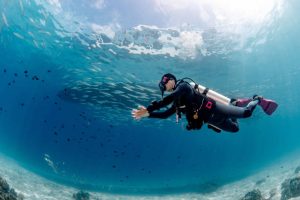
The shallower you are throughout the dive, the less air consumption you will take. The basic rule of Scuba Diving is to start the dive deeper and ascent throughout to extend your dive.
If you are the diver who finishes earlier than your friends from the same group, try to place yourself in the water column higher than other divers.
If a scuba diver is breathing at 10 meters deep, he will take double the amount of air as another breaths at the surface, so, if you are at 30 meters deep, you will take twice as much air as those at 10 meters.
Unfortunately, this is physics. That means there’s nothing to do. So, if you are consuming a huge amount of air, you should spend less time in the depths and more in The shallows.
-
Be Well Rested and Well Hydrated
We all love the sense of comradery. A diver who is making new friendships would like to go out to discuss their daily dives and know how other divers think. This can lead to drinking alcohol and having a beautiful night’s sleep.
These two behaviors will hinder your dives the next day. So if you are going to dive the next day check out before midnight and ensure not to consume alcohol and have a good night sleep so that no problems occur.
Remember that if you start the dive being tired and fatigue, this will mean that your body will work harder and in turn will consume more air. When you have a calm mind, your body will follow suit.
That’s why hydration is so important. If you suffer from dehydration, your body will automatically breathe more to increase the amount of oxygen within the red blood cells. Being dehydrated will not only mean that your body has to work harder, but it can also increase the susceptibility of the Decompression Sickness.
-
Be Physically Fit
Although scuba diving isn’t classed as a sport, sometimes it can be surprisingly strenuous. If you are a Novice diver, it will take you a few minutes of swimming against the current to find yourself breathing rapidly and heavily.
This type of breathing can lead to wasting air as there is no time for gas exchange to occur and before you know it You will find that you have the minimum amount of air in your scuba tank (50 PSI bar) and have to begin assent to end your dive.
When you are physically fit, you will be aware of how much body fat you should have. It’s important to know that body fat increases buoyancy, that means that you will need more weights and a larger suit to create more drag and resistance while moving through the water.
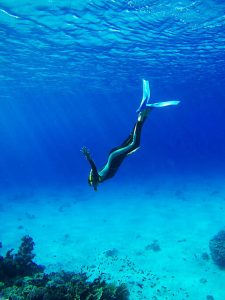
If you are a healthy and physically fit diver, you will exert less energy and require less oxygen throughout a dive leading to reducing your air consumption.
-
Take Off Any Accessories
Many divers get Swept up in the technology that is sweeping the diving industry. Both novice and experienced divers like to be well prepared for every dive and tend to enter the water with every kind of equipment hanging onto their BCD.
Many of them believe that it will be so easy to just clip it on and use it in emergencies. This can work in their favor. However, hooking too many accessories onto the gear can weigh you down and create more resistance causing using more energy and in turn increases your air consumption. If you want to take various pieces of equipment, ensure that you tucked them well.
-
Streamline Yourself
During your adventures underwater, have you seen a fish with added bulk? Of course no, because they are streamlined. Assembly it’s physics. The lower the bulk in the water, the lower the resistance, the less energy you will use and in turn the less air consumption.
In order to create the least resistance, you should go through every part of your diving equipment and ensure that every feature is tucked away
-
Check Your Equipment Regularly
There may be another cause to your lack of air other than your air consumption rate. A faulty o-ring or a small hole in your regulator can limit the time of your dive. You may not be able to see the leak, so, before you start your dive, ensure that your diving buddy has a good look behind you to make sure there is no kind of air lossing.
A scuba mask that doesn’t seal properly can have a great impact on your air consumption, too. As you have to breathe heavily to avoid water getting in which l can affect the amount of air that you consume on the dive.
It’s a vicious circle that you can easily avoid if you check your scuba diving equipment properly before you delve into the underwater world.