Whether you’re a seasoned diver venturing into the ocean’s depths or a beginner just dabbling in the realm of submerged exploration, one piece of gear you shouldn’t ignore is your dive light. These indispensable instruments don’t only shed light on the enigmatic depths, but also improve safety and let you completely enjoy the splendor of the underwater environment. Nonetheless, it might be difficult to choose the best diving light due to the abundance of variations. Do not be afraid! With the purpose of demystifying dive lights, this article will assist you in choosing the best one for your underwater adventures.
Comprehending Dive Lights
Comprehending the fundamentals of dive lights is essential before beginning the selection procedure. Divers’ tastes and situations vary, hence many types of dive lights are available. This is an explanation:

-
Primary Dive Lights: These are your main lights, which serve as the major source of light when diving. Generally speaking, they are long-lasting, brilliant, and made to last.
-
Backup Dive Lights: As the name implies, backup lights are intended to provide light in the event that your primary source fails. They are small and light, and they are frequently fastened to your diving equipment for convenience.
-
Video Lights: These are a must if you’re interested in underwater photography or filmmaking. For taking beautiful underwater photos, they offer a steady, even light source.
- Canister vs. Handheld Lighting: There are two types of dive lights: canister-style and handheld. While canister lights have a longer battery life and are generally brighter, they are bulkier because of the battery canister, handheld lights are more portable and easier to use.
Important Things to Remember
Now that you are aware of the many kinds of diving lights, let’s examine the elements to take into account in order to select the ideal one:
-
Brightness: Choose a diving light that has enough brightness to properly illuminate your surroundings. A light’s brightness is measured in lumens, so if you want better visibility, especially in muddy waters, go for a larger lumen output.
-
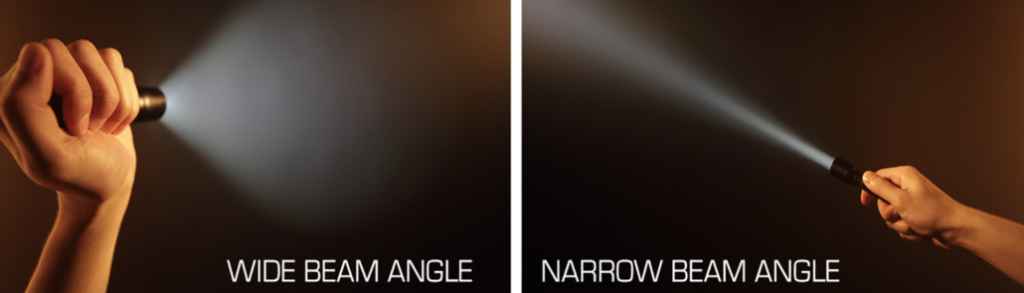
Beam Angle: Take into account the dive light’s beam angle. A narrower beam offers a more concentrated light for identifying far-off objects or marine life, while a broader beam angle is best for lighting a larger area.

-
Battery Life: Examine the diving light’s battery life, particularly if you want to do long dives. Due to their increased battery capacity, canister lights usually have longer battery life.
-
Durability: Your diving light needs to be made to endure the challenging circumstances found beneath the surface of the ocean. Seek for lights with attributes like impact resistance and watertight sealing, as well as those made of sturdy materials like reinforced plastic or aluminum.
-
Weight and Size: If you travel frequently or want streamlined equipment, pay particular attention to the dive light’s weight and size. Underwater maneuverability and portability are enhanced by the small and lightweight design of handheld lights.
- Extra Features: Some diving lights include extra features including strobe modes for signaling, color temperature adjustments for improved color rendition underwater, and brightness levels that can be adjusted. Considering your demands as a diver, decide which qualities are essential to you.
Choosing the Option
It’s time to choose your dive light now that you know what dive lights are and what to look for. Here’s a detailed how-to:
-
Evaluate Your Diving Needs: Take into account the depth you dive to, the diving areas you frequently visit, and whether you need any extra features, such as video lighting for photography.
-
Establish Your Budget: The cost of dive lights varies greatly, so decide what you can afford and rank the characteristics that are most important to you.
-
Investigate and Compare: Examine the many diving lights on the market, go over user reviews, and compare features to determine which one best suits your needs.
-
Try Before You Buy: To obtain a sense of dive lights’ functionality and ergonomics underwater, try them out in person or borrow some from friends if you can.
-
Purchase and Care: After you’ve discovered the ideal diving light, buy it and make sure it receives the necessary care to extend its life and functionality.
A good dive light improves visibility, safety, and the overall enjoyment of diving. It is an indispensable gear for any diver. You may select the ideal dive light for your diving expeditions with confidence if you are aware of the many kinds and take into account important elements like brightness, beam angle, battery life, durability, size, and bonus features. In the next article, we will recommend the top 10 best dive lights to buy. Prepare yourself, jump in, and set a new standard for underwater illumination!