Freediver initiatives are created in order to protect and conserve marine life and also to improve marine education, many freedivers and conservationists around the world have made great efforts in discovering insights to help finding a way to achieve that.
In this article, we will explain to you three freediver initiatives that are worth knowing about.
Three Freediver Initiatives You Should Know
We will talk on this article about specific three freediver initiatives including:
- Coral Gardening, Saving the Coral Reefs of our Planet.
- DAREWIN Organization in Conversation with Whales.
- Project Aware, from an Individual Action to a Global Impact.
Coral Gardening, Saving the Coral Reefs of our Planet
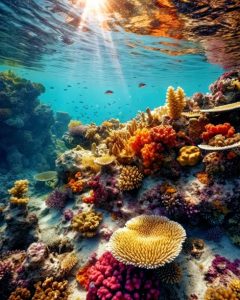
Based on reports, likely within 30 years, about 60 percent of the coral reefs in our planet will be destroyed. Coral reefs are regarded as the lungs of the ocean, as it help to sustain life on earth due to the air and the food that they give to us in addition to coastal protection.
At present, up to 27% of our coral reefs have been destroyed, there are many causes of that. Of course some degradation occurs naturally but the most causes are related to human impact, such as:
- Overfishing.
- Excessive tourism.
- Pollution.
- Climate change.
Coral gardening aims to reverse the degradation effect on coral reefs by breathing life back into the oceans.
The initiative has set up several underwater nurseries around the world for the goal of rebuilding reefs which are in great danger. Freedivers and scuba divers work as if they are botanists in a normal garden. They tend to aquatic plants where several species of corals are growing and replanted into the seabed.
The role of scientists is to monitor the success of the coral reefs and make the proper adjustments that the plant needs the most.
DAREWIN Organization in Conversation with Whales
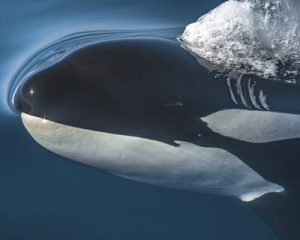
Thanks to a group of dedicated researchers we may have a conversation with whales. Darwin is an organization that consists of freedivers and audio engineers.
This organization was able to record over 100 hours of kuda clicks which is a complex language based on echolocation that cetaceans use to communicate with each other, identify food sources, determine location and assess threats.
By listening to these clicks and analyzing it carefully in the recordings the researchers have made some incredible discoveries. The most crucial is that the code that clicks may mean more than just a sound.
Fred Buyle, the famous freediver and underwater photographer, and Fabrice Schnoller, subroject founder, believe that sooner artifacts such as images may be embedded in the echoes. We can replicate and use them to create our own type for the goal of making communication with cetaceans.
If their theory is correct, we will be able to make conversation with them and gain insights into their world in the near future. This will help us to inform sustainable practices that can help us to protect these incredible creatures.
Project Aware, from an Individual Action to a Global Impact
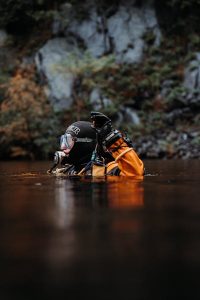
A research that has been done by Earth Day confirming that there is one garbage truck of plastic dumped into the oceans every minute and the number of this garbage is predicted to increase tenfold by 2020.
Actually, you will be shocked when you know that there are large islands of plastic that can be seen in five locations across the world. One of them has the same size as Texas.
These plastic garbage effects badly on zamari life as beneath the surface of the ocean you can see marine creatures eating the plastic thinking it is food. That results in starvation because their stomach can’t digest the plastic material causing it to be stuck in their stomachs.
As a fact, coral reefs get affected by the plastic too, they are becoming diseased more than normal by 4% to 89% after the marine plastic touches it.
In addition to these three freediver initiatives, Project Aware, PADI Sustainability Partner and Ocean conservation organization will hold their annual “aware weak” from the 15 to 23rd September. In this aware week, they will focus on marine conservation through the action of the global community.
Their goal is to protect marine creatures through healthier and cleaner oceans and also to help to tackle marine pollution while legislation and informing policy across the world.