There is a world under the surface where expertise and careful planning are critical. Few skills are as important for any diver to learn as the technique of cleaning their regulators. Gaining proficiency in this ability turns newcomers into experienced undersea adventurers, especially in the wide ocean, where survival depends on visibility and usefulness. Accompany us as we explore the depths of the open water course, learning the trade secrets of regulator cleaning and opening the door to a more thrilling and safe diving experience.
Comprehending the Regulator:
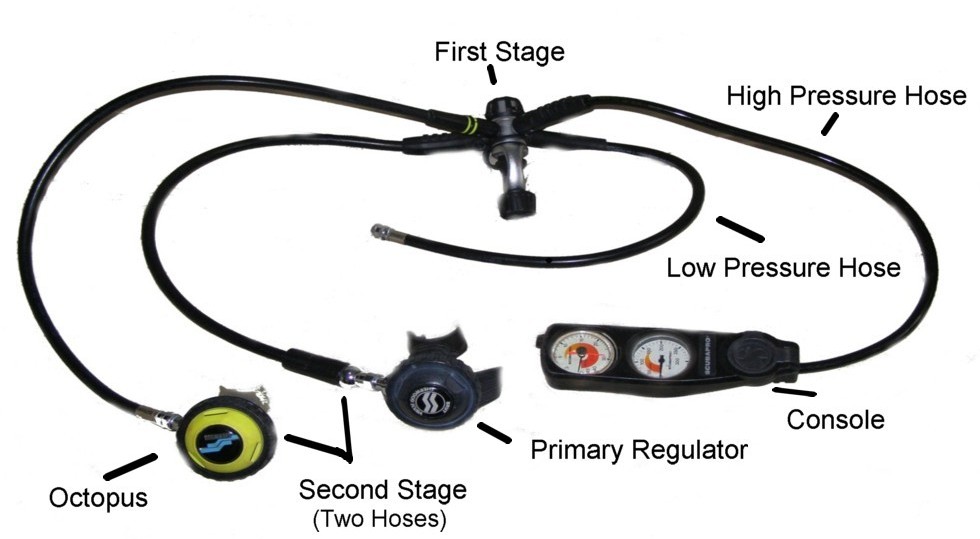
It is important to comprehend the regulator’s operation before beginning the cleaning procedure. The intricate piece of gear that regulates the airflow from the tank to the diver’s mouth is the scuba regulator. It is made up of several parts, such as mouthpieces, hoses, valves, and first and second stages. These elements can gather sand, salt, debris, and even biological development over time, which can compromise both performance and safety.
Relevance of Cleaning:
Maintaining proper regulators is essential for a number of reasons:
-
Safety: Diving is made safer with a clean regulator, which lowers the possibility of underwater failures.
-
Performance: Well-maintained regulators work best, supplying air smoothly and effectively, improving buoyancy control and overall dive performance.
-
Durability: By halting the corrosion and degeneration of important components, routine cleaning increases the equipment’s lifespan.
-
Comfort: By reducing pain and distractions during dives, a clean mouthpiece and hoses enhance comfort and enjoyment.
Essential Tools:
Before beginning the cleaning process, gather the required materials:
-
Warm Water: To dissolve the salt and release debris, use lukewarm, preferably fresh water.
-
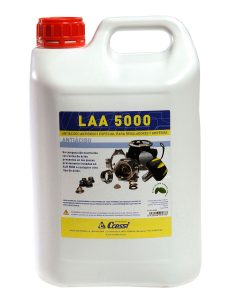
Gentle Detergent: Specialized regulated cleaning solution or non-abrasive, biodegradable soap.
-
Soft Brushes: To gently cleanse components, use toothbrushes with soft bristles or specialized regulator brushes.
-
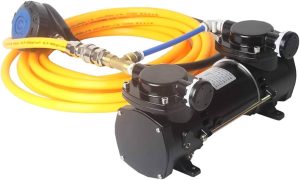
After cleaning, use an air compressor or tank to test and purge the regulator.
-
Towels: After cleaning, must completely dry the components.
-
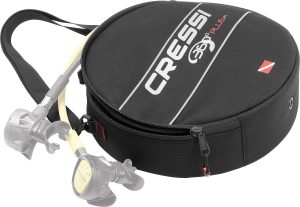
Regulator Bag: For securely storing your equipment in between dives.
Procedure for Cleaning in Steps:
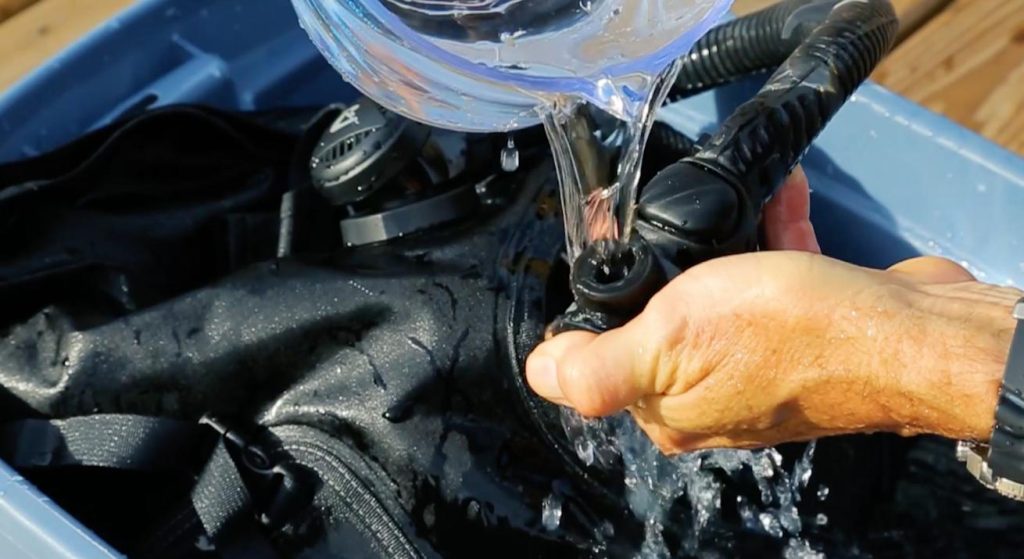
To properly clean your regulator, adhere to the following steps:
-
Disassembly: Take the mouthpiece, hoses, and second stage out of the first stage. If in doubt, get advice from the manufacturer’s handbook.
-
Rinse: To get rid of salt and surface particles, give each component a thorough rinse with warm water.
-
Soak: Put some warm water and a small amount of detergent in a basin or container. To remove tough buildup, immerse the dismantled components and let them soak for a few minutes.
-
Clean: To get rid of any last bits of filth or debris, carefully clean the components using soft brushes. Pay close attention to any moving components and crevices.
-
Rinse Again: To get rid of soap residue, give each component a thorough rinse with clean water after scrubbing.
-
Dry: Using a fresh towel, pat each component dry. Verify that there is no more moisture, particularly in the hoses and second stage.
-
Reassembly: Make sure all the regulator’s parts are properly aligned and connected when you reassemble them.
-
Purge and Test: To get rid of any last traces of water or air bubbles, attach the regulator to a tank or air compressor. Evaluate the regulator’s performance by taking a breath via the mouthpiece and letting it out. Make sure there are no leaks or anomalies in the air delivery system.
Additional Advice:
Take into account the following advice to keep your regulator operating at peak efficiency:
-
Regular Inspection: Visually inspect the area both before and after dives to look for damage, corrosion, or wear.
-
Steer Clear of Strong Chemicals: Since strong chemicals and solvents can harm plastic components and rubber seals, steer clear of them.
-
How to Store It: Keep your regulator out of direct sunlight, heat, and moisture by keeping it in a special bag or case.
-
Provision of services Periodically: As advised by the manufacturer or diving shop, schedule expert service on a regular basis.
-
Replace Parts When Necessary: To ensure maximum performance and safety, replace worn-out or broken parts as soon as possible.
In addition to extending the life of your diving equipment, learning the technique of regulator cleaning may help you develop a closer relationship with the underwater environment. You can improve performance and safety while also helping to preserve maritime environments by keeping your equipment in good working order. Recall that the knowledge and abilities acquired in the Open Water Course represent a dedication to accountability, deference, and ocean conservation and go beyond the technical components of diving. So go ahead and take on the task of cleaning your regulator with gusto, knowing that every careful scrape will help you become a more skilled and responsible diver. Happy and safe diving!