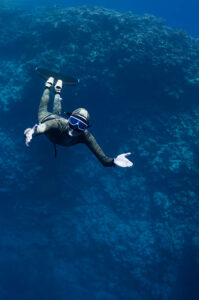
A world of wonder, brimming with life and secrets just waiting to be discovered, lies under the ocean’s dazzling surface. Scuba diving provides access to this underwater world for those who dare to descend. But in this huge expanse of blue, when landmarks are few and visions are unpredictable, being able to navigate becomes essential.
Presently, the compact yet essential scuba diving compass leads divers through the underwater labyrinth. The scuba diving compass, like its terrestrial equivalent, indicates direction and ensures that divers may navigate with assurance and accuracy. But why is this little tool so important to the diving experience, exactly?
How a Scuba Diving Compass Is Anatomized
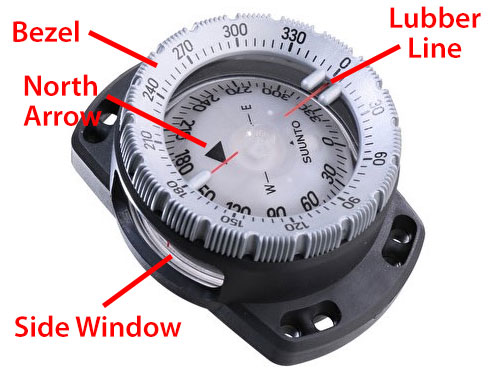
A scuba diving compass’s design may seem straightforward at first, yet it serves a useful purpose. The compass is usually contained in a sturdy case and has a revolving bezel with degrees and the cardinal directions (north, south, east, and west) marked on it. A needle within the casing that is hanging aligns itself with the Earth’s magnetic field to show which way is north.
A wrist strap or bungee cord is included with the compass so that divers may easily fasten it for hands-free navigation. Additional features like side windows for easy viewing or luminous marks for low light settings are also included in some variants.
Getting Around on Underwater Terrain

Navigating in the underwater environment has particular difficulties since there are fewer markers and often poor vision. To stay oriented and arrive at their objective, divers need to use a variety of tactics. A crucial tool in this procedure is the scuba diving compass, which provides a trustworthy point of reference regardless of the surrounding circumstances.
Divers usually choose a direction before plunging into the depths, taking into account their desired path as well as the positions of significant landmarks or dive sites. They frequently check their compass after they are underwater to make sure they are still on route. Even in situations where there are few natural landmarks, divers may navigate with accuracy by keeping a constant heading and keeping an eye on their surroundings.
Methods of Navigation
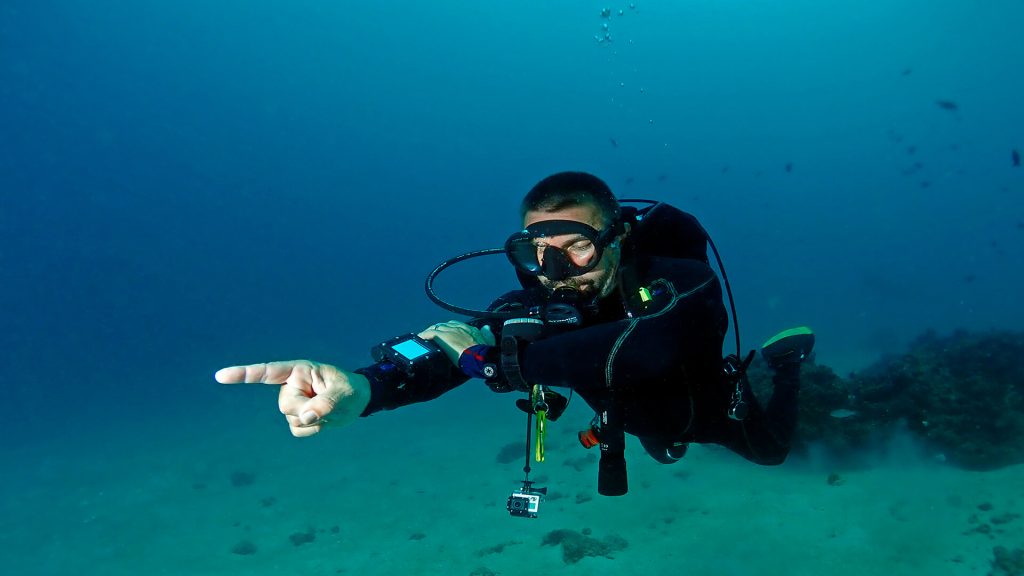
In addition to using a scuba diving compass, there are a few more methods that improve the effectiveness and precision of navigation:
-
Natural Navigation: Divers may improve their compass readings and keep their bearings by paying attention to the direction of natural phenomena including currents, sunshine, and underwater terrain.
-
Pilotage: This method entails directing navigation with the use of visual cues, such as distinguishable marine life or rock structures. Divers can verify their position and modify their path as necessary by comparing these landmarks with their compass headings.
-
Reverse Navigation: Divers can use reverse navigation techniques when they have to go back the same way they came. Divers can confidently retrace their path by adopting reciprocal bearings or reversing their compass headings.
-
Underwater Markers: Divers can better keep their orientation and recognize important places of interest by placing visual markers or navigational aids along the dive path. By decreasing the possibility of becoming lost, these markings improve safety by acting as navigational reference points.
Navigation is a talent that opens doors to new discoveries and experiences in the world of scuba diving, where discovery knows no limitations. Scuba divers can traverse the underwater environment with confidence and accuracy thanks to the compass, which acts as a beacon of guidance. Divers may discover the mysteries of the deep and set off on adventures only constrained by their imaginations when they become proficient in underwater navigation and compass use. Happy and safe diving!