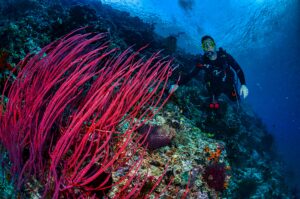
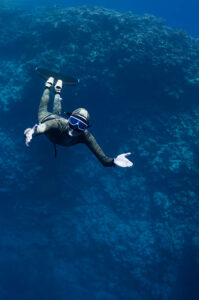
A view of the wonders under the waves is provided by scuba diving, which offers an amazing world of underwater exploration. The management of air supply is, nonetheless, one of the most important parts of scuba diving, particularly for novices. In order to ensure safety and enjoyment, it is crucial to comprehend air depletion, a typical worry in open-water diving courses.
What is Air Depletion?
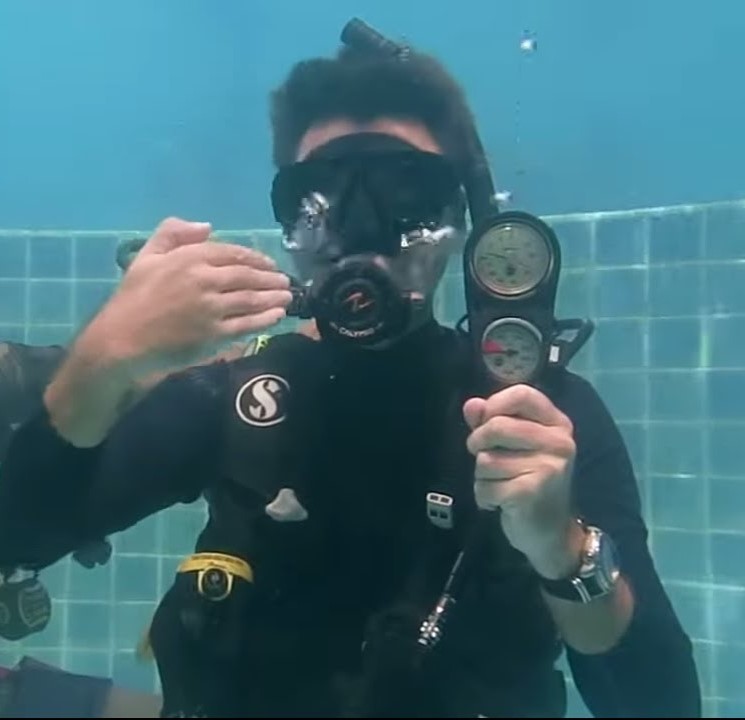
When a diver’s tank of air is depleted more quickly than expected, it is referred to as air depletion. There are several elements that might impact this:
1. Higher Rate of Breathing: Excitation, worry, or physical exertion can cause novice divers to breathe more rapidly, which increases their air consumption.
2. Depth: A diver uses more air with each breath the lower it goes because of the increased ambient pressure.
3. Physical Exertion: Breathing rates might increase when engaging in activities like swimming against currents, staying buoyant, or lifting heavy equipment.
4. Stress and Anxiety: These can lead to faster breathing and an elevated heart rate, which depletes oxygen faster.
5. Equipment Problems: Faster air loss may be caused by leaks or incorrect regulator operation.
Instruction and Awareness
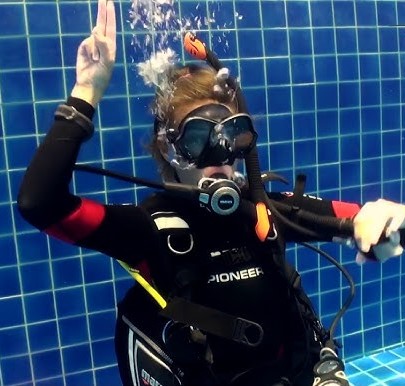
Divers learn to carefully check their air supply in open-water training. This entails discussing air levels with diving instructors and friends and monitoring the pressure gauge on a frequent basis. Aside from responding correctly, training teaches how to spot early indicators of air depletion.
Handling Depletion of Air
Several essential skills for efficiently managing air depletion conditions are part of proper training:
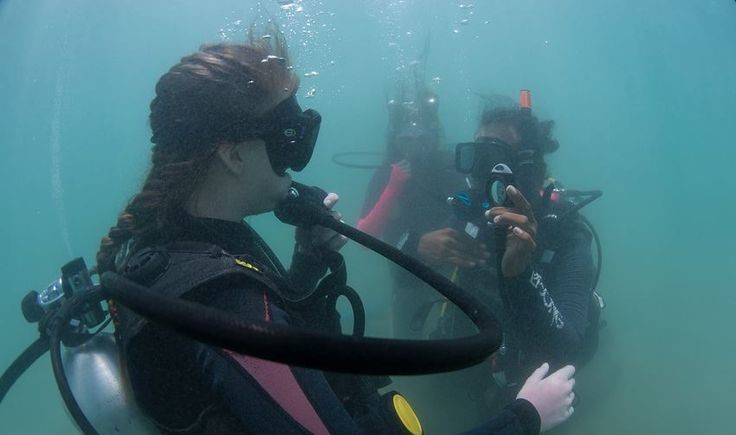
1. Buddy Inhalation: This entails employing an octopus, a secondary regulator, to share air with a dive partner. To make sure they can peacefully share air in an emergency, divers exercise this ability.
2. Emergency Swimming Ascent with Control (CESA): To avoid lung over-expansion injuries, divers learn to carefully climb to the surface while continually exhaling in case they run out of oxygen and are unable to reach their friend.
3. Air Supply Reserve: When the primary supply of air is depleted, some tanks have a reserve valve that can supply a tiny amount of supplementary air, allowing the diver more time to reach the surface or a friend.
Preventive Actions
The first steps in preventing air depletion are awareness and healthy habits:
1. Continuous Monitoring: Throughout the dive, keep an eye on your air gauge to make sure you know how much is left in your supply.
2. Efficient Breathing: To optimize your air consumption efficiency, practice taking slow, deep breaths.
3. Appropriate Buoyancy Control: Preserving air by neutral buoyancy lessens physical effort.
One of the main issues with open-water scuba diving training is air depletion. Divers can have safer and more pleasurable diving experiences by comprehending the elements that lead to fast air consumption and knowing how to control and avoid air depletion. Divers may safely explore the underwater environment while reducing the hazards associated with air depletion with the right training, careful observation, and efficient communication. Happy and safe diving!