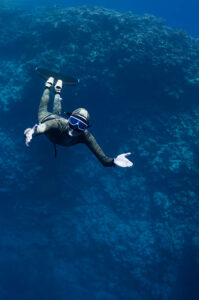
Picture the peaceful depths of the wide ocean, where each dive under the waves offers a fresh experience. As you go below, the world above disappears and is replaced by a tranquil underwater haven full of vibrant life. But all of a sudden, your leg is suddenly seized by a severe pain—a cramp. Even a small muscular spasm can become a serious risk in the weightless environment of the deep. It is not only a question of comfort when it comes to knowing how to release and control cramps while open-water scuba diving; it is also vital for your safety and the full enjoyment of this amazing experience. Come along with us as we examine the fundamental methods and strategies for relieving cramps, guaranteeing that every dive into the deep is as spectacular as it is safe.
Comprehending Muscle Cramps During Diving
Involuntary contractions or spasms in the muscle that impair mobility and frequently cause severe discomfort are known as muscle cramps. Legs, feet, and hamstrings are the usual places where cramps happen for divers. Dehydration, overexertion, inadequate stretching prior to the dive, and poor physical training are all factors that might cause cramping. The risk of muscular cramping might also be increased by the chilly temperatures of open water.
Methods for Releasing Cramps
Instructors stress the significance of identifying and treating muscular cramps in open-water scuba diving training. This is how the steps are often taught:
1. Give a signal and stop
In order to avoid more strain, the first thing to do when a cramp starts is to stop swimming right away. Divers should give their friend the proper hand signal for a “cramp”; this is usually a hand on the afflicted muscle or a certain motion that denotes discomfort.
2. Extend the muscle
The main strategy for relieving a cramp is to gradually stretch the tense muscle:
-
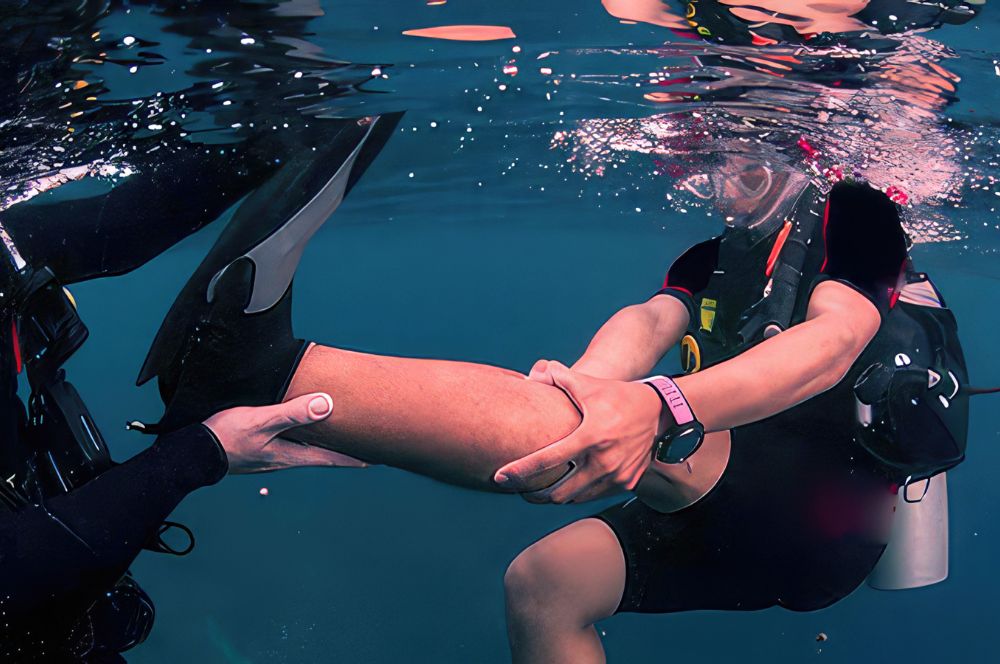
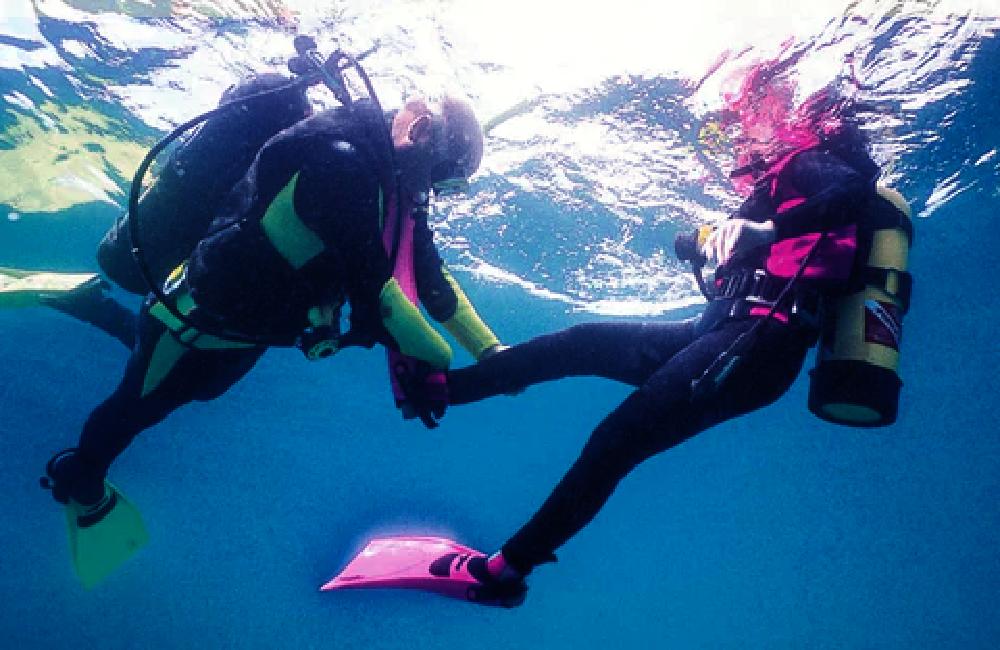
- Leg or Foot Cramp: To release the constricted muscle, extend the leg and tug on the toes or tip of the fin. To assist stretch the calf muscle, flex the foot upward.
- Stretching for hamstring cramps involves straightening the leg and slowly bringing the knee up to the chest.
3. Give the muscle a massage
Apply pressure on the tense muscle with your hands while you stretch. This may aid in releasing tension from the muscle fibers and lessen the severity of the cramp.
4. Take a deep breath and relax
It is important to remain composed. To keep your cool and ease your discomfort, take long, steady breaths. The cramp may go away if you can get your muscles as relaxed as possible.
5. Release
Make sure the muscle is no longer tight or painful by gently testing it once the cramp has passed. Once the muscle has recovered, you can cautiously continue your diving activities.
Stopping Muscle Cramps
Always choose prevention over treatment. Divers can lower their risk of developing muscular cramps in several ways:
- Hydration: To be properly hydrated, drink a lot of water both prior to and during the dive.
- Physical Conditioning: Strengthening your legs and core via regular exercise will help you achieve greater total muscular endurance.
- Stretching: Before going into the water, stretch your body enough, paying special attention to your feet and legs.
- Warmth: Keep muscles warm by wearing the proper thermal protection, especially in cold water.
Exercise and Preparation
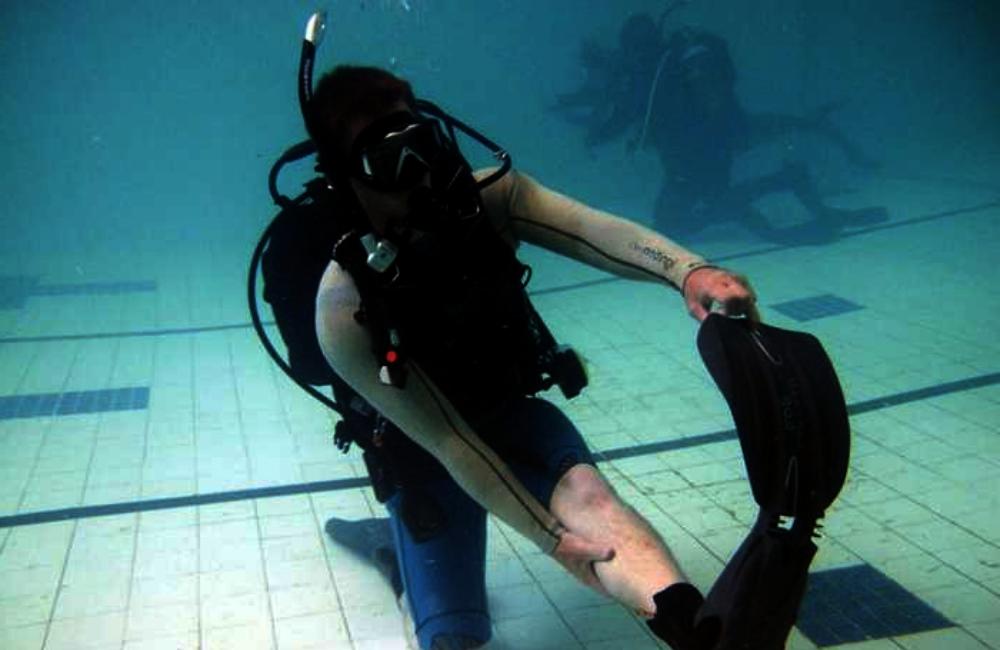
Cramping release methods are practiced in a controlled setting during practical sessions that are a common feature of open-water diving courses. These training sessions help divers gain confidence and make sure they’re ready to deal with cramping on the dives themselves.
Based on the circumstances, muscle cramps can be a small annoyance or a serious problem, but divers can efficiently manage them with the right training and tactics. A diver’s capacity to manage physical discomfort underwater is improved by knowing cramp release techniques, which increases overall safety and pleasure. As with everything related to diving, the secret to a successful and pleasurable underwater experience is preparation, practice, and maintaining composure. Happy and safe diving!