Just Imagine yourself heading down into a colorful coral reef that is filled with marine life for an exciting underwater excursion. The only item of gear separating you from the infinite splendor of the ocean as you get ready for your dive is your SCUBA regulator. There are several varieties of this vital equipment that are made to suit different diving situations. It is the one that draws oxygen from your tank to keep you alive. Nevertheless, how can you make the best decision when there are so many options? For a safe and pleasurable dive, it is important to comprehend the many types of SCUBA regulators. Choose the ideal SCUBA regulator for your underwater travels by exploring the wide universe of these devices with the help of this guide.
The SCUBA Regulator’s Basic Structure

Prior to discussing the many varieties, it’s critical to comprehend the fundamental parts of a SCUBA regulator:
-
First Stage: This part fits into the air tank and lowers the air pressure from high to medium.
-
Second Stage: The second stage, which is attached to the first stage by a hose, makes the intermediate pressure more breathable by bringing it down to ambient pressure.
-
Alternative Air Source: Also known as the Octopus, this is a secondary regulator that is used as a backup.
-
Low-Pressure Inflator Hose: This hose permits inflation and deflation by connecting to the buoyancy control device (BCD).
Different SCUBA Regulator Types
1. Unbalanced Regulators
One of the easiest and least costly kinds of regulators is the unbalanced one. Tank pressure affects how well these systems work. Breathing becomes more difficult when the air tank gets smaller.
Advantages:
- Simpler design, which may result in fewer possible failure spots, and generally more inexpensive.
Disadvantages:
- With a decrease in tank pressure, breathing becomes harder.
- Potentially less effective in colder or deeper water.
Perfect For: Novices and recreational divers in mild to moderately choppy seas.

2. Balanced Regulators
The purpose of balanced regulators is to deliver reliable operation at all tank pressures. They do this by maintaining an even airflow by equalizing the pressure on both sides of the valve.
Advantages:
- Maintaining a steady respiratory rate during the dive.
- Enhanced functionality in colder water and at greater depths.
Disadvantages:
- Usually more costly than regulators that are not balanced.
- A little more intricate in design.
Perfect For: Scuba divers often dive in a variety of environments, including as colder and deeper seas.
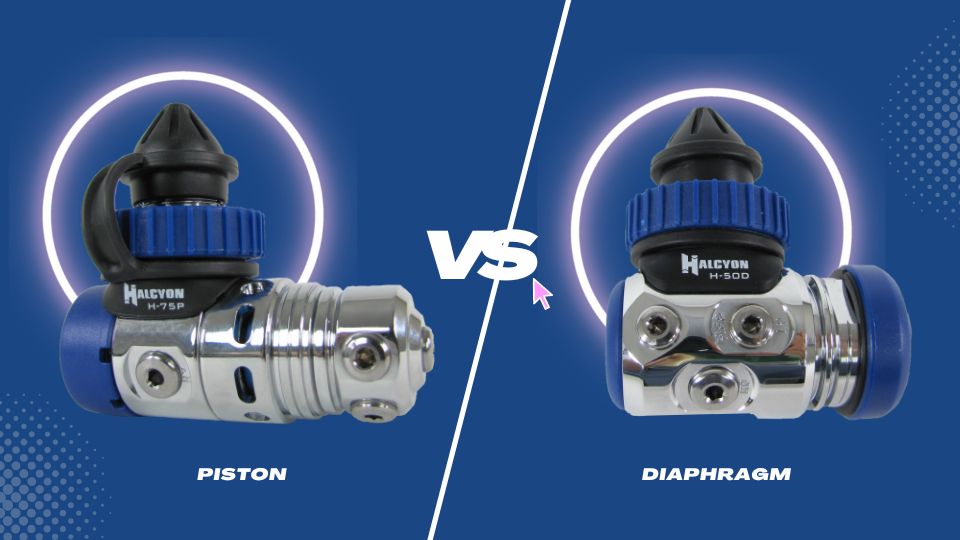
3. Pistons Regulators
The airflow is regulated by piston regulators by the use of a piston mechanism. They are characterized by their longevity and simplicity, and they can be either balanced or imbalanced.
Advantages:
- strong and dependable design.
- Excellent operation (in balanced models) at all tank pressures.
- Simple to care for and maintain.
Disadvantages:
- Possibly more costly, particularly for balanced piston models.
- Similar to previous imbalanced regulators, unbalanced versions have disadvantages.
Perfect For: Technical divers and anyone who values longevity and simplicity of upkeep.
4. Diaphragm Regulators
Description: Diaphragm regulators regulate airflow by use of a flexible diaphragm. They operate exceptionally well under a range of circumstances and are usually well-balanced.
Advantages:
- Reliable operation at different tank pressures and depths.
- Frequently protected from the outdoors, which makes them perfect for tainted or cold water.
Disadvantages:
- A more intricate design may need more upkeep and money.
Perfect For: Scuba divers who like to dive in harsh environments, such as frigid, deep, or contaminated seas.
5. Sealed Regulators for the Environment

Sand, water, and other impurities are not supposed to get inside the internal mechanism of these regulators. Although piston regulators can have this functionality as well, diaphragm regulators usually have it.
Advantages:
- Keeps cold water from freezing
- keeps interior parts safe from rust and damage
Disadvantages:
- Typically, more costly
- maybe needing more regular upkeep
Perfect For: Divers in polluted or silty areas; also ideal for cold water divers.
6. High-Performance Regulators
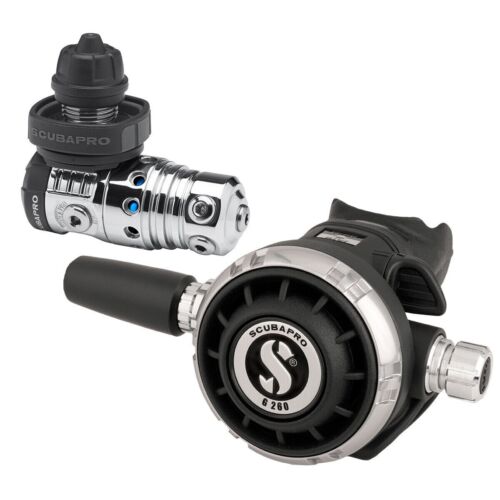
Description: Regardless of breathing demand, tank pressure, or depth, high-performance regulators are made to smoothly distribute air. Advanced features like venturi controls and adjustable breathing resistance are frequently seen on these regulators.
Advantages:
- enhanced capacity for breathing
- Adjustable airflow parameters
- frequently has elements that inhibit the free flow.
Disadvantages:
- Increased price
- more intricate, needing consistent upkeep.
Perfect For: Professional divers, technical divers, and anyone who expects the highest level of performance from their gear.
Selecting the Proper Regulator
Take the following things into account when choosing a SCUBA regulator:
- Diving Conditions: Consider the locations where you plan to dive most frequently. Advanced regulators are needed for deep diving and cold water diving.
- Frequency of Use: Purchasing a top-notch regulator might improve your safety and diving experience if you dive regularly.
- Budget: Ascertain the maximum amount you are prepared to spend. Regulators that are balanced and sealed against the environment work better, but they cost more.
- Maintenance: Take into account the regulator model’s availability of services and simplicity of maintenance.
One essential piece of equipment for divers is a SCUBA regulator; knowing the many varieties available allows divers to select the right one for their requirements and circumstances. Choosing the appropriate regulator may have a big influence on your underwater experience, whether you’re a novice or an expert diver, increasing both safety and enjoyment. You can make sure you have the greatest equipment for your diving experiences by taking into account the characteristics, advantages, and optimal uses of each type. Happy and safe diving!