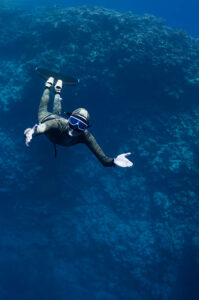
The buoyancy control device is one of the most important pieces of equipment (BCD). There are several different kinds of BCDs, the most common being the jacket and back-inflate versions. Divers may choose the kind that best fits their requirements and tastes by being aware of the distinctions between these two types.
Back-Inflate BCDs

Style and Organization
Similar to a backpack, the air bladder of a back-inflate BCD is positioned along the diver’s back. This design reduces mass and possible drag by creating a more streamlined front.
Orientation and Buoyancy
Better horizontal trim underwater is the principal benefit of using back-inflate BCDs. Divers can attain a horizontal swimming stance that is more natural when their buoyancy is centered on their backs. In addition to being more energy-efficient, this stance increases control and mobility.
Surface Behavior
On the other hand, back-inflating BCDs might initially be difficult. They have a tendency to push the diver forward when completely inflated, which might make it more difficult to stay upright. To overcome this propensity, seasoned divers frequently adapt by shifting their weight or body posture.
Comfort and Mobility
Back-inflate BCDs provide more mobility since they provide less heft to the torso. Because of this, technical divers and those who want a less constrictive fit frequently choose them.
Utilization Examples
The best BCDs for divers that value underwater performance are back-inflate models. Technical divers and those doing longer or more sophisticated dives frequently employ them. They are good for exploring confined areas like caverns and wrecks because of their streamlined shape and improved buoyancy control.
BCDs in the Jacket Style
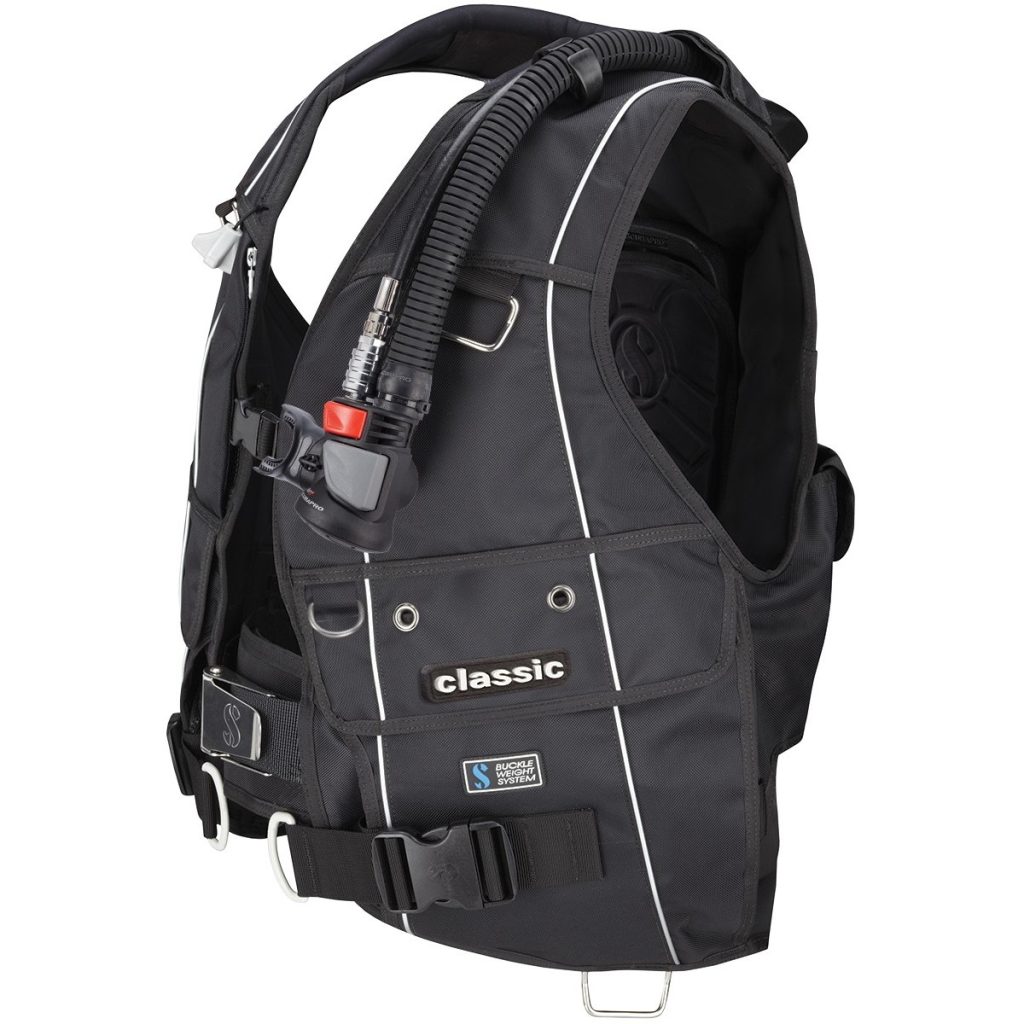
Style and Organization
An air bladder that covers the diver’s back and sides is a characteristic of BCDs made in the jacket type. This style fits snugly and securely, evoking a vest or jacket.
Orientation and Buoyancy
For novices, jacket-type BCDs are more intuitive since they are excellent at delivering upright buoyancy on the surface. Divers are guaranteed to be steady and comfortable while floating thanks to the wrap-around bladder.
Surface Behavior
One of the key benefits of jacket-type BCDs is their surface stability. They maintain the diver in an upright, natural position, which is especially useful when waiting for a boat to pick them up and during surface intervals.
Comfort and Mobility
Though they are quite stable, jacket-type BCDs might be more constrictive than back-inflate variants. When completely inflated, the wrap-around shape may feel bulkier and may restrict arm and chest movement.
Utilization Examples
Recreational divers and novices to the sport prefer BCDs in the jacket type. They are perfect for general-purpose diving because of their comfort on the surface and simplicity of usage. They are ideal for recreational dives in warm, calm seas where taking in the underwater beauty is more important than achieving a high level of technical proficiency.
Choosing Wisely
Your preferred diving technique, degree of experience, and level of comfort will all play a major role in your decision between a jacket type and back-inflate BCD. Here are some things to think about to help you decide:
-
Experience Level: Because of its surface-level simplicity and stability, jacket-type BCDs may be easier for beginners to operate. Expert divers may like the enhanced performance offered by back-inflate BCDs.
-
Diving Environment: Back-inflate BCDs provide improved control and mobility for technical diving or exploring demanding conditions. The comfort and stability of a jacket-style BCD can be more enticing for warm-water leisure dives.
-
Personal Comfort: Try on various styles to see which is less constricting and most comfy. A proper fit may make a big difference in how much you enjoy diving.
Each type of BCD—jacket style and back-inflate—has specific benefits and is made to accommodate a variety of diving requirements. You may select a BCD that improves your diving experience by being aware of these variations, giving you the comfort and buoyancy control you need to explore the underwater environment in a safe and enjoyable manner. Happy and safe diving!