Any life support equipment needs extra care in cold conditions and keeping it working can be a real challenge.
While regulators and rebreathers must be at the top of your list for Extra Care, buoyancy devices can also suffer from many of the same problems. Even dive lights can suffer in the cold.
If you learn how to maintain your dive gear in extreme cold conditions, you will ensure it will function better and last longer. If you are a scuba diver who prefers diving in extra cold dive sites, this article was written for you.
7 Tips to Maintain Your Dive Gear in Extreme Cold Conditions
Maintaining your dive gear in extreme cold conditions is crucial for ensuring both safety and performance. Cold temperatures can badly affect equipment functionality, so the proper care is essential.
You can regard this article as your guide to properly maintain your dive gear in extreme cold conditions. Here are seven tips to help you.
Tip 1
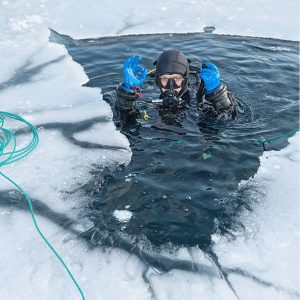
The first rule to maintain your dive gear in extreme cold conditions is to make sure that the regulators you are using are designed and tested to the temperature in the chosen diving sites. For Nordic divers, simple robust designs are an excellent choice.
Tip 2
The second tip is to always keep your dive gear Well survivedand maintained. A good technician should set your regulator to breathe easily but not freeflow.
Many divers only service their regulators once a year, as this is the maximum interval between services but you should put into consideration that if the regulators aren’t in good condition, you must service them even if they were serviced recently.
Tip 3
The hoses and o-rings become mis-shaped, brittle and need to be replaced several times in cold conditions. Always check the o-rings and ensure they are properly lubricated.
Always keep spears and change yours before having any problem. Finnish divers were shocked when they knew that most UK divers don’t change the o-rings in-between two services.
Tip 4
Don’t allow support equipment to freeze on the surface, as this can cause damage to this equipment over time because of expanding or freezing water. Ice crystals in the first stage, like any debris, can badly affect its function and longevity.
If your equipment is already freezed, ensure to transport it without stressing, don’t bend the hose or fold the fabric, you should dry them naturally without using a heater before storing them.
Tip 5

If you are scuba diving in colder climates, the important tip to maintain your dive gear in extreme cold conditions is to avoid purging the regulators out of the water, but you should go further than this.
If the temperature is extremely cold, test your regulators indoors or in a heated area. If not possible, pressurize the cylinders and turn them straight off again to avoid free flows.
When you start diving, it’s preferable to choose shallow water, if it isn’t possible, you must wear fins and ensure that you have adequate buoyancy.
When you are in the water, which is usually warmer than the air, turn your cylinder back on carefully and do all your pre-dive checks.
- Note – you should enter the water with your gas turned off. Don’t do this technique unless it’s absolutely necessary and you must take all the precautions to avoid going underwater before turning your gas on and checking your equipment.
- These precautions involve also inflating your BCD/wing, doing a predive check and choosing an appropriate entry.
Tip 6
If you store your scuba diving equipment in a vehicle overnight in freezing temperatures, your equipment will likely be damaged.
Even putting them in a garage will not be a good idea, as it’s also so cold, so ensure to keep in consideration the equipment care and the preparation when you make your dive plane.
Tip 7
Always remember that as the dive involves an increased risk your dive plan should be more conservative. Ensure you understand the risks well and properly account for them.