It is a miserable feeling when gearing up and getting ready for diving, sitting in the dive boat and suddenly you feel that queasiness… You may mistake it at first to be butterflies in your stomach, but you will feel excitement and anticipation when suddenly you realize you’re getting seasick.
The worst part of seasickness is that sometimes, it looks like you are the only one to be affected with it, as the other scuba divers in the dive boat are fine which leads to you feeling embarrassed.
What is Seasickness?
Seasickness, which is also called Mal de Mer , is considered as a form of motion sickness that is characterized by a feeling of nausea and coming with vertigo in some cases. These symptoms appear after spending time on a boat. Anyone can suffer from seasickness; even the most seasoned sailors and scuba divers can be suddenly plagued by the symptoms.
This illness is a form of vertigo. All vertigos are considered a result of the disturbance in the equilibrium of the ear. This problem is related to a disturbance in the balance of the system of the inner ear (vestibular). The problem happens in the sensory perception as it gets out of sync when the nerve fibers try to compensate for the unfamiliar motion of the boat when moving through water.
Symptoms of Seasickness
The symptoms of seasickness including the following:
- Nausea.
- Drowsiness.
- Dizziness.
- Cold Perspiration.
- Headaches.
Prevention & Remedies of Seasickness
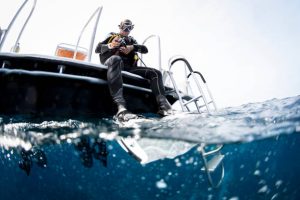
Follow the next tips to deal with seasickness when scuba diving:
- While being in the dive boat,
- it is better to sit in the middle of the boat,
- Always look at the horizon,
- The best sitting is to lean back against a firm surface to avoid neck movement.
- The idea here is to prevent any excessive movement or rocking and glancing at the horizon help your senses to provide stabilization inputs.
- Sit away from the exhaust or engines of the boat, as the diesel fumes have a negative effect on your condition. Sitting facing the wind is a good idea to be able to get plenty of fresh air. Reading isn’t recommended in the dive boat, and avoid using binoculars for extended periods.
- Put on your suit as quickly as possible and be the first one to dive. As time passes, these effects gradually tend to wear off.
- Always get a good sleep the night before diving, and if you’re hungry, you will certainly get seasickness. Experienced scuba divers. recommend eating a light breakfast before scuba diving, especially eating biscuits, as they may help you avoid seasickness.
- If the previous preventive measures didn’t help you, consider taking a seasickness pill once the symptoms occur. It is recommended to take a pill the day before diving so you can notice any side effects beforehand rather than happening when you are 30 feet underwater!
- Many scuba divers prefer wearing acupressure wristbands that claim to prevent seasickness, even though it is said to only have a placebo effect rather than being a remedy. You can also use seasickness patches and other seasickness products are also available nowadays. Obtained them with a prescription from your doctor. Stick one onto your skin before boarding the dive boat.
- Almost all scuba divers at some point or another have experienced the effects of seasickness. There is nothing to be embarrassed about, as its effects usually wear off once the unfamiliar motion stops. You will be ok just when you jump into that cool water so don’t let these deceptive symptoms ruin your diving.