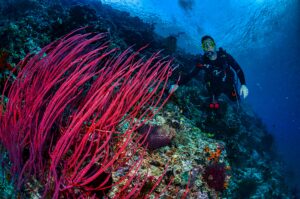
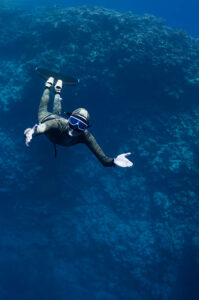
Strong tides and currents present some of the most spectacular diving opportunities. Imagine drifting diving over great walls with coral and colorful fish all around you, or coming across a big pelagic species in a current-swept Just some of these dives can be considered real adventures. Dive training in strong currents is challenging and can be hazardous without proper training. The aim of this article is to examine safe diving in strong tides and currents, and the specialized training that is required to master this environment.
Understanding Tides and Currents
Before entering a dive site with considerable tidal movements or currents, it is important that the basic elements of those forces be learned. Tides are the periodic rising and falling of the sea level induced by the gravitational pull of both the moon and the sun. Currents are water movements that flow continuously; such movements are induced by various factors: wind, water density, and the rotation of the Earth.
For divers, tides and currents both pose safety and dive planning considerations. Strong currents can whisk a diver along at high speed and produce some of the most exhilarating forms of drift dives, but they also create the risk of being swept away from a dive site if proper precautions aren’t taken.
Key Types of Currents
1. Drift Currents: These are ideal for drift diving, where the current carries the diver along a certain route, usually along a reef or wall.
2. Rip Currents: Fast-moving water that can pull divers away from shorelines. Understanding how to navigate these currents is very important in shore diving.
3. Upwellings and Downwellings: Currents that run vertically and at times propel divers upward or downward than anticipated. These become more dangerous if not foreseen.
Tide and Current Dive Training Essentials
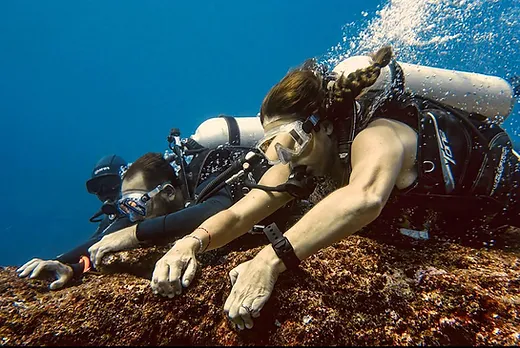
Specialized training is required for safe diving in areas of strong tides and currents. Most basic diving certifications include entry-level skills; with current diving, a little extra experience and knowledge is needed. Here are some key components of tide and current diving training:
1. Drift Diving Certification
One of the key certifications in diving in currents is the Drift Diving certification. In this course, one learns to manage strong water movement by using the current, not fighting it.
What You Learn:
- Drift dive planning and communication
- Entry and exit techniques in strong currents
- The use of SMBs for safety purposes
- Monitoring depth and air supply in movement with the current
2. Reading Tides and Current Tables

Knowing when and where currents are going to be the strongest is important. In tide and current diving courses, divers learn how to read tide and current tables, which, in turn, help estimate the intensity and direction of water movement.
- Tide Tables: Provide the rise and fall of sea levels, which are essential in the planning of dives, especially near shorelines.
- Current Tables: Provide details on the speed and direction of currents that allow divers to appreciate how the movement of the water is going to affect their dive.
3. Buoyancy Control
The secret to diving in currents is buoyancy control. Poor buoyancy in strong water movement can lead to unplanned descents or ascents, which might be dangerous. Advanced buoyancy skills covered in the training include breathing techniques that allow making small adjustments without reaching for the BCD.
4. Streamlining and Equipment

Diving in currents means minimum resistance in the water. Streamlining your equipment by tucking in loose hoses, making sure that your gear is snugly tightened, and avoiding chunky settings cuts through drag, enabling you to travel with a current instead of fighting it.
Training will cover the importance of the following:
- Streamlined equipment configuration
- Correct finning techniques – flutter kicks and frog kicks
- Reef hooks in high current areas where this may be needed
5. Entry and Exit Techniques
Special entry and exit techniques are usually used in strong current diving. For example, a jump from a boat into a swift current requires coordination and control not to be separated immediately from your group. Courses teach various methods including the negative entry (water entry where divers start to descend directly) and drift entry.
Surface Drift: In water, divers also need to be prepared to drift on the surface before descending. This way, they will not struggle against the current right from the outset.
Safety Procedures in Diving Through and Under Strong Currents
While training is important, keenly knowing and observing some of the safety procedures during dives is also paramount.
1. Plan Your Dive, Dive Your Plan
Diving in strong currents needs to be intricately planned. The divers should understand the current direction and strength, entry and exit points, and any emergency procedures. One would observe pre-dive briefings to make sure that everyone is well-informed on such issues. A pre-dive safety check is just about vital for drift diving or diving where the tides change considerably.
2. Use of Surface Marker Buoys (SMBs)
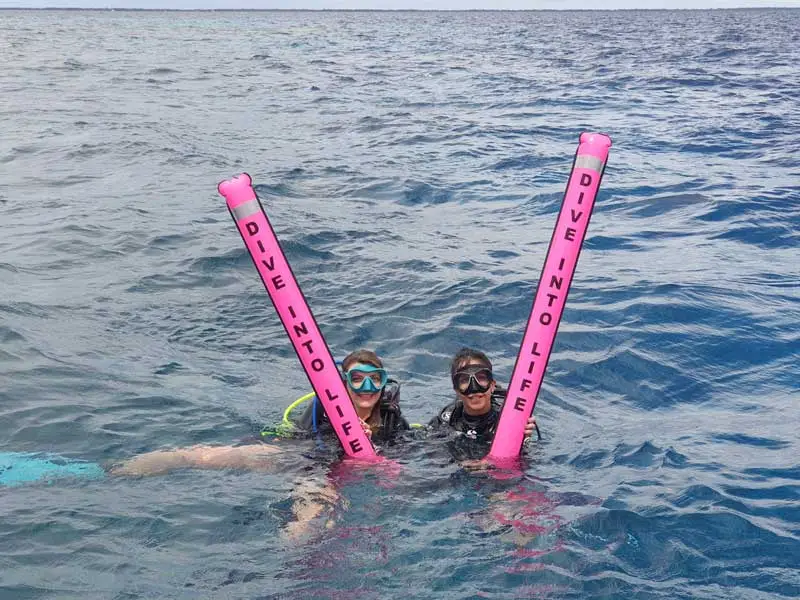
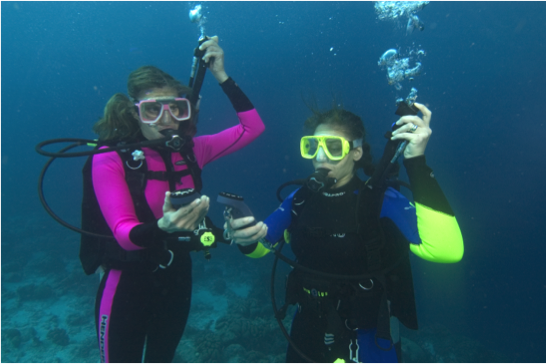
As arguably one of the most useful tools for the contemporary diver, the Surface Marker Buoy has an important place in contemporary diving. In strong currents, divers can be taken well away from a boat or shoreline, and an SMB allows surface support to easily monitor the location of the diver. The proper deployment of an SMB while underwater is one of the key skills learned in current diving training.
3. Stay Close to the Dive Group
Staying close to your dive buddy and the group is important during a dive with strong currents. When in fast-moving water, separation can occur in an instant. Use hand signals and deploy your SMB upon separation; these are important steps toward regaining contact.
4. Control Your Descent and Ascent
Strong currents can make the control of descents and ascents more difficult. Divers learn to make immediate descents under some circumstances (negative entry) and to make slow ascents while monitoring their depth since currents may influence buoyancy. Safety stops are critical in current diving to avoid decompression sickness, even when it is inconvenient to remain in one position due to currents.
5. Emergency Procedures
The diving courses nowadays teach the divers how to act in an emergency situation when they get swept away from the group or cannot keep track of where the dive boat is. Certain essential skills that one gets taught include the following:
- Deploying an SMB for visibility at the surface
- Signaling the boat with hand signals or noise devices
- Knowing the navigation back to the group or exit point safely
Dive Operators and Current Diving Experiences
Diving with strong currents requires experience, and good operators will offer a range of drift dives and current-intensive experiences for the trained diver. This operator will make sure the dive plan is congruent with the currents, utilizes trained guides conversant with the environment, and provides surface support in case of an emergency.
- Look for operators that will brief you appropriately before a dive on tides and currents, and safety procedures.
- Emphasize diver safety by using surface markers, radios, and emergency equipment.
- Have a high guide-to-diver ratio to monitor everybody during the dive.
Strong tide and current diving offer rewarding but challenging diving. With the proper training in understanding water movement and appropriate safety protocols in place, divers can enjoy spectacular drift dives, encounters with large marine life, and fast-moving underwater landscapes safely.
Training, proper equipment, and respect for the power of the ocean are required to dive safely in currents. Mastering these skills will not only enhance your diving capabilities but also take you to some of the most dynamic, exciting underwater environments on Earth. Happy and safe diving!