Shore diving offers a unique diving experience in which convenience meets adventure, allowing divers to explore the hidden world beneath the waves directly from the coast.
However, to maximize your experience, you need a bit of know-how. Proper preparation and a few key tips for shore diving tips can make all the difference. From collecting the needed information of the topography of your site, navigating tidal changes, to ensuring your equipment is set up for ease and safety, your well-planned shore dive can open up a hidden world of aquatic wonders.
Whether you’re a novice diver or a seasoned one, these key tips in our article will help you tackle the unique challenges of shore diving, to guarantee a smooth and enjoyable dive every time. Ready to discover what makes Shore Diving such an exhilarating pursuit? Let’s dive in!
Key Tips for Shore Diving

To make you shore diving experience an incredibly rewarding one, let’s dive together into some essential tips to be able to navigate the unique challenges of shore diving:
- Collect information about the underwater topography of your site.
- Consult the tide tables.
- Go slow.
- Establish and orient to both your entry/exit points.
- Use underwater natural navigation.
- Deploy a float or dive Flag.
- Practice responsible diving.
- Clean Up after yourself.
Collect Information about the Underwater Topography of Your Site
If you simply show up, gear up, and walk into a shore diving site without having any idea of the nature of the area you’re going to dive in, you are doing a foolish and risky thing. It’s important to look for and know all the available information about the chosen dive site before diving.
This way, you can make the proper plan, keeping in mind potential obstacles and hazards. Knowing the topographical features of a dive spot will also help you in natural navigation. Ensure to brush up on the dive site before going.
Consult the Tide Tables
Now, after knowing what your dive site actually looks like, consult the tide table for your area. Our oceans are living with changing bodies, and the times when tides are high or low will be different each day.
There are many apps you can download on your mobile to help you bring this information instantly to your fingertips. Or you can check out the website of NOAA’s Tides and Currents to get tidal information for the areas located on the East, West, and Gulf Coasts of the US, and also in the Pacific and Caribbean.
Go Slow
As you’re making an effort to reach the dive site, be cool and easy, don’t rush. Rushing an entry or trying hard to reach the site quickly can make you tired and more susceptible to stress when submerging with water.
It also increases the chance of injury. Take your time, breathe with comfort, assess your situation and let your entry be as smooth as possible. Swim nice and at a slow rate to the dive site without exerting yourself too much. Once you are in swime-able waters, inflate your BCD. This can help you find some great snorkeling sights worth checking out while swimming!
Establish and Orient to Both Your Entry/Exit Points
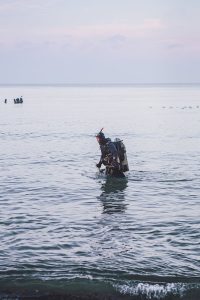
Don’t Think if you just get in the water, you will surface in a reasonable, safe place. Losing track of your course and time on your dive is so easy, especially if the dive site has many interesting things to spot.
In case of drift diving, you are more at high risk of becoming stranded or disoriented because stronger currents move you through the water column quickly. One of the best tips for shore diving before even getting in the water is to establish both your entry and exit points (it is better to use a map of the dive site if possible) and stick to them.
Use Underwater Natural Navigation
You don’t need to worry If you haven’t taken any specialty course on navigation using a compass as part of your scuba diving certification process. There are many other underwater natural navigation techniques you can choose to make sure you are staying on the right track. Using these techniques enables you to stray the opposite direction from shore or even veer off in an entirely different direction than that of the planned course.
Deploy a Float or Dive Flag
Understanding the importance of deploying a dive flag or float is one of the strongest tips for shore diving we can give you. Giving the topside world a sign that someone is beneath the surface is just an obvious safety procedure. They range in price, but there’s no reason to spend more than is necessary for a simple, highly visible signal flag or float. It is necessary to own one, however, as it is just as much a piece of your life-sustaining equipment as your BCD or regulator when shore diving.

Practice Responsible Diving
The practices of responsible diving are essential to preserve marine ecosystems. Never touch or disturb marine life. Conduct proper buoyancy control to avoid any damage to the seabed, and respect the delicate balance of the habitats in the deep blue.
Clean Up After Yourself
Don’t leave any trace. Try hard to minimize your impact by properly disposing of waste and trash. It is important to participate in the initiatives of local beach clean-up in order to actively contribute to the health and cleanliness of our oceans.