Every scuba diver imagines living the dream of becoming one of the scuba diving instructors on a tropical island. However, you can find more scuba instructors working in cold water regions than you may think, training scuba divers in their areas or even welcoming tourists to world-class icy diving sites.
In the case of choosing your passion as a career, it won’t matter the place you are working in, as long as you’re doing the job you love. So, why do scuba instructors choose to work in water regions in which the temperature can come close to 0°C (32°F)?
Three experienced instructors are asked about their reasons for choosing to teach and guide scuba divers in one of the coldest regions of Europe. Jammi who is a Bosnian instructor working in Iceland for Dive.is; Guido who is a German instructor working in Norway; and Stéphanie who is a French instructor (a specializer in ice diving) working in the Alps between France and Switzerland for Adventure.
You will be surprised when you know that all of them learned scuba diving at home. Jammi started practicing scuba diving after he came to Iceland 25 years ago; Guido learned scuba diving in German lakes; and Stéphanie came from Paris to the south of France to pass her first scuba certification.
The Challenges That Faces a Scuba Instructor in Cold Waters
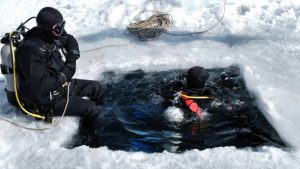
The reasons these three scuba divers chose to be a scuba instructor in cold waters inspired me so much. Jammi said he likes the respected feeling from his peers when he travels abroad; Guido said he was looking for better working conditions; and Stéphanie was in love with the exciting adventures that she get from the extreme cold destinations. She said, “Every dive, I feel that i’m an explorer.”
As you may expect, the temperatures in both the water and topside make this job a challenging one. As Jammi mentioned that everything there is against you because low temperatures means wearing more gear and requires more planning.
Both Stéphanie and Jammi agreed that almost all the problems usually come from the way divers are managed in unusual conditions. From dealing with recreational scuba divers struggling with buoyancy in their drysuits to tec divers’ demand who fancy the thrill of cold water destinations. Briefly, being flexible and understanding is one of the main requirements for being a scuba instructor in cold waters.
The Rewards of Working as a Scuba Instructor in Cold Waters
The beauty of cold water diving can’t be ignored. Jammi and Guido said that most people are unaware of the diverse and colorful marine life that you can find in the crystal-clear waters of Norway and Iceland.
Stéphanie fell in love with the magnificent atmosphere of ice diving in the altitude lakes of the Alps. If you have a diving experience in the transparent waters of the Silfra Fissure in Iceland, you can agree with Jammi’s statement, “It looks like flying in slow motion!”
Finally, the most fulfilling reward of being a scuba instructor in cold waters may be, according to Jammi, you have a good opportunity to become a better scuba diver, a better guide, and a better diving instructor.
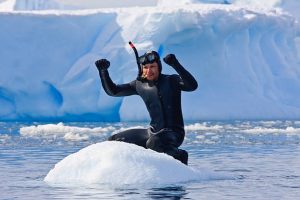
Top Recommendations for PADI Professionals Who Would Like to Work in Cold Waters
I asked Stéphanie, Guido and Jammi about the main tips for fellow scuba instructors who are currently working in warm destinations but thinking to work in a colder region, whether in their home or in a tourist destination:
- Build a good experience in cold water diving before applying for the job. You may think it is obvious, but a good experience in cold water is absolutely necessary.
- Purchase your own drysuit. Find the drysuit that has the perfect fit and train until you know how it works perfectly.
- Offer your unique knowledge of the area in which you grew up. According to Jammi, “Guiding is not just about the underwater part; but also about interacting with people.” If you are working in the area you grew up in, you are a valuable asset for your dive center. “Customers are often looking forward to knowing more about the destination they visit. There can be historical facts or even local food specialities that you should know about the area where you work.”
How to Become a Scuba Instructor in Cold Waters
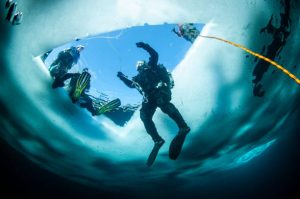
If you aren’t yet a scuba diving instructor, your first step is to take the Instructor Development Course (IDC) from PADI, after that, take the PADI Instructor Examination (IE). To enroll in the PADI IDC, you must have a leadership-level scuba diving certification, for example the Divemaster rating from PADI.
The other requirements are:
- Conducting up to 60 logged dives.
- Be 18 years old at least.
- Hold a current CPR.
- Hold a First Aid certification, such as the EFR certification.
- Have an in-date medical approval for scuba diving.
If you are already a scuba instructor, it is better to concentrate on becoming comfortable while scuba diving in cold water and a drysuit (as we mentioned above). Then, it is the time to check out the PADI Job Board for a job opportunity in the region you choose. From Iceland to the Alps and from Canada to Japan, there is a need for more cold water scuba instructors around the globe.
Ready to live your dream of being a scuba instructor in cold waters? Learn more about what it means to become a PADI scuba Professional from here.