In diving, technical dives and real-time information could mean the difference between a successful dive and one in which life and death contend. HMDs rapidly become game changers in high-stakes environments, allowing divers easy access to critical information in situational awareness. Let us analyze the technology behind HMDs; and how they apply and transform technical diving.
What Are Helmet Mounted Displays (HMDs)?
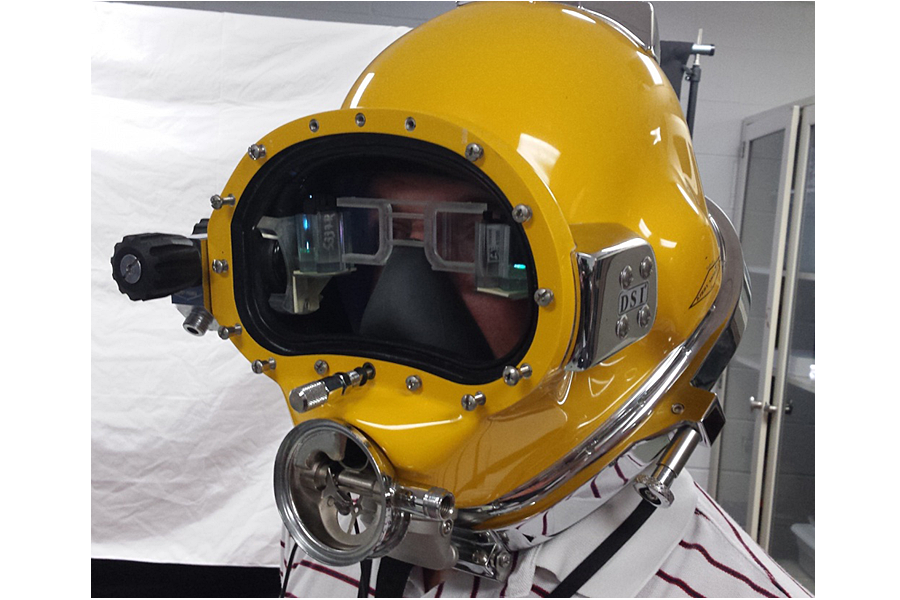
HMDs – Helmet-mounted displays are worn devices that are mounted in the diving helmet or full-face mask. They display any kind of critical information in the diver’s field of view, rather than having to look away to check arm-mounted computers or analog gauges. Already well established in the aviation and military sectors, heads-up display (HUD) technology is now being adapted for underwater use to meet the extreme conditions imposed by technical diving.
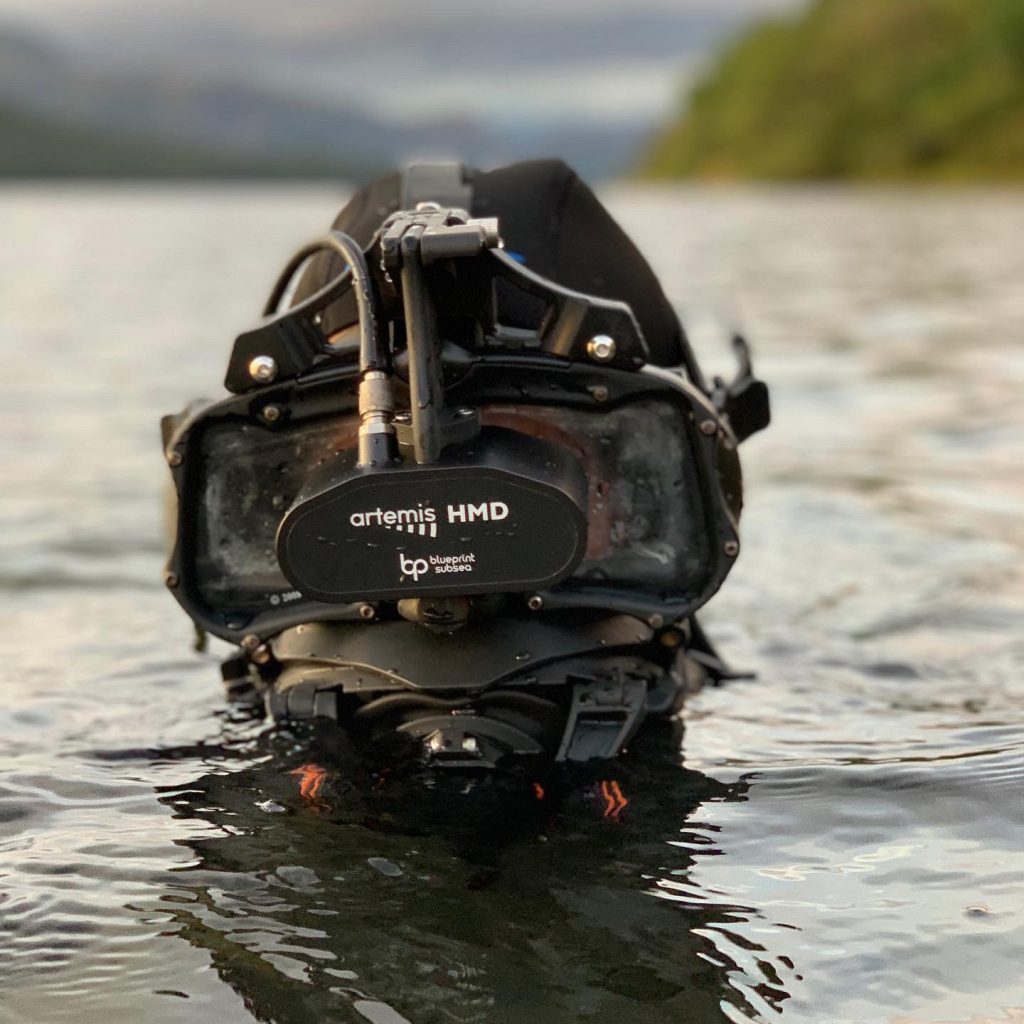
Main Characteristics of Head-Mounted Displays in Technical Diving
Real-time Information Viewing:
Head-mounted displays give simultaneous information on depth, gas remaining, decompression obligations, and time spent diving in an intuitive way, reducing cognitive load and allowing depth operation because of what the diver needs to solve.
Hands-Free Operations:
Technical diving may involve much manipulation through narrow hallways while attaching and detaching specific fittings. An HMD keeps critical information visible without requiring its users to use their hands, increasing efficiency and safety.
Customizability of Their Interfaces:
Modern HMDs not only allow divers to pick and choose the information that they want to be displayed but also tailor that information to the particular missions that they are undertaking. For example, a wreck diver may prioritize navigation and visibility metrics, while a cave diver might emphasize oxygen levels and decompression stops.
Environmental Adaptability:
It means that they will perform in low light, high pressure, and muddy kinds of water. Enhanced read features, for example, high contrast between displays and adjustable brightness, ensure visibility in extreme coding environments.
Uses in Technical Diving
Very Deeps:
When it comes to underwater explorations, divers face nitrogen narcosis, very short bottom time, and elaborate decompression schedules. HMDs more than compensate for these errors by alerting with a visual cue and hence bring decision-making more often at deep sea.
Cave and Wreck Diving:
To maneuver these tight places, one has to sustain a constant consciousness of the environment. The HMDs unite sonar maps and navigation aids, which will help divers avoid disorientation and then to exit efficiently.
Mixed-Gas Diving:
The correction of gas mixtures, especially when switching between an oxygen-nitrogen-helium mix, is extremely important. HMDs may now continuously monitor the gas composition and warn divers when a change is needed, thus significantly decreasing the risk of development of either oxygen toxicity or decompression sickness.
Search and Recovery Operations:
Technical divers tend to work at least informally in recoveries and searches. Giving them an HMD with communication and augmented reality capability would also further help coordinate these divers much better toward effective searches.
Hurdles and Restrictions
Though immense possibilities lie within High Mother-Display, they are not pane-less.
Price: High Mother-Display advanced ones are not affordable; thus, they are hardly going to find their use in recreational or entry-level technical divers.
Durability: They must lately be high-pressure compatible devices and withstand shocks also to perform effectively; hence much rigorous and solid testing is tested and done.
Training: Because correct interpretation and appropriate response are required, further training is obtained to use HMDs effectively.
Battery Life: Power sources are very necessary for extended technical dives, so management of battery life becomes critical to preventing mid-dive equipment failures.
Future Vision for HMDs in Diving
A very bright future with HMDs is e-integrated with technologies such as AI and IoT (Internet of Things). Considerations of future innovations:
Predictive Analytics: With the help of AI-powered algorithms, possible sneak preview warnings can be given at the instance of gas depletion or the person is susceptible to decompression illness.
Cloud Connectivity: The same view with real-time data transmission to surface teams for better tracking and coordination.
Integration of Biometric Monitoring: Profile the health of the diver through sensors monitoring vital signs like heart rate and oxygen saturation.
Augmented Reality (AR): These improvements will provide hazard and pathway tagging or highlighting to assist in navigation safety.
What diver helmet HMDs do in revolutionizing technical diving is bring the important right into the diver’s line of sight. The advantage of this new technology is that it is sure to have an associated improvement in safety, efficiency, and a holistic diving experience. But it is important to note that divers should never forget the limits, and still continue with more traditional protocols and skills. This essentially means that the underwater world becomes much more accessible but a lot safer for those willing to cross boundaries: for example, the exploration boundaries.