


The technological advancements, however, have continuously done the most for underwater exploration by redefining what divers can do. Among these technologies are integrated dive masks, which combine the full-face kind as the game-changing design among masks. These masks, developed with safety and better visibility in mind, also take into consideration built-in communication systems. Such kinds were traditionally used by military and professional divers, who now seem to share the benefits with many recreational divers. The following, features and advantages make these masks quite mandatory for modern divers.
Safety First: Full-Face Coverage Benefits
Traditional diving masks cover just the eyes and the nose with a separate mouthpiece for breathing. A full-face mask integrates the breathing with the mask covering the full face. Such masks provide safety advantages like:
Protection-from-Contaminants: Full-face masks protect the divers from contaminants, i.e., polluted water as well as hazardous marine organisms; thus, making them suitable for dives that are far from perfect.
Less Jaw Fatigue: A diver will not experience the strain of holding onto a mouthpiece, thus allowing him to stay under for a longer period of time in a more comfortable dive.
Improved Breathing Security: Provides protection to the breathing system from entering water as the mouth and nose are sealed within the mask. This feature can be very important in emergencies.
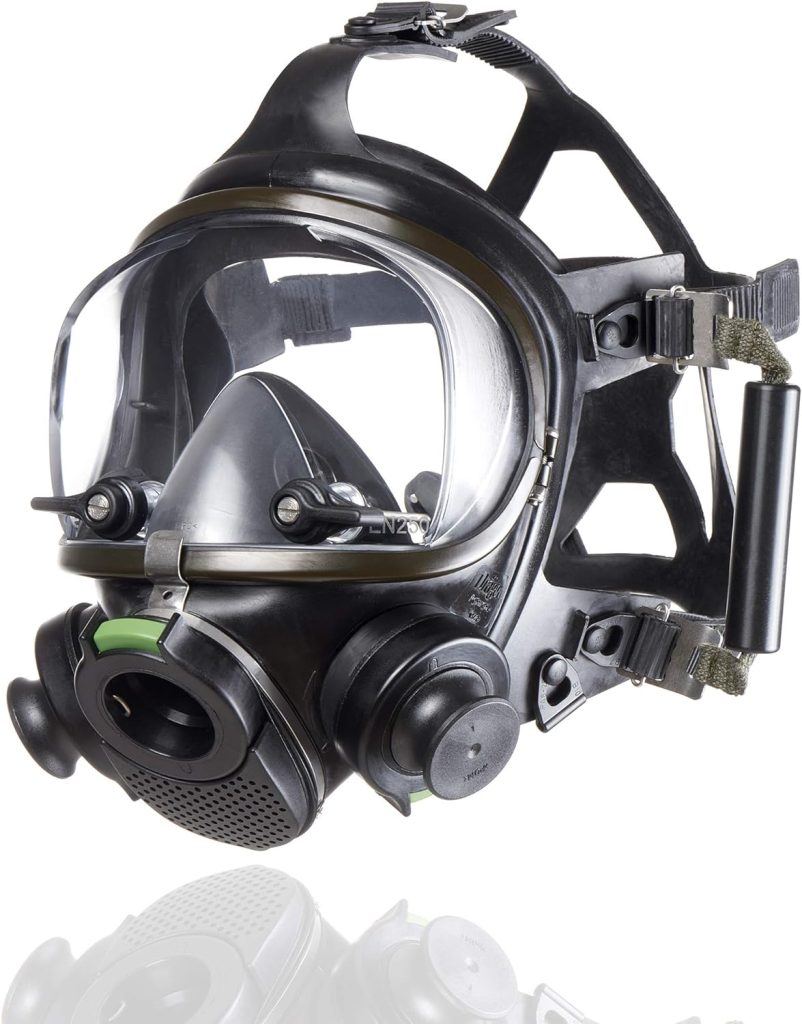
Redefining Visibility: Expanding the Fields of View
Dive masks are the best in providing beyond-par visibility. Most of the models would be equipped with large single-lens forms attuned to provide diverse viewing angles with the prevention of experience referred to as tunnel vision associated with regular masks. Enhancing the enrichments associated with divers being able to experience the underwater sceneries without much difficulty while spotting even the tiniest fishes.
Anti-fog coatings and ventilation systems are available in many full-face masks making it mandatory for every dive – whether an underwater photographer or videographer-at that moment of clarity which would yield great footage of the event.
Underwater Communication: Integrated Systems
Among the many revolutionary features of full-face diving masks, one of them is providing communication systems as part of the devices. Built-in microphones and speakers using either ultrasonic or digital technology I also allow computers to speak from the diver team members with surface support without hand signals or slates to convey related advantages such as:
Team Coordination Revolved: Real-time communication improves safety and efficiency, crucial factors in case of elaborate dives or rescue missions.
Access Increase: Communicating diving systems makes this kind of diving possible for beginners since it allows them to get a lesson and motivation through guidance from experts.
Scientific and Technical Aspects: Researchers and technical divers share simple and continuous communication needed to conduct underwater experiments and mapping during the process.
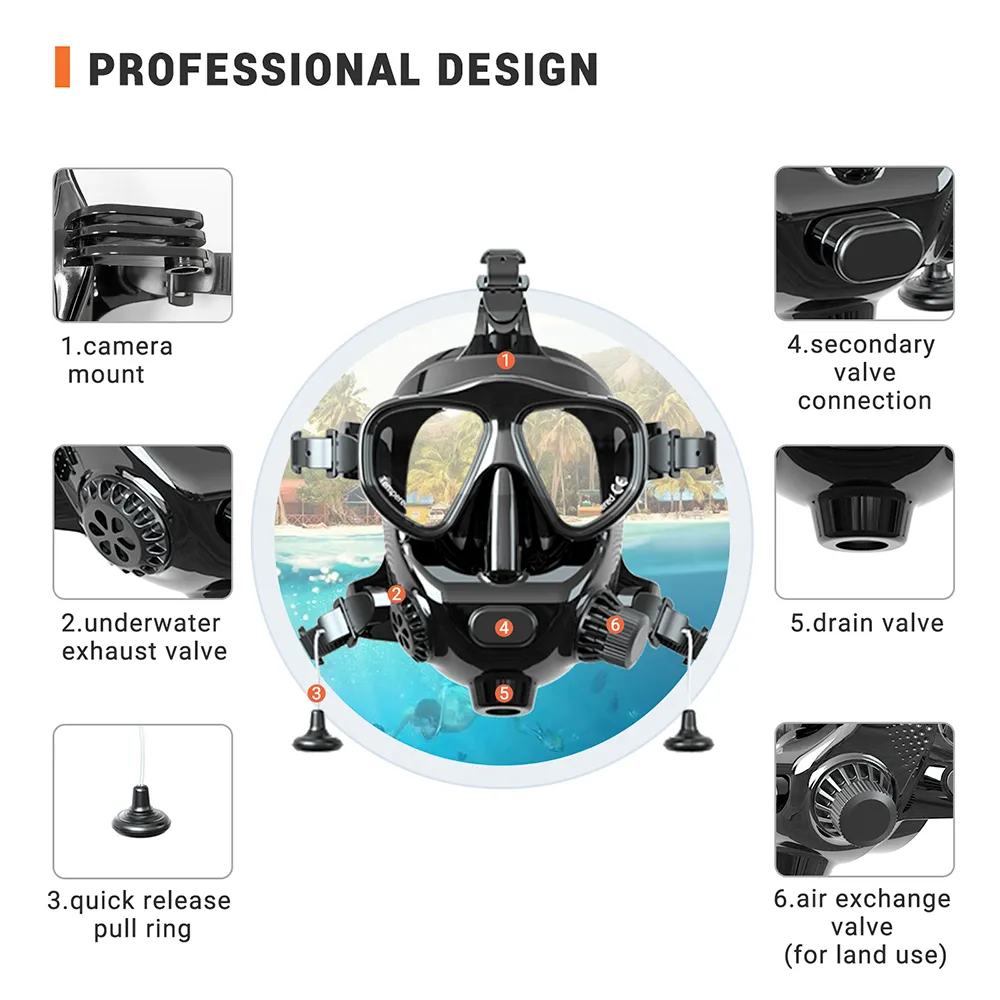
Issues and Perspectives
Certainly, the total face masks offer much more aid towards diving, but challenges and issues still abound. The diver should, therefore, consider the following:
Learning Curve: A full-face mask requires a practice technique to equalize pressure with any successful emergency procedures.
Weight and Bulk. These masks are heavier and bulkier as contrasted with traditional models, thus not suitable for all divers.
Costs. The full-face masks, especially those that have to be integrated with communications systems, are very expensive compared with the traditional setup.
Choosing the Right Mask
Here are some aspects to note when choosing a full-face diving mask:
Fit and Comfort: A mask that conforms to an individual’s face is necessary for safety as well as enjoyment. Look for masks with adjustable straps and silicone seals for a secure fit.
Communication Features: Make sure the feature is compatible with the dive team’s communication system if this is an important point.
Field of View: Select masks with wider, distortion-free lenses for optimum underwater view.
Certification: Check whether the mask meets safety standards and whether the type is compatible with the diving regulator used.
The Technology that Would Shape Future Diving
Integrated diving masks will always develop and get much better in terms of features and cost. Soon, advances in materials, wireless communications, and augmented-reality displays will change these masks into essential equipment for divers, from experts downwards.
These are the full-face integrated masks in diving technology. are the Future of Diving Technology. They improve safety, visibility, and communication, so divers can work together in exploring the depths of the oceans more confidently and learnedly. Then this equipment is being introduced into the market for the well-experienced ones and good investment for anyone who enjoys diving as a leisure activity because it can add a whole new dimension to it.


