The fact that the water covers about 70% of our planet was the motivation for many people to be passionate about exploring what is beneath those fascinating waves. This will only be done by the use of at least the basic scuba gear.
Whether you are a skilled diver or still a beginner, in this article you will find a list of basic scuba gear with useful information about each gear in a simple, uncomplicated way. Keep reading to get what you are looking for.
Basic Scuba Gear List
So, before we start diving in the basic scuba gear list, we will illustrate that we are only talking about the essential basic scuba gear without mentioning anything about advanced scuba gear or the accessories, so, our list now is:
- Dive mask
- A regulator
- Snorkel
- Scuba suit
- Fins
- Scuba tank
- Dive computer
- Surface maker buoy
- Buoyancy control device (BCD)
Dive Mask

the mask is the most important gear in the basic scuba gear list. Just as your eyes are the organs that enable you to recognize the world, The dive mask is your window to the world beneath the sea.
Its basic importance lies in keeping the water out of your eyes and giving you a clearer view of the depth with its picturesque creatures and charming coral reefs.
There is an air pocket in the mask located in front of your face. This pocket has great importance as it helps in equalizing your ears while descending. There are only few features found in most masks you should take into consideration, including:
The color of the mask skirt and frame
Hunters, photographers and videographers prefer the mask skirt and frame to be in black to block out the peripheral light.
Panes number
Most of the masks contain two panes but there are some masks with one continuous pane and another some can have up to 6 panes. The panes of the mask are designed to help the divers to have bottom and side visions.
Mask profile
The mask profile is the ability of the mask to stick out from your face. A more panned mask has a higher profile. It will be dangerous if you decide to dive in strong currents using a high-profile mask.
Another problem with the higher profile mask is that the larger spaces inside the mask require additional air to equalize. That may create additional buoyancy concerns.
Number of lenses
We can categorize the types of masks according to the number of lenses to:
-
Single lens mask
With the single lens mask, you have a more open and wide underwater vision. These masks have a single lens that runs along the length of the mask with no solid nose bridge which makes the front window unobstructed.
-
Dual lens mask
The mask has two separate lenses and is known as double-lens mask or twin-lens mask. This type has important advantages that make it the best choice for many divers as:
- The mask design is characterized by lightweight.
- There are additional corrective lenses for divers who wear glasses. Their job is to make the view more clearer.
- Its shape makes it easy to look down.
-
Tri-lens mask
It is perfect for an expensive underwater view. You must buy a tri-lens scuba mask if you want:
- A panoramic view of the depth.
- A more clear view with truer colors.
- To reduce blind spots underwater.
- A low-weight style.
-
Full face mask
It is a type of mask that covers the whole face and only be used by professional divers like commercial ones and videographers. It is also used in cold water diving to provide extra heat protection. The full face mask has integrated intercom systems that help you communicate with other divers in the group.
A regulator
The process of breathing underwater is organized and safe thanks to the regulator. It is a great invention. It delivers the air from the scuba tank to you on needing it.
It is considered the hub of the dive equipment because it links much of your gear. You will need to have an easy reliable breathing regulator to forget that there is something in your mouth and enjoy your adventure underwater.
You can find the following features in your regulator:
- The first stage_ is attached to the scuba tank valve and is responsible for reducing the pressure of the air and routing it from the tank to several hoses.
- The second stage_ The demand valve (mouthpiece) gives you the air you need in exact pressure to breathe comfortably.
- Alternate air source_ In case to help another diver, you can use the spare mouthpiece to share air. It is usually built into the flator of the buoyancy control device(BCD).
- Submersible pressure gauge (SPG)_ It is connected to your first stage. Its job is to tell you how much air pressure you have in your tank.
Snorkel

The snorkel isn’t considered an important piece in the basic scuba gear list when compared to other diving gear. Most divers don’t use it on diving but for a novice diver, your instructor will recommend it for you. Most training agencies consider snorkeling from the required pieces of scuba gear.
As you don’t share your toothbrushes with other people, you will never want to share your snorkel with hundreds of divers using rental gear every day. So, it is better to buy it.
Scuba suit
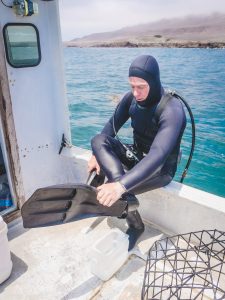
The scuba suit is the outfit of the diver while being underwater. It is responsible for protecting the diver from harsh environmental conditions and preventing heat loss. There are two types of suits:
-
Wet suits
A wet suit is made from neoprene. It keeps you warm by trapping a water layer through its material. this water warms up due to body heat and then acts as an insulator. It protects you well from minor thermo clines (when the water temperature changes at different depths).
You can find wet suits in different thicknesses and that makes them suitable for diving in different water temperatures except very cold ones.
-
Dry suits
Dry suits are different from wet suits in the design as dry suits are designed to prevent seawater from entering. This makes them the best choice for diving in cold water cause they have better insulation. It is more complicated in components, more expensive and requires more training to use it well.
Fins

Fins for a diver like a tail or fins to fish. It helps the diver to move easily and navigate against currents. When you dive easily without effort using fins, you will conserve your energy and use up less of your air supply leading to a longer time enjoying the underwater world.
There are many types of fins and every type has its pro’s and con’s. The basic types include:
-
Blade fins
This type is the traditional one. They have a large flattened surface that covers all your toes. They also have a wide variety of features designed to make you move strongly with less effort.
-
Split fins
This type is split from the middle. They are designed to provide divers with the same propulsion of marine mammal tales. Most divers find them comfortable for their knees and require less effort. If you have bad knees, hips or lower back, split fins will be a good option for you.
-
Hinged fins
This type combines the advantages of the previous two types. They give you the easy and quick propulsion of the split fins with the power of the blade fins but some divers don’t feel comfortable due to the way the hinge works.
Scuba tank

-A scuba tank is used to store air. The regular air we breathe is compressed in the tank at 3000 ps the stored air consists of nitrogen and oxygen in the same proportion as they are found in atmospheric air,78% nitrogen and 21% oxygen.
Dive computer
The job of a dive computer is to tell you four things:
- the maximum depth during your dive.
- Your current depth.
- How much you can stay safe at any depth.
- Length of time underwater.
Surface maker buoy
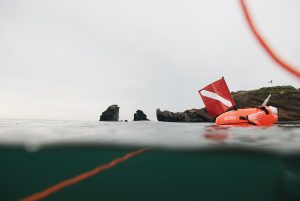
If you are diving with professional divers you may notice that they have afloat and flay included in their scuba gear. This gear’s job is to indicate your presence to anyone passing on the surface of the water. It is important cause it helps you ascend safely after finishing your dive. It is like a sign for any boats or jestskis to not carelessly run you over while ascending.
You have many options from it but professional divers usually use larger, inner tube style floats or support platforms of SMB.
Buoyancy control device
The buoyancy control device (BCD)is a vest-like jacket and is worn by divers during their dives.it is one of the important basic scuba gear list because
- You can control your depth underwater using it Because it is connected to the tank through a hos and has air pockets. These pockets can be inflated and deflated easily.
- It compensates for the weight of the scuba equipment you wear.