Air Consumption Awareness and Breathing Control: Depth and Physical Activity Variations – Some Tips on How to Manage Your Air Efficiently.
Of all the skills any scuba diver could ever hope to master, air consumption awareness and breathing control are probably some of the most important. Not only is efficient management of air underwater a matter of extending your dive time, but it also greatly enhances your overall safety and comfort. From shallow coral reef diving to deeper wreck exploration, good air management will no doubt play an important role in determining not only how long you can stay underwater but also how safe your dive will be.
Throughout this article, we shall see why air consumption varies with depth, how physical activity influences your breathing, and basic practical tips to increase your air efficiency while diving.
1. Why Air Consumption Increases with Depth
The simple essence of physics in scuba diving is that with increased depth, the pressure on your body and equipment also increases. This, in turn, has a direct bearing on the quantity of air you breathe.
- BOYLE’S LAW: The volume of a gas and the applied pressure are inversely related according to Boyle’s Law. All that means for diving is the deeper you go the greater the pressure, and that makes the air you breathe denser. That means at 20 meters, or 66 feet, the air you are breathing is twice as dense as what you were breathing on the surface, and thus you are consuming air at double the rate.
- Depth and Air Consumption Rate: While in the water at 10 meters, the rate at which you use air is twice that at the surface, while at 30 meters it increases fourfold. Thus, with an increase in depth, one has to be more cautious regarding air conservation.
2. How Physical Activity Affects Air Consumption
Just like on land, physical exertion underwater increases your rate of breathing. Underwater, however, all those effects are magnified by the density of the water, the resistance of your equipment and by the effects of depth.
- Increased Effort: Fighting currents, having to swim against the flow or fin harder than necessary; all these things can increase your air consumption by many times. Anything that increases your heart rate-like swimming too fast so you become over-stressed or panicked will have you burn through air at a quicker clip.
- Over-exertion and Air Use: The most common and work-intensive type of diving is done with strong currents or at a fast pace, which makes you overexert yourself. This results in rapid, shallow breathing. This is inefficient since shallow breaths do not allow you to fully exchange air in your lungs. In turn, the higher the CO2 levels in your body, the higher the increased rate of breathing.
3. Breathing Techniques for Efficient Air Consumption
Proper breathing techniques will make a great difference in air conservation and the entire diving experience.
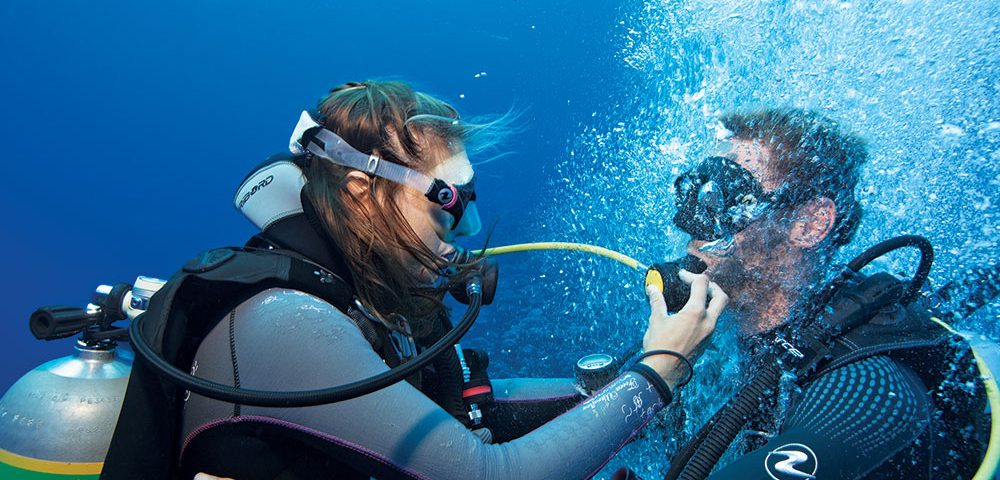
- Slow, Deep Breaths: The greatest technique to conserve air is through breathing slowly and deeply. Take heavy deep breaths in your diaphragm, exhalation being full. It effectively swaps the air in your lungs without letting them get filled with carbon dioxide, which automatically reduces the demand for breathing more frequently.
- Avoid Inhaling and Outbreathing Rapidly: The shallow breaths can result in the accumulation of CO2 in your lungs and give you a feeling of not getting enough air, even though your tank is full. Get your body adapted with practice to slow rhythmic breathing both on the ground and in water for controlled respiration.
- Stop for a Moment Between Breaths: After having inhaled, it is beneficial to stop for a while before exhaling. It would give you complete assurance that you have exchanged air in the lungs and hence reduce the general rate of breathing without holding your breath, which is quite dangerous. It would also help in buoyancy control since less frequent changes in the volume of your lungs would occur.
4. Buoyancy Control to Save Physical Energy
Poor buoyancy control is among the major causes of this inefficient use of air. Constant adjustments of your buoyancy result in unnecessary movements and much wastage of effort, with an increase in air consumption.
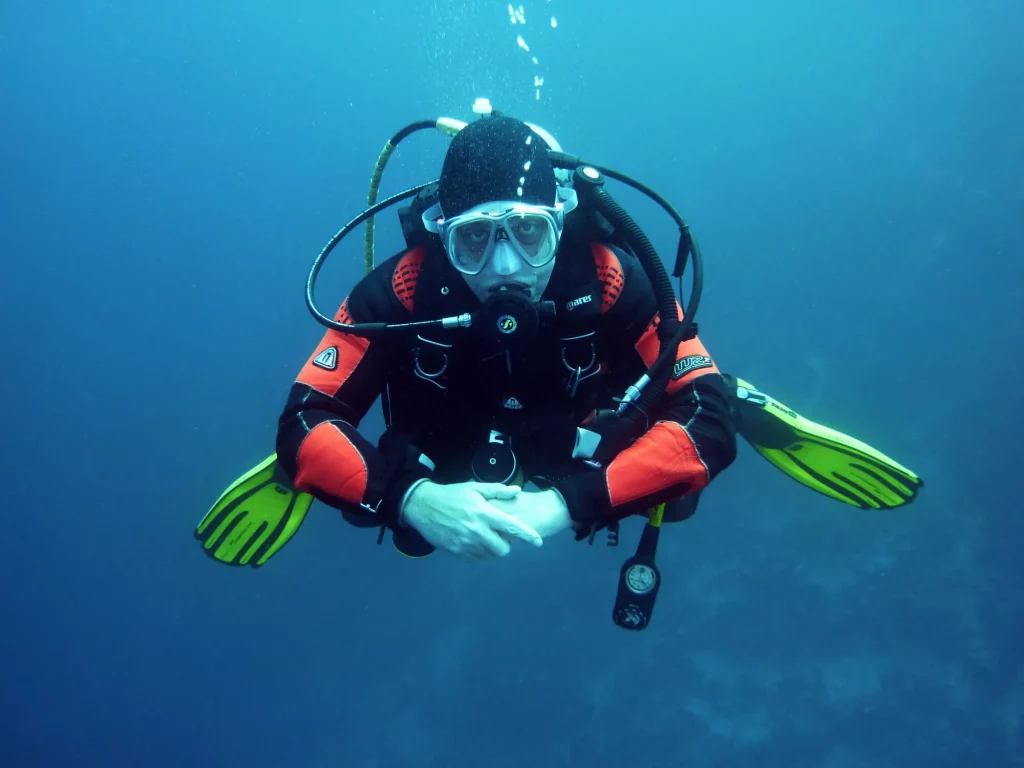
- Neutral Buoyancy: Once desired depth is reached, inflate the BCD to where you neither descend nor rise. Perfect buoyancy allows you to relax and conserve movement without overusing your fins, to conserve air and energy.
- Correct weighting: Be correctly weighted. If you are over-weighted, you will need to inflate your BCD more; this increases drag, and it also takes more energy and effort to travel. For that matter, being underweighted means you’ll use your arms or fin far too much to stay down, in which case it is a total waste of energy and air.
- Streamline Your Movement: Never do unnecessary moves like arm swimming or gearing up and down too much. Slow, smooth motions minimize drag and effort. Good trim squares this off, as it puts your body in a horizontal position to minimize resistance during water movement.
5. Relaxation to Conserve Air
There are various ways through which anxiety or excitement could be said to be the prime cause for speeding up one’s respiration rate during a dive.
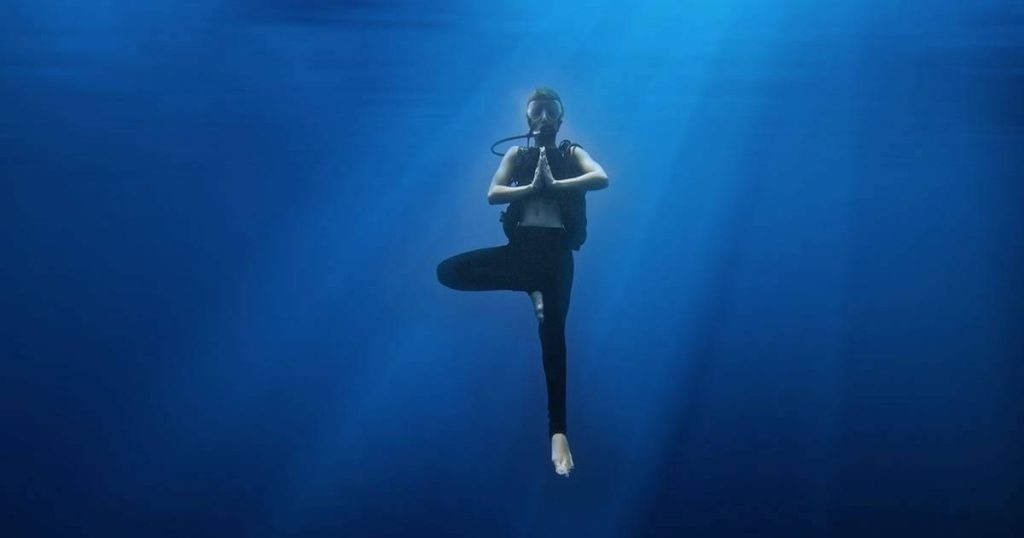
Remain Calm: Another effective method of saving air is to remain unflustered or simply relaxed. As soon as you feel anxious, stop, inhale a few deep breaths, and then go more slowly. The more relaxed you are, the slower and more controlled will be your breathing.
Pace Yourself: Diving is not a race; go at your own pace, take in, and enjoy being around the underwater environment. More importantly, for every meter you swim fast, not only does it make you breathe harder but you can also miss some beautiful details around you.
Mindful Diving: Dive consciously – observe what is happening around you and pay attention to your breathing. Ensure that movements become smooth and regular. For most divers, the very mental process of “slowing down” prevents overusing air.
6. Diving Equipment and Its Influence on Air Usage
Your diving equipment contributes much to your efficiency in air use.
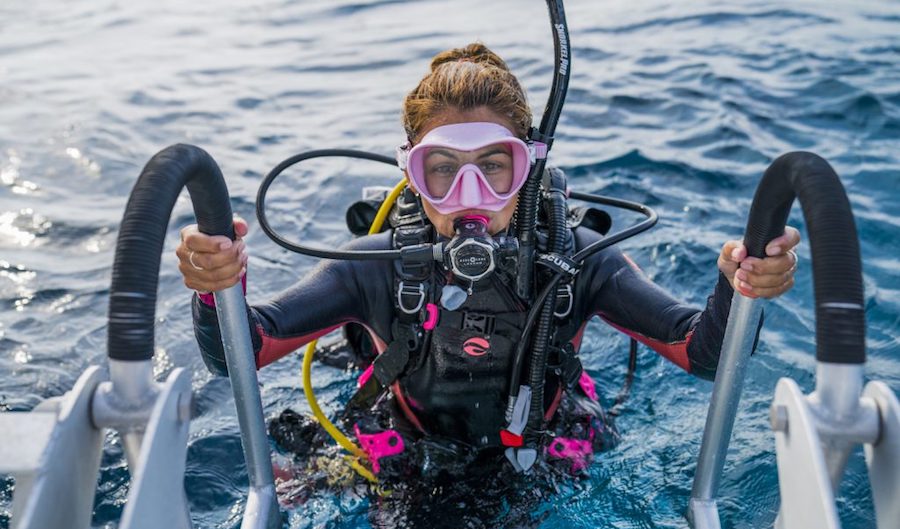
- Well-Maintained Regulator: A good functional regulator will ease and smoothen your breathing. If the regulator is not providing air in the correct form, you are fighting to breathe hard. As that means you use more air than you need because of increased consumption of air. Have your gear serviced so that it is in tip-top condition.
- Diving Fins: Use fins matched for the conditions you dive in. Strong kicks with minimal effort require good fitting fins. Long, slow kicks with well-fitted fins will help you glide through the water with less drag or resistance.
- Dive Computer: This is utilized for the real-time management of depth and time underwater. During such dives, one can make adjustments by staying within no-decompression limits and by observing how your air consumption has altered with time.
7. Plan Your Dive-plan Your Air Consumption
A pre-planned dive will allow you to use as little precious air as possible before even hitting the water.
- Shallow Dives First: If one is diving multiple times a day, he/she may consider his/her deeper dives in the earlier part of the day when he/she is fresh and has more energy. Later in the day, shallow dives decrease the workload on the body and use less air.
- Monitor Your Air Regularly: Regular checks on your air gauge, especially in deeper depths, as at those places you use the air at a much faster rate. It helps you know how much air you have left and thus aids you in making better decisions about the duration of your dive and the ascent.
- Air Management Rule: Maintain the “rule of thirds” for air management. Use one-third of your air for the descent and bottom time, another third for the ascent, and keep the final third as a reserve. That way you will always have enough air to make a safe ascent including a safety stop.
8. Improving Air Efficiency Over Time
This is something that will come with time and experience. The more you dive, the more you will be able to manage your breathing, movements, and buoyancy to optimize air consumption.
- Monitor Your Air Consumption: Make entries in your logbook for each dive, including depth, dive time, and conditions. After a while, you will begin to see patterns in your consumption and be able to make educated changes in your techniques.
- Take Specialty Courses: Why not take a buoyancy control or breathing techniques course? Specialty diving classes will also help you get better with your underwater control and thus be much more efficient and relaxed as a diver.
Two of the most valuable skills a scuba diver should be aware of involve air consumption and breathing control. You can optimize dive time by utilizing techniques like slow and deep breathing, managing buoyancy, conserving energy through relaxation, and recognizing depth and physical exertion effects. You will be able to become more efficient with practice and mindfulness, thereby enabling you to use each underwater adventure to its fullest through practice and after observing your actions. Happy and safe diving!