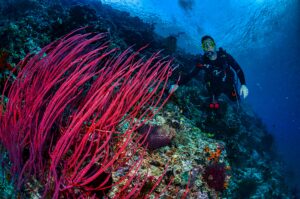
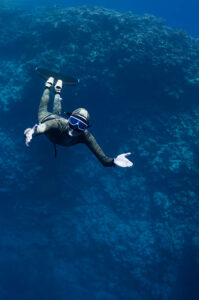
If you choose to scuba dive with a buddy, you will ensure yourself more safe and fun-filled dives. But what about solo scuba diving? Imagine you are alone beneath the waves and a whales’ family passes near you. It is regarded as an amazing moment, but you may feel bummer because:
- You can’t share this precious moment with someone, as you are alone now.
- There is no witness except you to confirm this unbelievable story.
So why would anyone want to dive solo? Is it even legal?
In this article you will find answers to all the questions on your mind about solo scuba diving and you will get valuable information about the PADI Solo Diver certification course Self Reliant Diver.
Imagine again an Advanced Open Water Diver course with four students . That means that there are two buddy systems with an instructor. Then you may wonder “ who is the dive buddy of the instructor?” Technically, the instructor has no dive buddy. Dive professionals such as the instructors find themselves scuba diving semi-independently. You will know what than means when you buddy up with a passionate photographer or videographer.
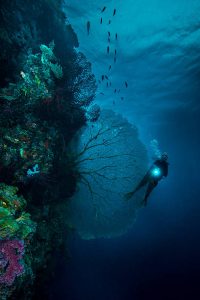
Is Solo Scuba Diving is a Safe Activity?
Regardless insanely reckless buddies, diving with another diver is regarded more safer because at least, they are considered your ambulatory second air source who can come once you need them.
Some divers take the approach of “same ocean, same day” to be a dive buddy. If you are very close to your diving buddy, you will learn several potentially lifesaving skills from the PADI Self-Reliant Diver course.
Understanding Self-Reliant Diver Course
You mustn’t learn how to dive independently unless you are an experienced divers and put a big emphasis on “experienced”. There are several requirements to enroll in the PADI Self-Reliant Diver course including:
- You must be 18 years old at least.
- You must have a PADI Advanced Open Water Diver certification.
- Also 100 logged dives must be have completed.
with solo scuba diving, you will be on 100% your own. There is no one except you to solve any arising problem. So, on applying into the Self-Reliant Diver course, you will practice the following:
- Swimming without using a mask.
- How to use a surface marker buoy (DSMB).
- How to navigate to various points till your exit.
- Different method of carrying and switching to air supplies that are considered redundant.
- Calculating the amount of time that your dives should last.
If you are disciplined enough to follow Self-Reliant diving techniques, you will find solo scuba diving so exciting and more adventurous. Even if you hate to dive alone or are not very interested in the thrill of solo scuba diving, you will learn new skills including handling problems on your own. That will help you to be more confident whether you have a dive buddy or you are diving alone.

Is Solo Scuba Diving Legal?
Unfortunately, Getting a PADI Self Reliant Diver certification doesn’t guarantee that you can scuba dive alone anywhere because some individual countries and dive operators can have rules and regulations that require you to dive with a diving buddy.