Water covers over 70% of the surface of our planet, so why do we call it Earth, not Ocean? The sea has always been a source of mystery, but only recently have we gained the tools to explore its deepest reaches. This article dives into one of nature’s most fascinating riddles: how deep is the ocean, really? Let’s take you on a journey into ocean depths.
How Deep is the Ocean?
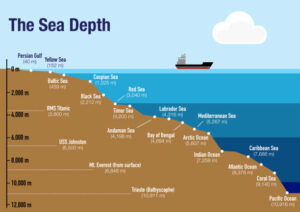
The ocean’s deepest known spot plunges to 36,201 feet (11,034 meters). But, before looking into the specifics of this depth, we should first understand the structure of the ocean. It isn’t a uniform body of water, as it can be divided into five distinct layers:
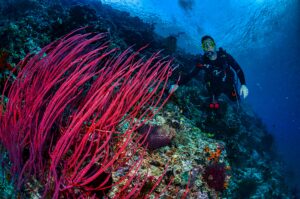
- The sunlight / epipelagic zone. (0 – 650ft / 200m) It is considered the top layer of the ocean and has enough sunlight to support plants and diverse marine life. It is regarded as the playground for scuba divers. The sunlight zone includes the coral reefs, rocky shores, and all the places we love to dive!
- The twilight / mesopelagic zone. (to 3,300ft / 1,000m) In this zone, the ocean starts to become darker and colder. However, these depths are still considered a shelter to several species that come to the surface to feed.
- The midnight / bathypelagic zone. (to 13,100ft / 4,000m) In this pitch-black world, the only source of light is the bioluminescent creatures. Remarkably, life is still nourishing under these harsh conditions, despite its different look from the surface.
- The abyss / abyssopelagic zone. (to 19,700ft / 6,000m) In this remote zone, temperatures stay just above freezing. Very few nutrients can be found, and the pressure is immense. However, organisms, such as the giant squid and the anglerfish can call this zone home.
- The trenches / hadopelagic zone. (to 36,100ft / 11,000m) Named after Hades, the Greek god of the underworld, these rare zones remain among Earth’s least explored regions. They are considered the deepest parts of the ocean, and created as a result of the movement of tectonic plates that converge into a deep depression in the form of trenches and canyons
The Ocean Trenches
The deepest part of the ocean known today is located in the western Pacific Ocean between Japan and the Philippines, which is called the Mariana Trench. Its deepest point (the Challenger Deep), is named after recording its depth for the first time by the HMS Challenger expedition.
The average ocean depth is only 2.3 miles (3.7km), but the Challenger Deep measures an estimated 36,201 ft (11,034m) deep, which makes it the deepest known point in the oceans of the Earth. To understand that, if we can place Mount Everest at this depth, it would still be submerged by over 2 km (1.3 miles) of water!

Threats to the Deep Sea
We know very little information about the deepest depths of the ocean; there could still be deeper trenches for us to discover. However, it is a fact that it’s considered the most remote part of Earth, but the depth of the ocean isn’t immune to human-made threats.
Pollution that is caused by the chemicals and plastic waste, besides with overfishing and a loss of biodiversity, negatively impacts these fragile habitats. Indeed, in 2019, Victor Vescovo, who is the first human to reach these deep depths, reported that he found plastic waste at the bottom of the Challenger Deep.
Deep Sea Exploration
Although Earth is covered over two-thirds from water, we’ve just explored less than 5% of our oceans. The vastness and depth of the ocean offer a final frontier on our planet, filled with unexplored territories in addition to undiscovered species.
Exploring these deep depths is beyond the limits of scuba diving, because our body cannot withstand the extreme pressure and cold below. While submersibles and remotely operated vehicles (ROVs) have reached these deep depths, only few people have ever descended to Challenger Deep, showing how hard it is to reach.
We’ve only seen a tiny part of what’s down there. With each expedition, we know more about the mysterious depths of Earth and the creatures that live there. As scuba divers, we catch a quick look at this amazing underwater world.
We might not have the ability to reach these greatest depths, but every dive helps us to understand more of the ocean’s mysteries. Next time you’re floating above a coral reef or marveling at a school of fish, take a moment to consider the incredible depth beneath you. It’s a humbling reminder of our small yet significant role in our planet’s vast, interconnected ecosystem.
One thing is sure: the ocean, with its unfathomable depths, will always captivate and inspire us.

Want to explore the ocean’s depths?
Recreational diving won’t take you near the deepest parts of the ocean, but it will open the door to many new underwater adventures! If you are fascinated by this world, become a PADI Open Water Diver to get down a little further.