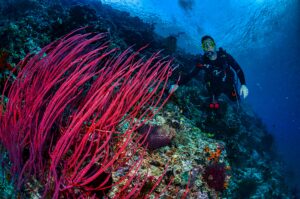
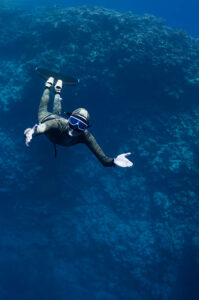
Imagine if everyone, regardless of body limitations, could take a glimpse at that calmness within the ocean depths. Innovative breakthroughs in adaptive scuba diving gear are making that dream a reality. Disabled divers now dive in coral reefs, swim with sea creatures, and feel the freedom that will not be equaled any other way. In its wake, this technology not only opens up an entirely new area of adventure but also makes a leap in humankind’s ability, demonstrating more than ever that the wonders of the underwater world are within reach for all.
The Significance of Adaptive Equipment
For Scuba Diving The utilization of adaptive scuba diving apparatus stands as a significant element in facilitating disabled individuals to immerse themselves in the aquatic realm. Such apparatus is meticulously devised to cater to a spectrum of physical impediments, thereby assuring that the act of diving remains secure and pleasurable. The gravity of this equipment’s role is profound, as it unveils opportunities for physical engagement, psychological wellness, and a pursuit of adventure—experiences that numerous individuals may potentially forfeit without it.
Varieties of Adaptive Diving Gear
-
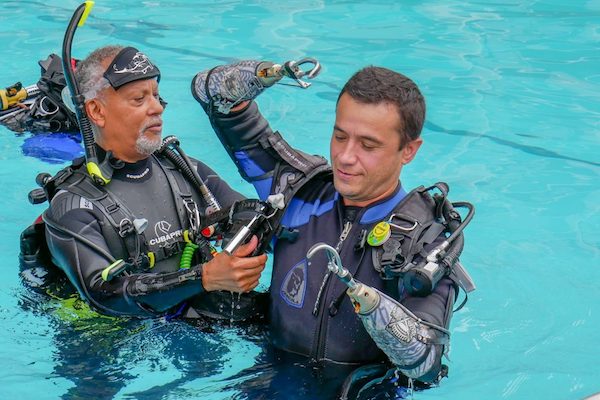
Buoyancy Compensating Devices (BCDs)
- Adaptive BCDs: These specific devices are constructed to cater to a spectrum of body configurations and varying mobility capabilities. They might incorporate supplementary straps or bespoke buoyancy regulation features, thus aiding divers in enhancing equilibrium and steadiness in submerged environments.
-
Fins and Footwear
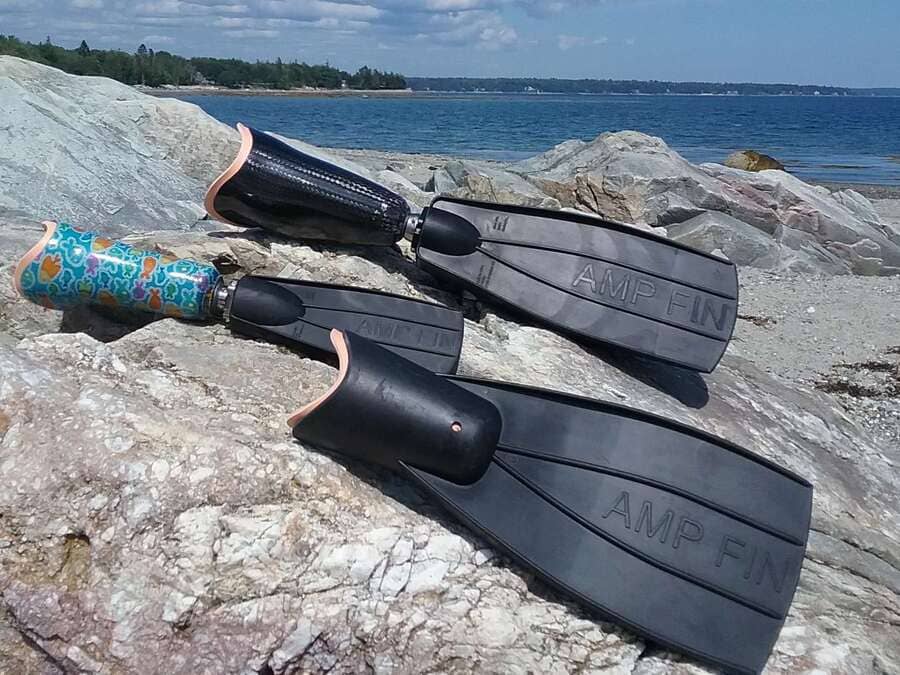
- Tailored Fins: For individuals exhibiting constrained leg mobility, specialized fins can be employed to optimize thrust with diminished exertion. These fins frequently possess a lighter structure and necessitate reduced physical energy for practical utilization.
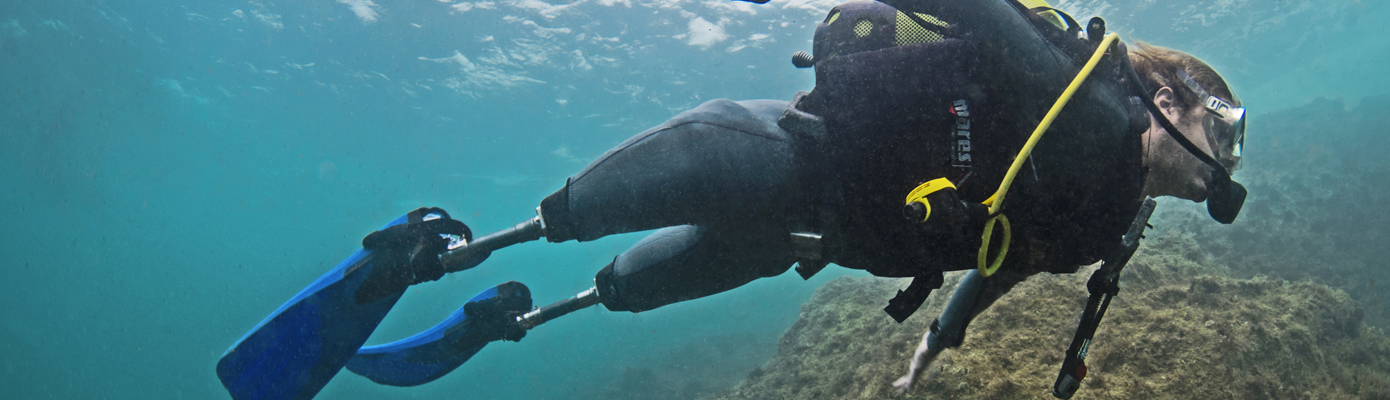
- Adaptive Footwear: Diving boots and fins engineered for individuals with limb loss or those utilizing prosthetic devices are designed to provide both comfort and functional efficacy.
-
Masks and Snorkels
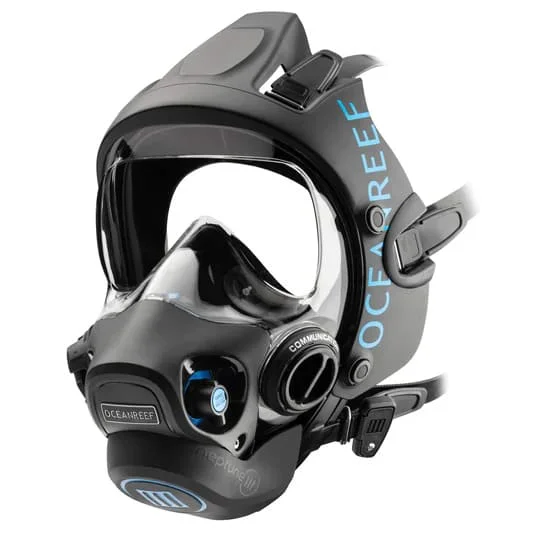
- Full-Face Masks: The category of masks designated as full-face encompasses the entirety of an individual’s face, which facilitates the diving experience for those who may encounter challenges with conventional mouthpieces. Furthermore, these masks afford an enhanced sealing capability, which diminishes the probability of water ingress.
-
Wet Suits and Drysuits
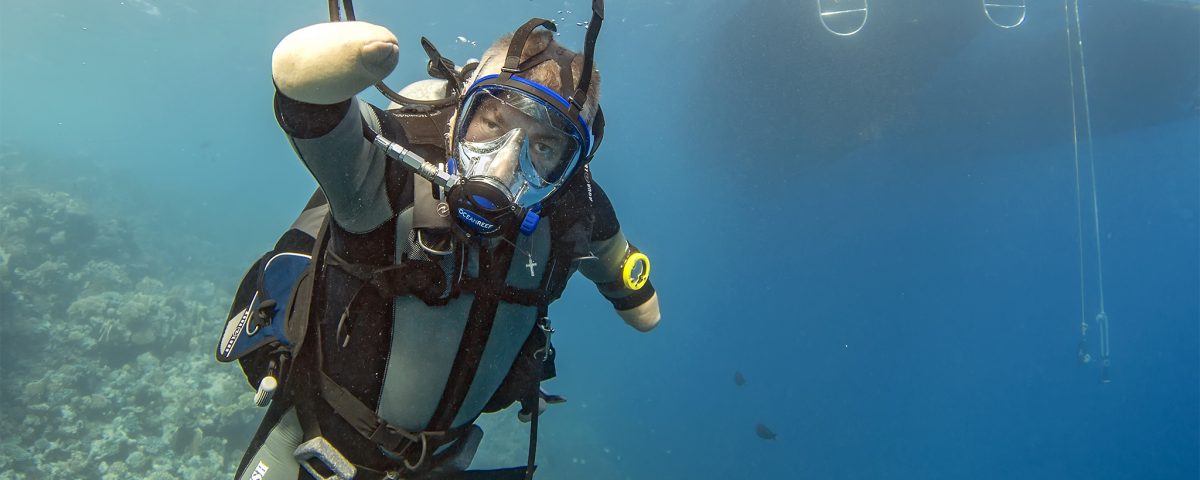
- Adaptive Suits: Suits that are tailored to individual specifications are implemented to accommodate a multitude of physical conformations, thereby delivering both thermal insulation and an augmented range of motion. Certain variations of these suits incorporate supplementary fasteners such as zippers or Velcro, intended to aid in the processes of donning and doffing the garment.
-
Assistive Devices
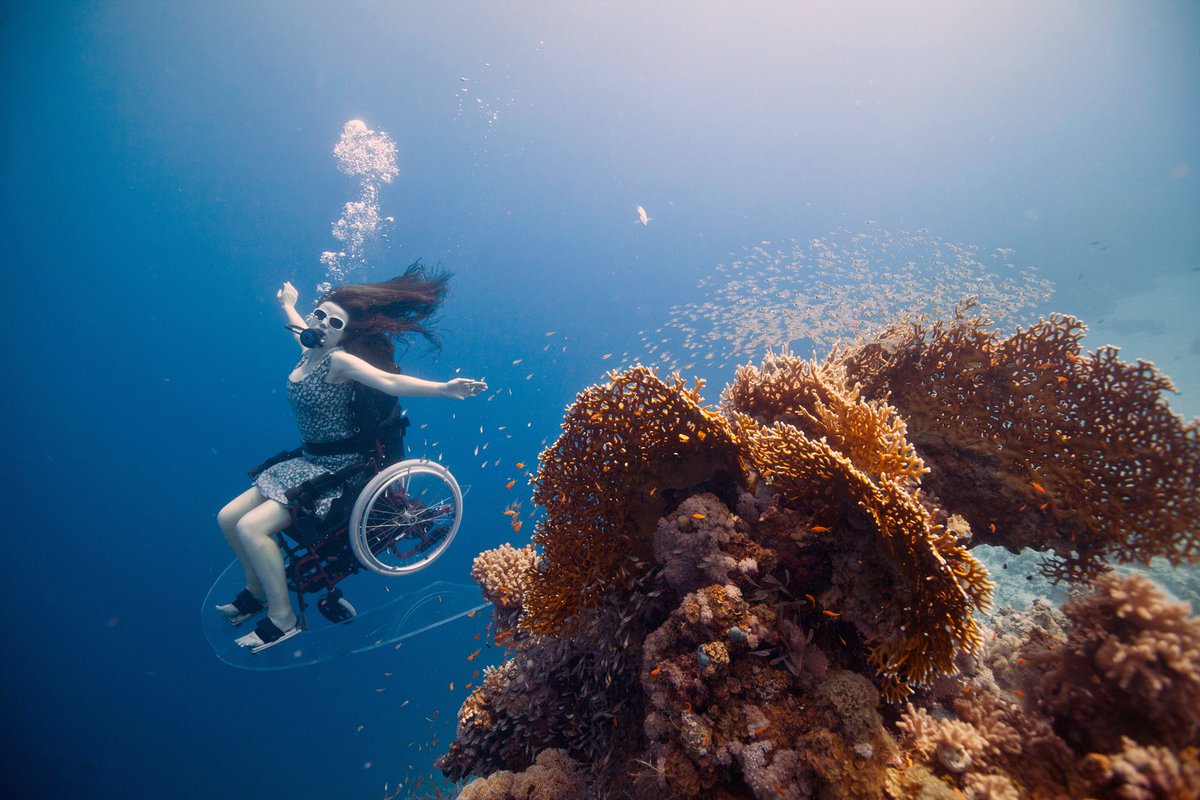
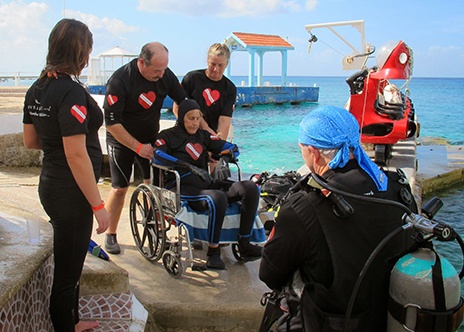
- Underwater Wheelchairs: These are specially designed wheelchairs suitable for underwater use that give divers with mobility impairments an easy time moving on the ocean floor.
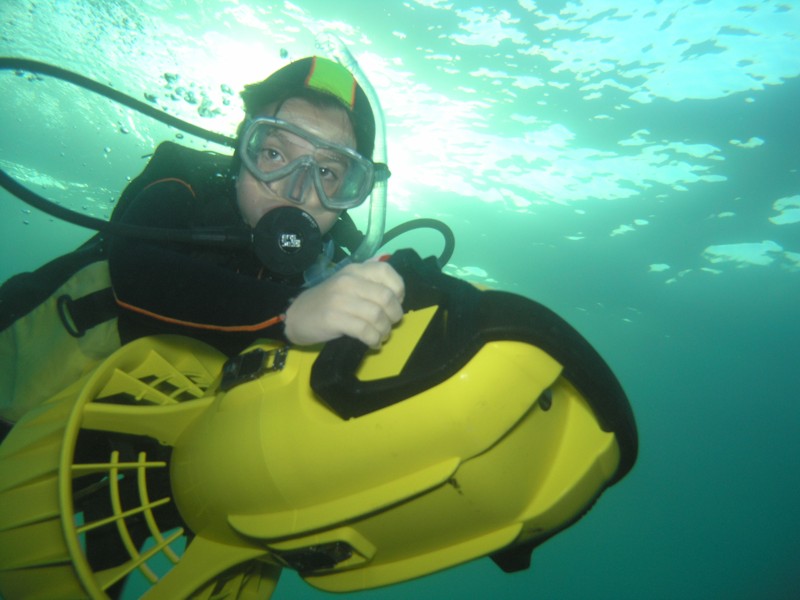
- Human Propulsion Devices: These assist the diver in swimming through the water and are intended for use by those who may have less upper body strength.
Communication Aids
-
Underwater Communication Systems:
- These systems will ensure clear communication between the diver and his instructor or dive buddy, thus allowing for timely alert and response in crucial situations
Training and Certification
Scuba diving adapts to much more than just equipment. To make a safe and competent diver, the process needs appropriate training and certification. Organizations like Disabled Divers International and the Handicapped Scuba Association run specialized training programs for both disabled divers and instructors. These courses include adaptive techniques, emergency procedures, and handling of equipment so that each diver faced with challenges underwater is well-prepared.
Success Stories and Inspiration
There are so many disabled divers who have recorded unsurpassed, remarkable achievements in proving to the world that a person with a disability can equally enjoy the underwater world. For example, Sue Austin is a disabled artist and diver who utilizes an underwater wheelchair to create her beautiful underwater art installations. Her work really shows just how much can be done with adaptive scuba diving.

The Future of Scuba Diving Adaptive Gear
Adaptive scuba diving gear has a bright future based on advancements made in technology and design for use. For example, the increase in underwater mobility will be realized through the improvement in the propulsion systems, communication device enhancement, and the adoption of better materials to make suits and fins. These are but a few developments certain to increase access to diving for the disabled and make their experience even more enjoyable.
The adaptive scuba diving gear is an instrument by which to open up the underwater world to all divers who are disabled. The right kind of gear accompanied by training will get that person into the beautiful underwater environment with a sense of freedom, accomplishment, and adventure like no other. Frontiers in adaptive scuba diving continue widening with further improvements in technology, ensuring all and sundry have a lifetime experience. Happy and safe diving!