In scuba diving, continuous development in technologies and ever-increasing knowledge of human physiology greatly transformed the way divers explore the deep. Further, one of the most important factors that have made this exploration possible, taking into account safety and efficiency in the water, is the variety of breathable gas mixes and corresponding delivery systems. This article investigates three main points of advanced diving further: Nitrox, trimix, and rebreathers.
Understanding the Basics – Gas Mixes
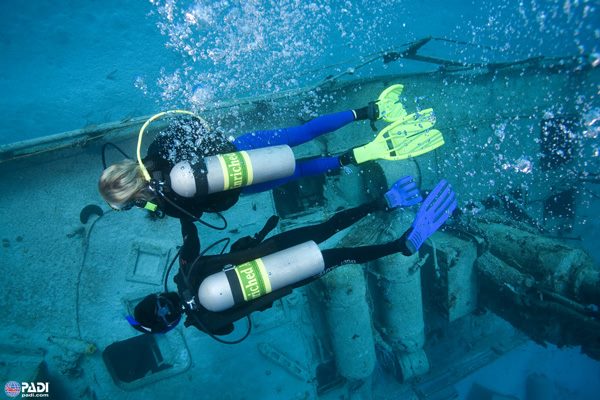
The section shall start by explaining why different mixes of gas are used. For instance, standard air, with a composition of approximately 21% oxygen and 78% nitrogen works well for shallow and recreational dives. At depth, however, a number of significant problems arise that make specialized gas mixes necessary. These include nitrogen narcosis and oxygen toxicity.
Key Challenges Specialized Gas Mixes Address:
- Nitrogen narcosis: a condition during dives beyond 30 meters (100 feet) that can cause stupor or euphoria and impair the judgment of a diver.
- Oxygen Toxicity: High partial pressure of oxygen in your body leads to this effect, which can be life-threatening and cause seizures.
- DCS or Decompression Sickness: It occurs when pressure is suddenly reduced, and it causes nitrogen bubbles to form in your tissues and blood.
Nitrox or Enriched Air is a gas mix consisting of a greater percentage of oxygen-usually 32-36%-and a lesser percentage of nitrogen than the surrounding atmospheric air.
Nitrox Benefits:
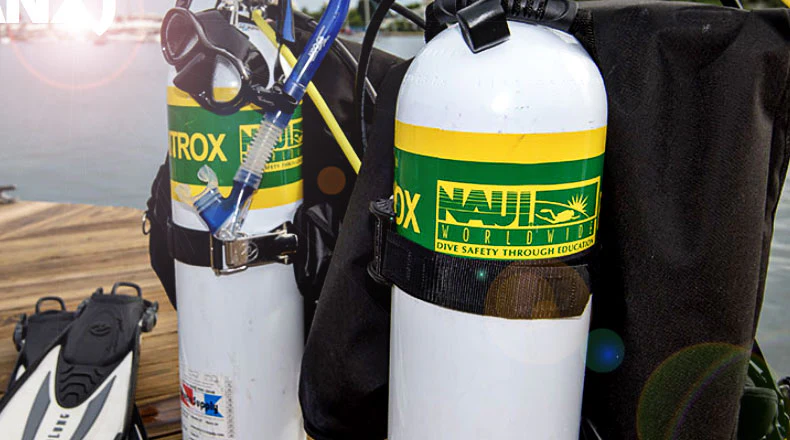
- Extended Bottom Time: Lower levels of nitrogen allow divers longer bottom times at certain depths without reaching decompression limits.
- Reduced Decompression Sickness Risk: Because the nitrogen percentage is lower, less nitrogen is taken into the body; thus, in the case of ascent, fewer bubbles will form.
- Quick Recovery at the Surface: Divers may have reduced levels of exhaustion after the dive since there was low absorption of nitrogen gas.
- Oxygen Toxicity: The added oxygen content shall determine the limiting depth in relation to avoiding toxicity. As an example, a mix of 32% oxygen limits divers to a maximum operating depth of about 33 meters.
Equipment Considerations:
Most dive computers today are designed to handle enriched air mixes by safely calculating their no-decompression limits and keeping exposure to excessive oxygen within acceptable limits.
Trimix: Diving to Greater Depths
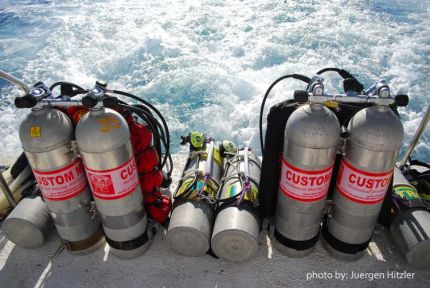
Trimix is a combination of oxygen, nitrogen, and helium for technical divers who work outside the boundaries of recreational diving, generally deeper than 40 meters or 130 feet. The addition of helium is used as a diluting agent to help alleviate the problems created by nitrogen and oxygen at these deep levels.
Components of Trimix:
- Oxygen: Normally lower in percentage to minimize the risk of oxygen toxicity.
- Nitrogen: Lower than in the air to maintain narcosis minimally.
- Helium: Inert, non-narcotic gas added to the mix in order to keep the diver clear-headed at depth.
Why use Trimix?
- Avoids Nitrogen Narcosis: The inert nature of helium will keep the diver much more alert and awake when deeper.
- Oxygen Toxicity Prevention: The reduced content of oxygen allows a diver to operate at extreme depths without complications.
- Safe Decompression: Reduced nitrogen levels therefore reduce the risk of decompression sickness occurring upon ascent.
Limitations:
Complex dive planning: Trimix dives require more detailed planning with very precise calculations of decompression stops. Increased costs: Helium is costly. Thus, trimix diving is an expensive sport. Specialized training: A diver must have an advanced certification to be able to plan and safely execute a Trimix dive.
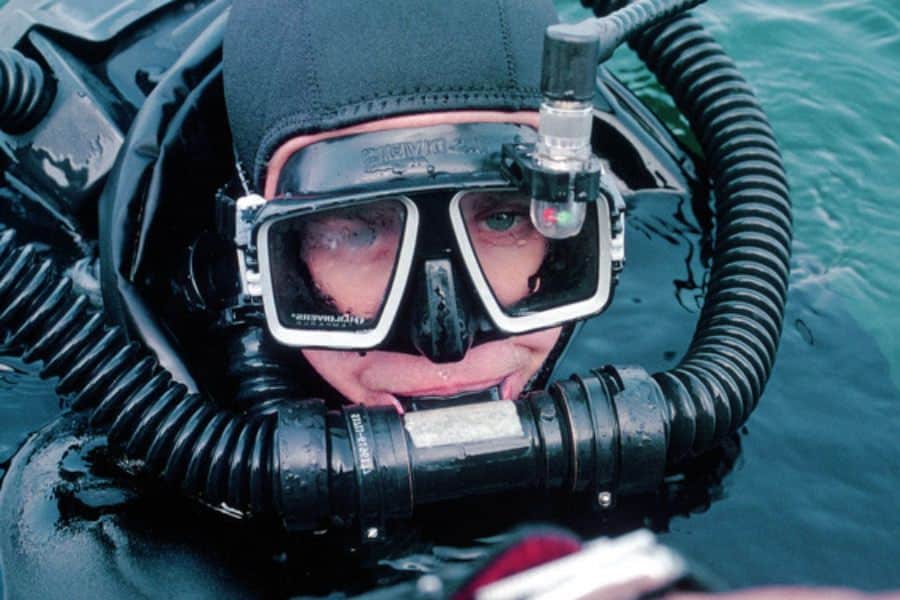
Rebreathers are a quantum leap in diving technology in that they recycle exhaled gas by removing carbon dioxide and replenishing oxygen, making the air supply available for rebreathing.
Types of Rebreathers:
Closed-Circuit Rebreathers (CCR): These maintain a constant, optimum level of oxygen for deep and long-duration dives.
Semi-Closed Rebreathers (SCR): These use a constant flow of gas, possibly simpler but less efficient than CCRs.
Advantages of Using Rebreathers:
Longer Dive Time: Gas consumption decreases as the gas supply is recycled by divers.
Silent and Stealth: Low bubble discharge favors better interaction with marine life, making less noise in the water.
Optimization of Gas Mixtures: Better utilization of oxygen and mixed gases increases the effective radius of the dives.
Challenges and Risks:
- Complexity and Maintenance: Rebreathers are machines that require great amounts of knowledge and maintenance in order to be safely operated.
- Risk of Hypoxia or Hyperoxia: Failure in oxygen control could present dangerous drops or spikes in oxygen levels.
- High Expense: The initial investment cost and maintenance expenses can be very high.
How to Choose the Right System for Your Diving Goal
This would be a matter of a diver’s experience level, dive plan, and, of course, budget. Recreational divers who are interested in extending their bottom time safely may want to consider Nitrox. Those divers who wish to go deeper should seriously consider Trimix. Rebreathers, giving the longest dive times, are best for technical divers seeking long or very specific and challenging dives.
Important Considerations:
- Training: Each of these requires special training and certification.
- Equipment: computers, analyzers, and backup safety devices must all be compatible with the chosen gas mixture or rebreather system.
- Environmental Impact: Regardless of what system is used there is an obligation to dive without causing damage to the marine environment.
Evolution within the realm of breathable gas mixtures and delivery systems has opened frontiers that allow divers safer and more efficient ways to explore the underwater world. From safety enhancement with Nitrox, the deep-reaching capabilities of trimix, and the rebreathers that can prolong dive time, each system offers its own unique advantage. Understanding the technology, along with the prerequisites, allows the diver to make an informed decision that assists in enhancing safety and adding value to the diving experience.