Although scuba diving isn’t considered an extreme activity, there are some challenges you may face while diving. So, if you are ready to take the plunge, but are worried about the challenges you may face, you can keep reading this article to know these challenges and overcome them safely.
We will cover the following points in our subject:
- Equalizing
- Diving injuries
- Mask clearance
- Running out of air
- Buoyancy
- Equipment malfunction
- Entanglement and entrapment
- The danger of marine life
- Getting lost
Equalizing
Equalizing is one of the important challenges you face while diving. It is considered from the first skills to be learned while scuba diving. It is a vital skill that can be natural to some divers and a challenge for others. You must know the best technique for doing and mastering it to avoid scuba diving injuries such as barotrauma and reverse squeezing.
Don’t panic, just train and in no time you will be able to overcome this challenge. Here are some tips to help you:
- Take your time to practice the skill and master it.
- Make slowly ascending and descending.
- If you have any problem with your ears, stop descending.
diving Injuries
You should be familiar with diving injuries you may face underwater, if you have any medical condition, diving injuries might be one of the biggest challenges you may face while diving. so, you should practice safe diving in order to reduce diving injuries.
we can summarize diving injuries in the following conditions:
- Decompression sickness
- Nitrogen narcosis
- Oxygen toxicity
- Hypothermia
- Barotrauma
- Anti-gas embolism
mask Clearance
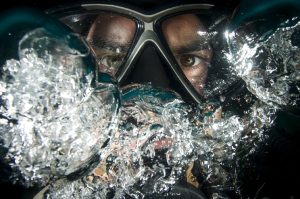
Mask clearance is one of the basic skills you learn at the open water course, as no one likes to have salt water in the eyes. It is a challenge at first, but like any skill, once you repeat practicing it, it becomes second nature. when a small amount of water enters your mask or you forget to defog it before jumping in the water, you should clear your mask in confidence to prevent any panic.
If you are weaning contact lenses, you must close your eyes while cleaning your mask to prevent the salt water from dislodging your lenses.
Running out of Air

- Running out of air is the worst challenge you may face while diving. It is a common challenge that novice divers fall into as they lack training. It may also happen in case of unexpected exertion and equipment failure.
- Being underwater, there is nothing is worse than dragging the last amount of air remaining in the tank through your regulator, but always remember the most important thing in these situations is not to panic.
- You must be aware of the amount of air you need on a dive, how to calculate the limits, and how to know the right time to ascent with enough air in your tank.
- To prevent running out of air while diving, follow these steps :
- Check your SPG regularly.
- Communicate with your dive buddy regularly.
- Apply the rule of thirds: the first third, use it while descending, the next third, use it during the journey, and the last third for ascending.
Buoyancy
Buoyancy is a challenge to beginner divers, but once you practice it and get its ‘knack’ you will be able to move freely underwater without any effort.
Buoyancy is related to how efficiently you maneuver your body in the seawater. It is important because it makes you experience an enjoyable fascinating dive.
Mastering buoyancy takes much time, but once you do the concept and do it with confidence it starts to become second nature. To get that, you should know the right amount of weight you need to have, you will be aware of it by practicing and it is also related to the suit you wear.
Equipment Malfunction
To scuba dive safely, you need your scuba gear to be in good condition. The existence of defecting scuba gear is a risk that can be a challenge you may face while diving so, you must check them regularly.
The common challenges you may face with your diving gear involve:
- O-ring ruptures
- Jamming of your tank cylinder valve
- Regulator malfunctions
Always inspect your equipment at least on the morning of the day you are going to dive in. If you have your own scuba equipment, look after it properly and service it regularly. If you suspect there is something wrong with your scuba gear, rent other gear or just tell your instructor to help you.
Entanglement and Entrapment
Entanglement and entrapment are some of the challenges you will overcome if you have a buddy diving with you. This is one of the challenges that shows you the importance of having a dive knife.n The Divers Alert Network (DAD) reported that about 20% of fatal accidents while diving are caused by entanglement and entrapment.
On diving in shipwrecks, areas containing a lot of vegetation, or caves, you should dive with a partner and carry a dive knife, in case you run into problems related to entanglement.
The Dangers of Marine Life
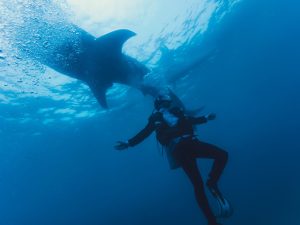
The most important motivation for learning scuba diving is to explore marine life and see its creatures. but as a diver etiquette, remember to never touch anything and not to be so close to marine creatures.
Most marine creatures aren’t harmful or dangerous but on feeling threatened many of them can be unpredictable, so always pay attention to your surroundings not only to protect your life but also to protect the ecosystem of the coral reefs.
Getting Lost

Getting lost from your group can be very scary and make you feel panic. This can happen for two reasons:
- A sudden change in currents.
- You paused for some time to look at something epic
You can carry a compass, whistle, or surface marker buoy(SMB) to overcome this challenge. Remember your dive guide when he said that if you got lost and you didn’t know the dive site well, Search around you for bubbles.
In one minute, if you didn’t see any bubbles or your group members start to ascent and signal your boat on the surface. Always remember to be close to your group or dive buddy and if you get lost, you must remain calm and focus on your safety.