There is no doubt that cold water usually produces very unique dive destinations containing diverse marine life. Warm water divers will shock at first when they try cold water diving, but surely they will get used to the colder temperatures.
In this article, we will give you some helpful tips to be able to enjoy cold water diving rather than missing out.
Tips for Cold Water Diving
In the next lines, there are some tips about cold water diving for warm water divers, our tips will include the next points:
- Exposure suits.
- Weights and tanks.
- Weight distribution.
- Buoyancy control device (BCD).
- Regulators.
Exposure Suits
Warm water divers only need board shorts or a then wetsuit and a rash guard while diving in tropical locations.
When they start scuba diving in colder areas, the first thing they will change is the wetsuit, as they will need a thicker one (at least 5mm or 7mm). They may even need a semi dry wetsuit or a drysuit.
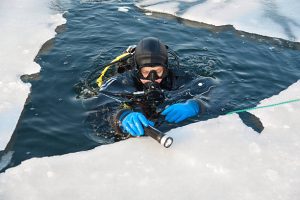
If you are going to dive regularly, don’t forget to buy gloves, booties or socks and a hood, to prevent losing heat through these areas.
Both the type of the exposure suit and the fit are considered important. If you wear a wetsuit that doesn’t have a correct fit, it will let in cold water and will have no benefit at all.
Weights and Tanks
With all these extra thick layers, you will need more weight. Some scuba divers prefer steel tanks for that instead of aluminum tanks in cold waters.
However, aluminum tanks are considered more common in the warm water regions. Using your dive log is considered the best way to know the quantity of weights you will need with the chosen exposure suit. If you aren’t sure, you can ask help from your scuba Instructor or Divemaster.
Weight Distribution
Keeping into consideration that you will be wearing extra weight, you should choose the best way to wear it.
The style of your Buoyancy Control Device will sometimes has an impact on how you wear your weights. For instance the style of jacket BCD having an integrated weight (the most popular).
However, this style may not be able to carry your weights. In this case, you should look for a weight belt or a harness having an additional weight pocket. You have to try out different methods until you find the most comfortable for you.
Buoyancy Control Device (BCD)
When you move from warm water to colder temperatures, you may need to change the style of your scuba diving equipment. In colder areas, scuba divers usually use a donut wing BCD instead of a jacket BCD.
The wing style can help divers streamline their swimming while being underwater and also gives them more space to move particularly when wearing thick layers. This will suit you, especially if you are interested in underwater photography.
Regulators
Once you make the switch to cold water diving, the first thing to do is checking if your first stage regulator has environmental seals.
The importance of the environmental seals is preventing sediment, salt and other contaminants from entering the first stage in addition to preventing the internal components from freezing in cold temperatures. Don’t forget to check the regulator’s rating to be able to assess the amount of temperature which it can withstand.
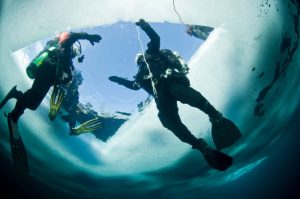
When a scuba diver decides to dive in extreme temperatures, such as ice diving, there are more considerations and preparation that he should undertake.
After finishing this article, you won’t let a little cold water stop you from scuba diving. Just equip yourself properly and you will be amazed about how much you will enjoy practicing cold water diving.