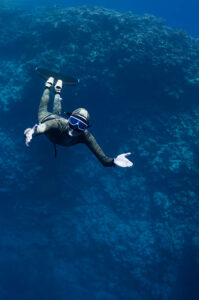
The marine life envelops you as you plunge yourself into the glistening waters of a colorful coral reef. You sense a weightlessness and a harmony between you and the ocean as you glide through the underwater paradise with ease. In what way is this feasible? Every process begins with the weight check, which may appear unimportant at first but is actually quite important. The weight check is the first step in learning how to manage your buoyancy and discovering the mysteries of the deep in the fascinating realm of open-water scuba diving courses.
Comprehending the Weight Check:

Novice divers enrolled in open-water scuba diving courses are taught the weight check process prior to starting any dives. This crucial stage guarantees that divers are appropriately weighed to maintain neutral buoyancy during their underwater exploration.
The diver puts on their tank, mask, buoyancy control device (BCD), and wetsuit before starting the weight check. The fins, on the other hand, are noticeably missing since they affect buoyancy and were eliminated for this evaluation.
As soon as the diver steps into the water, they lay flat on the surface and inhale deeply several times. In this first stage, the diver may determine their natural buoyancy and determine if they are sinking or floating (positive buoyancy).
Fine-Tuning Buoyancy:
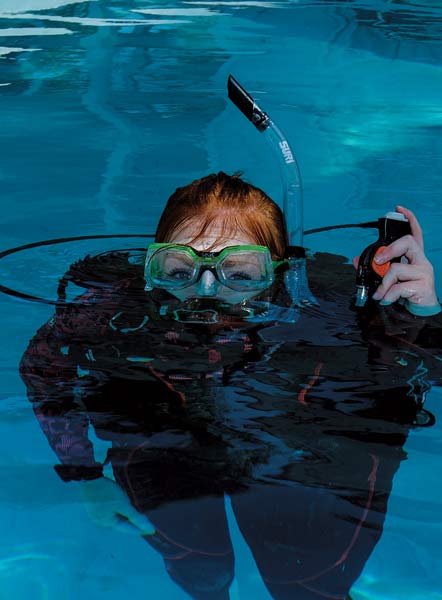
The diver’s weight may need to be adjusted based on the results of their first buoyancy evaluation. To reach neutral buoyancy, the diver may need to add more weight if they are sinking too rapidly. On the other hand, in order to achieve the appropriate balance, some weight needs to be removed if the diver is floating too freely.
During the weight check, adding or removing weight must be done carefully because little changes can have a big influence on buoyancy. Scuba instructors provide guidance and safety assurance throughout this procedure.
Advantages of Suitable Buoyancy
Divers can benefit greatly from mastering neutral buoyancy through the weight check method.
-
Energy conservation: Divers use less energy to stay in their current location in the water column when they reach neutral buoyancy. Longer and more pleasant dives are made possible by this energy saving, improving the diving experience as a whole.
-
Control and Stability: Divers can precisely control their underwater motions thanks to neutral buoyancy. They provide easy navigation in the underwater environment because of their seamless ability to climb, descend, and hover in any direction.
-
Preservation of the Environment: Adequate buoyancy lowers the possibility of unintentional interaction with sensitive marine life and weak coral reefs. By minimizing their influence on the undersea ecology and maintaining neutral buoyancy, divers help to conserve marine species and advance conservation efforts.
-
Safety: The foundation of safe diving procedures is neutral buoyancy. Appropriately weighted divers are more capable of managing emergency scenarios, such as fast ascents or equipment failures. Furthermore, preserving neutral buoyancy during a dive lowers the possibility of decompression sickness and nitrogen absorption.
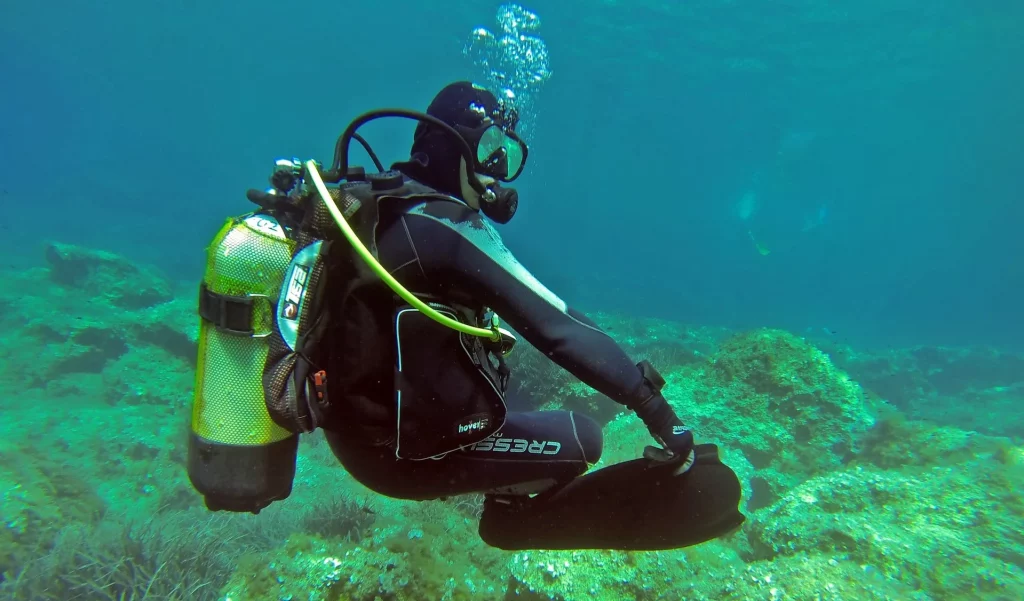
In Open-Water Courses, Useful Application:
Divers consistently hone this talent during their diving careers, and the weight check method is no longer just a one-time evaluation. Weight checks are incorporated into training dives by instructors in open-water scuba diving courses, giving pupils the opportunity to hone their buoyancy control abilities in authentic situations.
Novice divers learn to adjust their buoyancy by trial and error under the supervision of knowledgeable instructors. Divers enhance their confidence in their abilities to attain and sustain neutral buoyancy by practicing breathing methods and experimenting with various weight arrangements.
In open-water scuba diving courses, the weight check technique is more than just a formality; it is essential to understanding buoyancy management and guaranteeing safe, pleasurable dives. Divers acquire neutral buoyancy by painstaking evaluation and adjustment, which allows them the freedom to explore the underwater environment with elegance and accuracy. Divers learn that the weight check is more than simply a procedure while honing their abilities in open-water courses; it’s the gateway to exploring an amazing world under the waves. Thus, keep in mind the simple weight check and welcome its revolutionary potential the next time you go scuba diving to reach new heights in your underwater experience. Happy and safe diving!