Knowing when to seek medical care can feel like walking a fine line—too soon, and you worry about burdening healthcare services; too late, and you risk missing critical signs.
With flu season fast approaching, it’s more important than ever to recognize the moments when professional care is essential. Children and adults often show different warning signs, and the youngest among us may find it difficult to express what they’re feeling.
By learning to spot these signs early, we can protect our health, ease our worries, and ensure knowing when to seek medical care in scuba diving in time..
Warning Signs in Children
Knowing when to seek medical care in scuba diving is vital, especially for children. So, you should know the emergency warning signs that need urgent medical attention, which include:
- Rapid or difficult breathing.
- Turning the skin color to Blue or gray.
- Insufficient fluid intake.
- Intense or persistent vomiting.
- Not waking up or not responding.
- Being too fussy that the child refuses to be held.
- Flu signs get better, then come back with fever and stronger cough.
Warning Signs in Adults
On the other hand, the emergency warning signs in adults that need urgent medical attention including the following:
- Difficult breathing or shortness of breath.
- Feeling pain or pressure in the area of chest or abdomen.
- Sudden dizziness.
- Intense or persistent vomiting.
- Confusion.
- Flu-like symptoms which get better but then come back fever and worse cough.
Medical Attention & Getting Help
If you are unsure if the symptoms which you or another one suffer from are severe enough to warrant seeking medical attention, it’s always safer to assume they might be and seek help.
Depending on the place you live in, many countries have made hotlines since the pandemic of COVID-19 in order to ease the strain on hospitals and prevent any crowd in waiting rooms.
For instance, in the UK, people are encouraged to dial 111 for support, before dialing the emergency services number. In the UAE, you can call the Emergency department at any time at 971547789369.
Why Take the Emergency First Response Course?
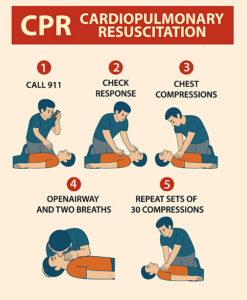
It is a worrying experience when put in a situation in which you don’t know whether to seek medical attention or not. However, learning more about CPR and first aid in addition to knowing the proper way to handle medical injuries, illnesses and emergencies minimizes uncertainty and causes a more confident approach to any situations that may happen.
You can also study the theory part (knowledge development component) of the Emergency First Response (EFR) course online through PADI eLearning.
Enroll Now with DRAR DIVING Center
Take the Emergency First Response Course at DRAR DIVING Center and dive with confidence! Learn vital CPR and first aid skills, become the buddy everyone can rely on, and enjoy expert, hands-on training that keeps you safe in and out of the water.