


You can turn your passion for scuba diving into a career by becoming a scuba instructor or dive master in resorts, cruise ships, or even for liveaboards, but If you are seeking a more challenging and lucrative scuba career without the glitz, commercial diving might be the ideal choice for you.
The commercial diving industry offers a much broader range of scuba diving jobs, and it pays well as a result of the unique and significantly more challenging skill sets required compared to recreational diving.
Training to Be a Commercial Diver
If you’re seeking one of the commercial diving jobs, be prepared for a challenging journey. Commercial diving involves using various scuba diving equipment tailored to specific tasks which is often highly demanding, both physically and mentally. In addition to that, the training required to be a commercial diver is considered quite distinct from that of recreational diving..
To achieve a commercial diver certification, you need to go beyond standard diving certification by enrolling in an advanced commercial diving training program at an accredited dive school.
In the commercial diver course, you’ll need to dive deeper into open water using specialized scuba diving equipment in some of the most challenging and hazardous conditions to earn the necessary certifications (such as an ADCI certification) and qualify to be a certified commercial diver and dive tender.
The training in the Commercial diver course is rigorous due to the high risks involved, and because of that, you should make both your efficiency and safety your priority. Nevertheless, for most professional scuba divers, a career in commercial diving is highly rewarding, thrilling, and financially satisfying.
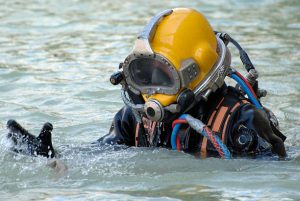
Commercial Diving Jobs
Let’s explore together some popular categories of commercial diving jobs that might be worth considering for your career path.
Offshore Diving
Hard hat diving on offshore oil, gas platforms and pipelines for tasks such as surveying, construction, and maintenance is also a key aspect of commercial offshore diving jobs. This field often demands extra skills, such as underwater welding as well as specialized trade knowledge.
In offshore diving jobs, the work may be extended from hours to several weeks to complete the whole project. Given the extremely harsh conditions, commercial divers need to undergo intense training and utilize specialized scuba diving equipment.
Onshore Diving
Onshore divers, also known as inland commercial divers. Inshore divers perform similar tasks to that in offshore diving jobs, such as ship-hull repairs, welding, and pipeline work, but they operate in smaller bodies of water, such as lakes and rivers..
The role of onshore diverd can also involve salvaging, cleaning water systems, and topside welding, but these tasks are generally less demanding than offshore diving. As it’s much safer, it usually comes with lower wages compared to offshore roles.
HAZMAT Diving
Despite being regarded as one of the dirtiest scuba jobs, HAZMAT divers typically get higher salaries. They handle hazardous materials such as radioactive nuclear waste, raw sewage, and other toxic substances. Their duties may also involve underwater repairs, maintenance, and cleaning, particularly in pipelines and chemical vats.
HAZMAT divers generally use pressurized and sealed rubber suits with integrated gloves to ensure protection and safety.
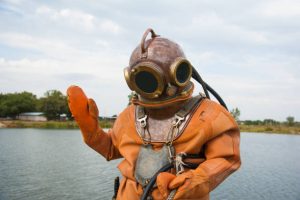
Diving Engineer
Engineer divers are responsible for overseeing underwater inspections related to repairs, construction, salvages, demolitions, and other marine infrastructure. They also plan and manage underwater engineering operations, which often require skills such as surveying and underwater welding.
Media Diving
In this category of commercial diving, roles include professional underwater photography and filmmaking. Media divers are responsible for underwater footage for television and film documentaries. It’s an ideal job for individuals who have a good recreational diving experience and a passion for photography as well as filmmaking.
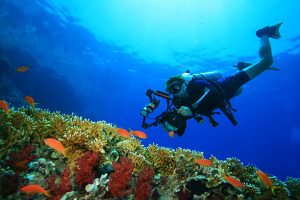
Seafood Harvesting
As the name implies, this job involves divers harvesting seafood like urchins, sea cucumbers, and geoduck clams. The diving work is seasonal, and the earnings are based on the value of the harvested products, which can range from $4,000 to $5,000 or more weekly.
Police Diving
Public safety divers are employed in law enforcement, search and rescue, and similar sectors. Their work involves conducting search operations or rescue missions in various bodies of water, recovering objects like illegal materials, cadavers, and other evidence, in addition to other responsibilities.
Similar to several commercial diving jobs, prior experience is necessary for this position. You should already be in police service and possess scuba certification before pursuing this job.
Military Diving
If you’re currently serving in the military, you can pursue this position. Military diving is highly demanding and ideal for those who thrive in risky and challenging environments, such as sabotage operations, demolition tasks, intensive search-and-rescue missions, and bomb diffusion. It often involves diving in harsh conditions, low-visibility settings, and confined spaces.
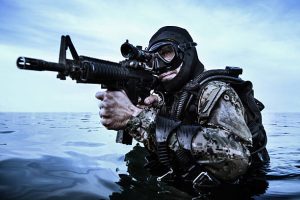
Commercial Diving Jobs Salary
Commercial diving jobs salary in the United States is between $40,000 and $100,000 annually. Factors like experience, location, and the specific diving tasks (such as underwater welding, construction, or inspection) influence this range.
Entry-level divers often begin at the lower end of this salary range, whereas those with specialized skills or extensive experience can command significantly higher earnings, particularly if they work in high-demand regions or take on hazardous assignments. Furthermore, commercial divers frequently receive benefits and might work on a contract basis, which can impact their total earnings.
Other types of commercial diving jobs include vessel salvage, environmental surveying, search and recovery, scientific/research diving, among many others. If you’re keen on exploring more commercial diving opportunities, you can always review the courses offered by top commercial diving schools in the United States.


