Coral reefs are not just vibrant and visually stunning; They are also teeming with life and play a crucial role in our planet’s biodiversity. With their breathtaking colors, unique inhabitants, and mind-boggling facts, coral reefs have captivated scientists, explorers, and nature enthusiasts for centuries. Get ready to embark on a mesmerizing journey as we unveil 11 fascinating facts about these hidden marvels. So grab your snorkel gear, prepare for a virtual underwater adventure, and let’s delve into the astonishing world of coral reef ecosystems together!
Exploring the Underwater World: An Introduction to Coral Reef Ecosystems
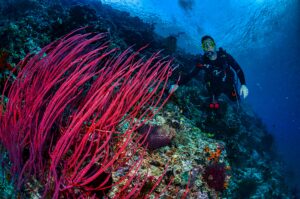
Coral reefs are diverse ecosystems that house a plethora of marine species, and scuba diving is undoubtedly one of the best ways to explore and learn about this underwater wonderland. When you slip beneath the surface and dive into the depths, you are instantly transported into a world buzzing with life. The beauty of scuba diving lies in the unique opportunity it offers to intimately connect with the coral reef and its inhabitants. You can swim alongside colorful fish, watch in awe as corals sway with the current, encounter graceful sea turtles leisurely gliding through the water, and even catch a glimpse of other fascinating aquatic creatures. The experience is truly extraordinary and lends itself to a deeper appreciation for the delicate balance of this enchanting ecosystem. So, grab your gear, take a deep breath, and prepare for an unforgettable adventure into the mesmerizing realm of the coral reef.
Scuba diving offers an extraordinary opportunity to immerse oneself in the captivating world of coral reefs. Not only do these reefs possess a mesmerizing beauty, but they also play a crucial role in maintaining our planet’s health. By providing a habitat for countless species, coral reefs support the intricate balance of marine life. Moreover, these reefs are also frontline soldiers in the battle against climate change, working diligently to absorb excessive levels of CO2 from our atmosphere. Through scuba diving, we have the privilege to explore and gain invaluable insight into these fragile ecosystems. It is during these underwater adventures that we realize the urgent need to protect and preserve coral reefs for the benefit of future generations. As we continue to dive into the depths of these colorful wonders, let us cherish every moment and advocate for their conservation, ensuring that coral reefs thrive for a long time to come.
Enhancing Your Knowledge About the Underwater Environment
Enhancing Your Knowledge About the Underwater Environment
Scuba diving is an incredible adventure that allows you to explore the underwater world like never before. One of the keys to becoming a better scuba diver is gaining a deeper knowledge of the underwater environment. By understanding the natural habitat and behaviors of fish and other creatures in the ocean, you can anticipate how they will behave during a dive. For instance, learning about coral reefs can be truly fascinating:
-
Algae is one of the primary food sources for corals.
Algae are so tiny that they’re a good source of food for little fish, crustaceans, and other creatures. They can protect themselves by hiding in corals and absorbing the sunlight. To obtain energy, algae absorb sunlight and release waste products at the same time. Fortunately, corals like to eat these products, so they get a free meal from their resident algae.
- Where do corals poop? Where do corals eat?
While most corals get about 90% of their energy from algae, they also replenish their energy levels by eating at night. Polyps use their long spines to grab food particles that float on the surface. The polyps then push the food particles into an opening that serves as their stomach and anus.
- Marine rainforests
Coral reefs are one of the world’s most diverse ecosystems. Around 25% of all marine life relies on a coral reef at some point in its life cycle. This includes 4,000 species of fish, as well as a wide variety of plants and animals. Visiting the Coral Triangle is a great way to experience the extraordinary biodiversity of coral reefs. This marine area includes the waters around Indonesia, Malaysia, the Philippines, and Papua New Guinea, as well as East Timor and the Solomons.
-
Nurseries of marine life
Coral reefs are important to all marine life, but they play an especially important role for juvenile (juvenile) creatures. This is because young marine animals are particularly vulnerable to predators, and reefs provide a safe haven to hide from them. Other places to hide as a marine juvenile include Seagrass Meadows and Mangrove Forests.
- Our coastline is protected by coral reefs
If you’ve ever been out on the beach, you know how powerful the waves can be – especially in a storm. Over time, waves can cause coastal erosion through a variety of processes. For example, waves contain tiny particles that grind down rocks as they crash. They can also cause pebbles and objects to collide, breaking them up into smaller pieces. This process is called attrition. Some types of rock can also be dissolved by chemicals in the sea, such as salts and acids. Coral reefs, on the other hand, are natural barriers that protect our shorelines from powerful ocean waves. Coral reefs also act as overlapping mechanisms that protect our coast from floods and storm surges by absorbing the force of these waves. In addition to coral reefs, mangroves are also important barriers to protect the coast. Human activity along coasts and in the oceans has wiped out 20% of the world’s mangroves and 30% of its seagrass bed while wiping out 20% of its coral reefs. This is devastating news for the 680 million people living on or near low-lying coastal areas worldwide.
- Corals are one of the oldest living things on earth
Coral reefs can live for over 5,000 years, making them the oldest living thing on earth. How do you know how old a coral is? The age of a coral can be estimated by looking at its cross-section. This cross-section is made up of many individual corals, each of which grows outwards layer by layer. The layers of growth appear as bands. Counting these bands is how you can predict the age of the coral. This is the same way we can estimate how old trees on land are. How old is a coral? You can find out the age of a coral by looking at the presence of elements in the coral. This can provide information about past climates and key climatic events.
- Some corals can even glow
One of the most amazing things you can see underwater at night is illuminated corals scattered throughout the reef. Some species of corals can absorb light, change color through a chemical reaction, and then emit it as a new color. This is called biofluorescence. The color of the light emitted is dependent on the protein that responds to it. In most shallow-water coral, the green fluorescent protein is the GFP, and the resulting light is green. Other common colors found in shallow corals include orange-red, purple-blue, and yellow, orange, or red. For those looking for fluorescent corals on their next night dive, our top tips include using a UV/blue light torch, using filters for your mask/camera, and avoiding full moon – natural light can visually reduce the fluorescence. Kona Hawaii has some of the best night dives in the world.
- The green fluorescent protein
(GFP) that allows corals to light up was first identified in a jellyfish in 1961, but it wasn’t until GFP was discovered in members of the class Anthozoa (including corals) that its full potential was harnessed. Since its discovery, GFP has been used in medical research. Through the use of genetics techniques, it has been possible to attach ‘glow in the dark’ ‘tags’ to specific proteins. This has enabled scientists to study molecular processes, such as the behavior of cancer cells, and has resulted in significant advances in medical care. Corals Enhance the Marine Medicine Cabinet The structure of some corals has also been used in tissue engineering, and others, such as the soft-bodied Pseudoptera-Gorgia-Elisabethae have produced molecules with antibacterial and antiinflammatory properties. And many more medicines are likely hidden beneath the surface of the ocean, waiting to be found!
- Coral reefs are a major source of income for many industries.
Coral reefs are one of the world’s most popular tourist attractions, attracting snorkelers, anglers, and scuba divers from all over the world. This influx of visitors to coastal areas boosts local economies by supporting local businesses and providing jobs. In fact, reefs around the world generate an incredible $375 billion in economic goods and services each year.
- They need our help!
Coral reefs are essential for the health of marine ecosystems, global food supply, human health, and our economies. However, they only make up less than one percent of our oceans, and their small size and slow rate of growth make them especially vulnerable to threats. The main threats to coral reefs are coastal development, climate change, chemical and plastic pollution, and fishing (e.g. overfishing, destructive fishing, bottom trawling). The effects of these threats are having a devastating effect on coral populations worldwide. By 2050, it is estimated that up to 90 percent of coral reefs will have perished.
So, there you have it – 10 mesmerizing facts about coral reef ecosystems that have left us in awe. We hope this journey has ignited your curiosity and deepened your appreciation for these hidden marvels. From the intricate relationships between coral and its inhabitants to the astonishing size and age of these underwater landscapes, coral reefs truly are a treasure trove of wonder. As you don your snorkel gear and embark on your own exploration, remember to treat these ecosystems with care and respect, as they are not only visually stunning but also crucial to our planet’s biodiversity. So dive in, soak up the breathtaking colors, and let the magic of the coral reef ecosystems continue to captivate your imagination for years to come.