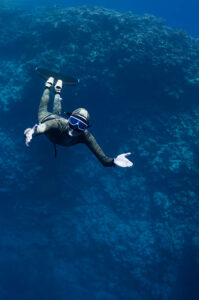
The freedom of movement that you feel while you swim weightless underwater is considered one of the highlights of scuba diving. And much like any skill you begin to acquire, mastering neutral buoyancy is difficult and takes practice. Buoyancy control is regarded from the most challenging skill for scuba divers to master, but it isn’t impossible.
Dive into the tranquil world of neutral buoyancy with these six simple techniques that will guide you to float effortlessly like a weightless astronaut in the vast oceanic cosmos.
6 Steps to Master Neutral Buoyancy
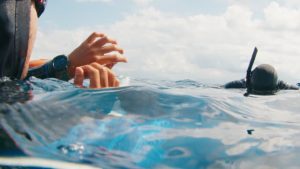
Here are six steps that you can follow to master neutral buoyancy and feel perfectly weightless on your next dive adventure:
- Get your weights right for buoyancy.
- Don’t sink.
- Short and sweet.
- Easy does it.
- Vent on the way up.
- Ask your dive master and train.
Get Your Weights Right for Buoyancy
The most important step to Master neutral buoyancy is to wear the right amount of weight. Most scuba divers wear too much clothing.
Ensure to do a weight check at the surface by floating upright with the regulator in and exhale completely. You should only sink until the surface of the water is at your eye level.
Try to add or remove weights and repeat the process until you get it right. Ensure to record the amount of weight you carry in your log book along with information that is related to your exposure suit and also if you are diving in freshwater or saltwater so that you can refer to it again afterwards.
Don’t Sink
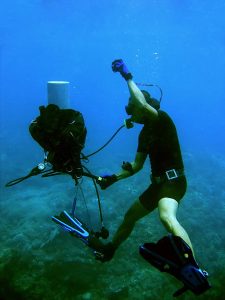
The perfectly weighted scuba diver shouldn’t sink like a stone. It’s a normal thing to feel that you have to exhale, then kick yourself down at first or pull yourself down a line.
Once you become a few feet under you should feel slightly negative or neutral. With this, you can make a slow controlled descent with sufficient time for equalizing your ears and mask. Don’t consider getting down as a race, as safety and comfort must be your priority.
Short and Sweet
If you are negatively buoyant, try to add one or two quick short bursts of air to the BC. Don’t ever hold the inflator button down. If you do that, you will find yourself over inflated which results in making a runaway ascent.
Check the buoyancy after each air burst. Do that by breathing in and out to ensure that you rise and fall while breathing.
Easy Does it
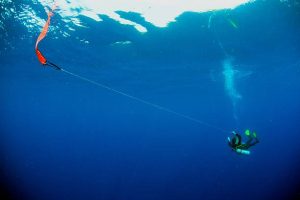
When you feel neutrally buoyant, leave the inflator hose alone and use it as little as possible. Instead of that try to make minor changes in your buoyancy with slow deliberate breathing. take a deep, long breath to rise slightly while swimming over a coral head. If you want to kneel on the Sandy bottom, then exhale slowly and completely.
Vent on your Way Up
As a beginner scuba diver, It seems a natural thing to you to inflate your BCD to ascent. But it’s a wrong practice, don’t forget that air expands while going up and that will make you more buoyant.
Ensure to start ascending by venting some air from the BCD to avoid a runaway ascent situation. Hold the inflator hose up while ascending to be able to continue venting air when you need until you reach the surface.
Ask Your Divemaster and Train
All of the scuba Divemaster and Instructors in DRAR Diving Center are experienced and well-educated PADI professionals.
If you aren’t sure about how many weights are needed or wondering about what can be done to improve your buoyancy, just ask your instructor.
Are you interested in developing your buoyancy skills, take our PADI Advanced Open Water course in which you will train through five epic dives on how to get neutral buoyancy under the subdivision of one of our professional PADI instructors.