


Our relationship to the ocean is very important because without it we wouldn’t exist. We are physically connected to the ocean with every drop of water with drink and every breath we take. The algae that is found in corals convert the carbon dioxide we exhale to oxygen.
That’s why we must be careful about our interactions with the environment. Environmental anthropologists, sociologists and psychologists around the world are studying the different ways that Scuba divers affect oceans.
Human Industry and Activity
Almost all human industries are essentially water-based such as, closing, forming, food production, fishing, transport manufacturing, etc… water is essential for animals, making packaging and also for growing plants. Management of water supply has a great role in changing the surface of the earth through diversions, reservoirs and dams.
While our waste flows to the oceans some of these products are washed directly down the drains, for example, cleaning products, sunscreen and personal hygiene. The ability of making anything we want has led to increasing disposable items which include single-use ones.
Humans need water for almost all their activities and unfortunately taking water and returning waste isn’t sustainable. That’s why the local farming and the fishing communities around the world are coming into direct contact with these issues. People’s need for food and clothes prompts governments to launch initiatives to care for the oceans. The question here is how scuba divers affect oceans and help these initiatives.
How Scuba Divers Affect Oceans
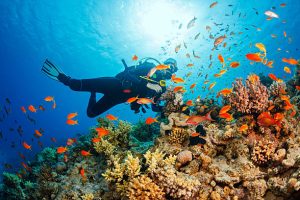
Scuba divers affect oceans in various ways. Simply, scuba divers can share what they see underwater with people on social media and talk with their friends about their passion for the underwater World. This can make a bigger difference than you think.
In addition to that, they can leave reports about the Dive site they visit on the Dive against debris app. However, there are some behaviors that can cause damage to the ocean habitat.
These behaviors can be poor buoyancy control or finning, as this can affect badly on the dive site. Actually, a moment of carelessness can destroy coral reefs that have been growing for hundreds of years.
There are many incidents of intentional destruction or vandalism that have been recorded. You must know that when you feed or touch marine creatures, this can change their habits and affect their health badly.
Marine Tourism
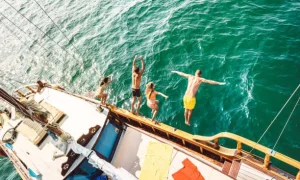
Ecotourism becomes increasingly popular. Becomes passionate about learning about different environments. There are many things that become available to help you preserve marine life, such as:
- Taking courses in Coral habitats.
- Participating in restoration projects.
- Collecting data on some species of marine life.
In some communities, the different interaction with marine creatures has attracted many tourists around the world. This altered the financial drivers on human activity. When people being informed means that they can choose which organizations to support.
Our interaction with the environment of the ocean is important and you should know that almost all of our actions have an impact on this. When we understand how ocean affects us and how our behaviors affect the ocean we can be more careful about consequences of our actions and how our choices, even the small ones can make a difference


