Diving and flying are considered overlapping activities. Although all open water courses warned of the dangers of flying after diving, divers still have some questions on the topic. In our article, we will try to cover all the aspects related to flying after diving, so stay tuned.
Why is Flying After Diving Dangerous?
The main concern about flying after diving is the risk of decompression sickness. If you have a scuba certification, you surely learn that your body needs adequate time during your ascent to be able to get rid of the excess nitrogen in the blood. Forming bubbles during fast ascents possibly leads to decompression sickness.
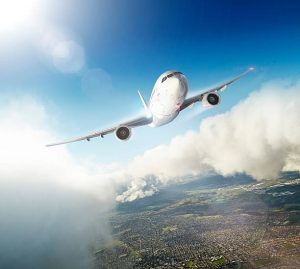
Directly flying after diving has the same effect of a fast ascent from a dive, as the cabinet of the plane has a decreased ambient pressure that can cause the residual nitrogen in your blood to come out rapidly and create nitrogen bubbles. So, it is necessary to stay at the ground level before flying, as it is like a decompression stop.
Doesn’t the Airplane Cabin Have Constant Pressure?
If we are talking about a typical commercial jet, its cabin will be pressurized to approximately 8000 feet. This pressure decreases from sea level by 25 percent. If you are at sea level and your body is still off-gassing, then you boarded a plane, this decrease in pressure could be enough to make you suffer from decompression sickness.
Flying in Small Planes
Many small personal or chartered planes don’t have pressurized cabins and can regularly fly higher than 8000 feet. The pilot also can easily hit up to 16000 feet in the plane’s unpressurized cabin where any oxygen requirements aren’t effective. This extra decrease in the atmospheric pressure will enhance decompression-related symptoms.
How Long Should You Wait Before Flying?

Briefly, there isn’t a specific time to be the answer of this question, as there are many considerations to put in mind before deciding to fly after diving, such as:
- The number of dives you take during your trip underwater.
- The type of dives and their patterns.
- Type of air you used underwater.
- Diver’s general health.
- The age of the diver.
- The maximum altitude of your flight, etc…
If you are looking for the famous diving organizations’ recommendations on safe intervals before flying after diving, read the next point to know:
- PADI and DAN recommend a minimum surface interval of 12 hours after single dives.
- For repetitive dives and multiple days of diving, PADI and DAN recommend waiting at least 18 hours before flying.
- NAUI recommends a surface interval of 24 hours after any type of diving.
- Refer to the dive tables of the U.S Navy altitude, if you want details about the more structured diving, as you will find the exact surface interval for every Repetitive Group Designator and flying to a specific altitude.
- The FAA’s Airman’s Information Manual (AIM) also indicated in its section “Decompression Sickness After Scuba Diving” that a diver should have a surface interval of 12 hours before flying to 8000 feet after the dives that don’t require controlled ascents, and 24 hours before flying above 8000 feet or after the dives that require controlled ascents.
a worried person may wonder about the best course of action, before answering, we must illustrate something:
- Research shows that the probability of developing decompression sickness is around 1 percent if we are talking about a surface interval of 12 hours.
- For the surface intervals between 12 to 24 hours, the percent will be 0.004.
Therefore, it will be good practice if you have a “day down” before flying after diving. If you want a better plan, two days will be an excellent choice, especially if you did any repetitive, decompression or deep dives.
There is nothing worth putting your life at risk, especially if it is just to make the most of your holidays. Make your safety a priority by planning a day off and take it as an opportunity to explore the attractions of the city or do other cool activities.
Using a Dive Computer as a Helping Tool
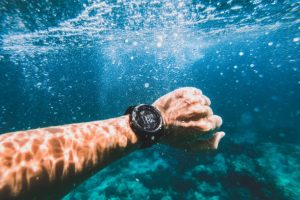
You can use modern dive computers to help you determine the time required for your surface interval, as many of them have a “time-to-fly” feature that shows the recommended surface interval after a specific dive in two different ways:
-
Arbitrary Countdowns
This way doesn’t require any calculations, since they are clocks that remind you of the rule of the twelve hours or the other of the twenty-four hours.
-
Calculations to Desaturation
These computers use no-decompression algorithms which calculate the time to total desaturation and use it as a time to fly.
Although the second way isn’t realistic, it isn’t very practical in terms of planning because different dive computers use different decompression algorithms, and that depends also on the profile of the dive.
If you want to use a dive computer to calculate the surface intervals before flying after diving, just remember to use the same dive computer in every dive to make sure that calculations will be done accurately because they are based on the number of dives, the depths, and the diving times.
Hiking or Driving to High Altitude After Diving
Actually, driving or hiking to high altitudes after scuba diving will have the same risk of flying after diving because the problem basically is the occurring decrease in the ambient pressure.
You should put that in mind, as in many popular destinations like Bali, South Sinai in Egypt, and the Canary Islands, there are many activities that are done in their mountains, so if you plan to do any activity that will cause a higher change in altitude, ensure to wait enough time after diving.
What about Diving After Flying?

Diving after flying doesn’t cause a decompression problem in itself. That is why you won’t find guidelines for the time to do your first dive after flying. The problem here is related to your fitness to dive, as air traveling for long distances seems to be tiring in addition to dehydration and exhaustion.
This can -in turn- affect your safety and performance while scuba diving, so, you should wait for some recovery time to ensure you are ready for your adventure underwater.