Air consists of a mixture of gasses in certain proportions, oxygen and nitrogen gasses have the largest proportion, and the rest includes small quantities of other gasses. Every gas of which has a specific partial pressure which is based on its concentration in the air. In high pressures Gas Toxicity may occur.
Gas Toxicity can occur during diving causing harmful effects. This toxicity can occur from several gasses, such as oxygen, nitrogen, carbon monoxide or carbon dioxide. Keep reading to get more information.
Oxygen toxicity
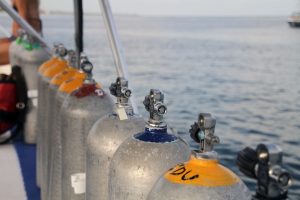
Any scuba diver can suffer oxygen toxicity while diving when it’s partial pressure reaches 1.4 atmospheres. Theoretically, if you are breathing 100% oxygen, you will reach 1.4 atmospheres if you are at 4 meters deep. At normal proportion of oxygen (21%), you can reach this toxic level of partial pressure at a depth of 57 meters. Although you can rarely get oxygen toxicity in a hyperbaric oxygen chamber even if its partial pressures reached 2.8 atmospheres, using inappropriate concentrations of oxygen underwater puts divers in higher risk of this problem.
Symptoms include:
- Tingling.
- Focal seizures (lip, facial or limb twitching in one side).
- Vertigo.
- Nausea.
- Vomiting.
- Constricted vision.
- Seizures or fainting causing drowning (about 10% of people).
Preventing this type of Gas Toxicity depends on using special gas mixtures in your scuba tank and requires more special training.
Nitrogen Narcosis

It is also known as rapture of the deep and occurs as a result of the high partial pressure of the nitrogen gas. Its symptoms resemble the symptoms of alcohol intoxication which include:
- Euphoria.
- Disorientation.
- Poor judgement.
on having this problem, divers may fail surface in time if they didn’t receive help, as they may swim more deeper while thinking the are going to the surface as a result of poor judgment.
Nitrogen narcosis can occur at a depth of 30 meters. On breathing compressed air, you can get the symptoms at 90 meters.
To prevent this case from occurring, use a special mixture of gases instead of regular air at great depths. Using heliox scuba tanks (a mixture of low concentration of oxygen that is diluted with helium instead of nitrogen) can help you prevent nitrogen narcosis, but remember to ascent in a slow rate to avoid decompression sickness.
Carbon Monoxide Toxicity
Carbon monoxide is a combustion product and doesn’t enter the scuba tank except by subsidence in one of two ways:
- If you placed your air compressor intake valve so close to the engine exhaust.
- If the lubricating oil in your compressor becomes hot enough to produce carbon monoxide.
symptoms in most cases include:
- Nausea.
- Headache.
- Weakness.
- Clumsiness.
- Confusion.
Symptoms in severe cases include:
- Seizures.
- Loss of consciousness.
- Coma.
To make carbon monoxide diagnosis, make a blood test as soon as possible, carbon monoxide’s level in blood decreases by time.you can also test your oxygen supply whether it contains carbon monoxide or not.
Oxygen is given to eliminate high blood levels of carbon monoxide, but this doesn’t help in treating damaged organs in many cases. In severe cases, patient will need high-pressure oxygen therapy in a hyperbaric chamber at a medical center.
Carbon Dioxide Toxicity

Our body releases carbon dioxide in the exhaled air. Carbon dioxide toxicity can occur due to many reasons including:
- A diver’s breathing doesn’t adequately be increased during exertion.
- At great depths, the compressed air becomes denser and requires greater effort from a diver to move it through the breathing apparatus and airways. as a result, some divers retain carbon dioxide until the toxicity from it occurs.
- A diver may reduce their breathing rate voluntary to conserve air. That causes building up if carbon dioxide in the blood.
- A malfunction in the rebreathing apparatus.
Increasing carbon dioxide levels in the blood is your body’s signal to breathe. Divers, like snorkelers, who don’t use a breathing apparatus and just hold their breath, breathe vigorously, as before they dive, they breathe out a large amount of carbon dioxide and inhale less oxygen.
This technique allows them to swim underwater longer while they are holding their breath because of the low levels of carbon dioxide.
However, this technique is also hazardous, because they may lose their consciousness as a result of running out of oxygen before carbon dioxide levels are high enough to signal the need to return to the surface to breathe.
This technique and its consequences is believed to be the reason some divers (who hold their breathe while diving) drown without specific reasons.
There are many symptoms of carbon dioxide toxicity, including:
- Difficult in breathing.
- Nausea.
- Headaches.
- Flushing.
- Vomiting.
- Blackouts.
- Seizures.
carbon dioxide toxicity can also worsen the severity of nitrogen narcosis. So, slowly ascents is recommended to gradually decrease carbon dioxide levels. Scuba divers who continuously suffer from headache after diving should modify their diving techniques.