Material Science and Structural Engineering in Scuba Tanks: High-Pressure Air Cylinders
But scuba tanks, or high-pressure air cylinders, are the lifeline of every diver because they maintain a compressed supply of breathing gas that enables exploration underwater. These cylinders are designed to be literally at the heart of diving activities and are engineered to cope with the high pressure of the high-pressure gas storage that is associated with the underwater environment. Materials and structural principles of engineering involved in scuba tank designs give a good overview of the world of safety, performance, and innovation that supports divers at all levels.
The contribution below deals with the materials involved, structural integrity considerations, and safety mechanisms to make high-performance scuba tanks.
1. Materials in Scuba Tanks: Aluminum and Steel
There exist two basic types of materials used in making scuba tanks: **aluminum** and **steel**, each having its variant of advantages and trade-offs regarding performance, durability, and weight.
Aluminum Tanks
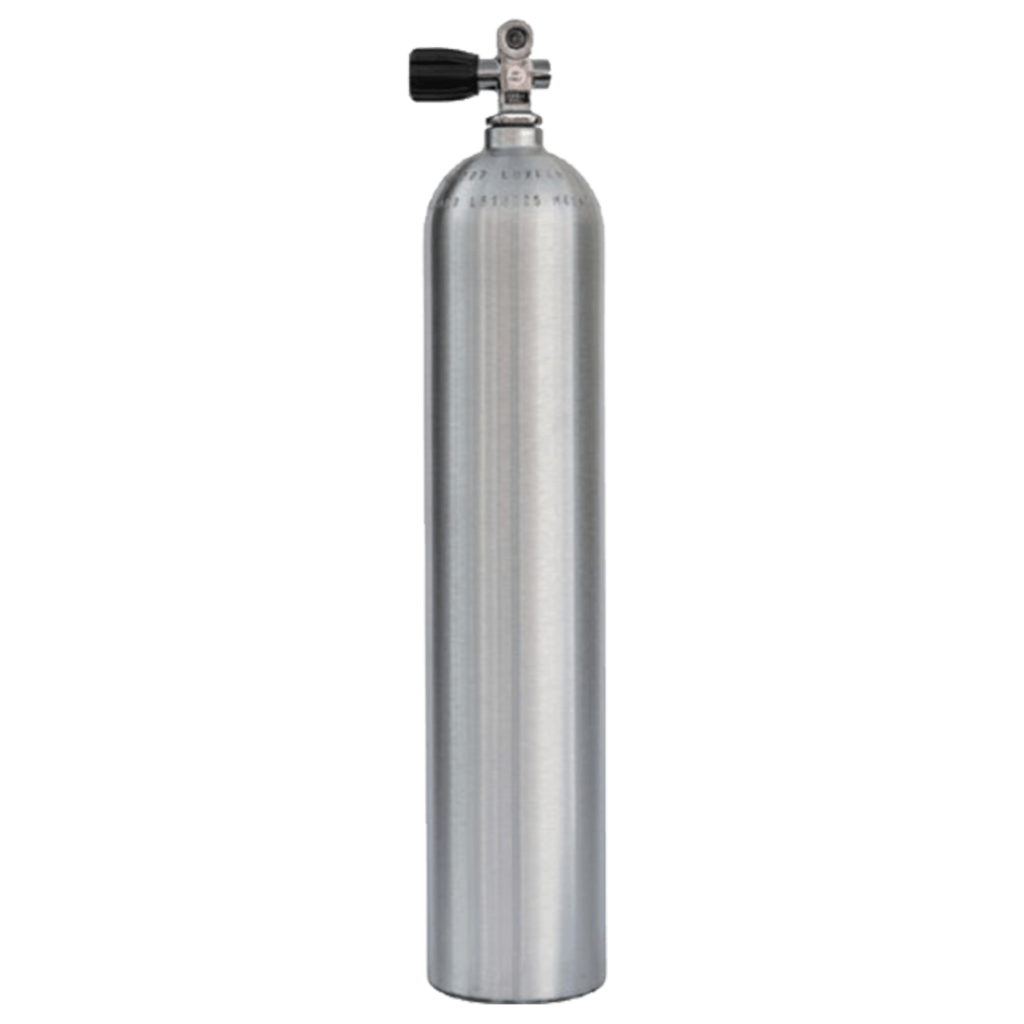
Aluminum scuba tanks are lighter in weight and resist corrosion; thus, they are popular for recreation dives. These tanks are manufactured from very superior quality **6061-T6 aluminum alloy** that is lightweight and very strong. An aluminum scuba tank is manufactured by extruding a solid billet of this alloy, heating it, and forming it into a cylindrical shape.
One disadvantage with aluminum is that the walls must be thicker than those made of steel for the same pressure rating. This thickness also makes the tanks slightly more buoyant, meaning divers can use less weight to achieve the same neutral buoyancy. Due to the increased thickness of their walls, these tanks are bulkier, which reduces their maximum pressure rating to about 3,000 psi or 207 bar.
Steel Tanks
High-pressure and volume requirements among divers are best served by stainless steel tanks made from resilient carbon steel alloys. Unlike aluminum, steel allows thinner walls without sacrificing strength. Relatively smaller in size, these types of tanks have a capacity of 3,442 psi (237 bar).
Steel will corrode more easily, particularly in saltwater; however, manufacturers use **zinc coatings** and other anti-corrosive treatments to protect these tanks. Other merits of steel tanks include that they tend to be negative buoyant which appeals to divers who need more weight to have stability in the water.
2. The Structural Engineering of High-Pressure Cylinders
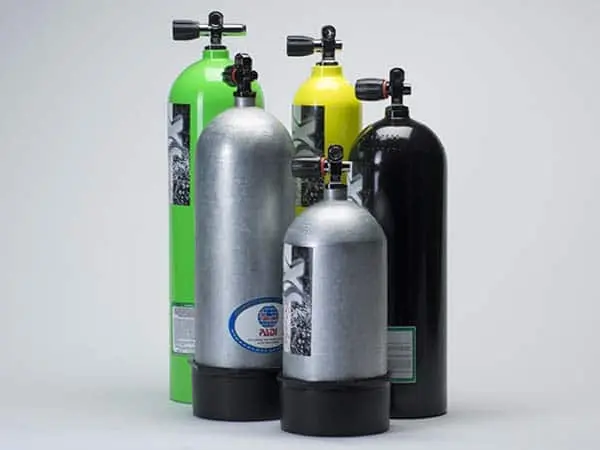
There are enormous stresses on them because of the pressure inside a scuba tank from the compressed air. The engineers involved in their design would then need to pay attention to detailed wall thickness, manage the influence of tensile forces, and use materials tested for pressure that can support numerous filling cycles.
Wall Thickness and Stress Management
The internal pressure of a scuba tank imparts hoop stress or circumferential stress on the walls of a cylinder. For this reason, engineers carefully determine the required wall thickness in an effort to balance weight with structural integrity, to avoid any deformation or rupture due to high pressure. The thickness of the tank walls also has much to do with how well the cylinder will resist impacts on important things at times in transportation or in cases of accidental drops.
Dome Design to Distribute Stress Evenly
The ends of scuba tanks are dome-shaped closures to distribute stress naturally. Unlike flat ends, in a domed structure, there are no weak points as the pressure is equally distributed along all directions of the wall of the tank, thus reducing the possibility of failure due to high internal pressures.
Burst Disk for Safety
To reduce the risk of over-pressurization, all scuba tanks have a **burst disk** fitted to the valve. The burst disk is a thin metal disk engineered to burst if the internal pressure exceeds the maximum limits of the tank. This designed failure point negates the possibility of a catastrophic explosion of the tank; instead, gas can safely vent.
3. Advances in Composite and Carbon Fiber Tanks
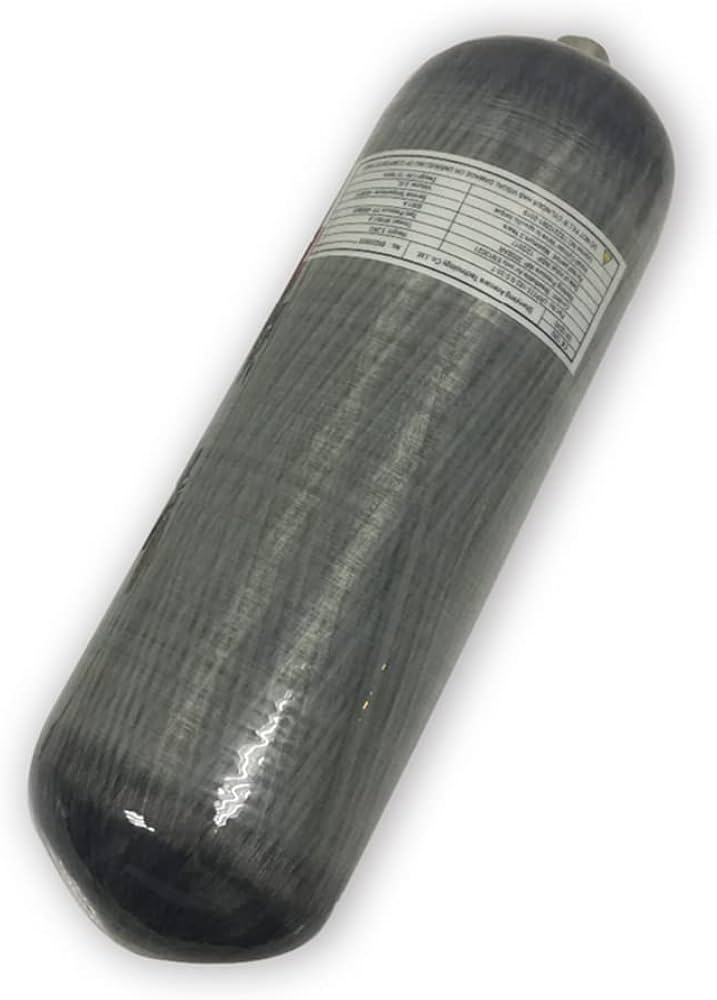
While steel and aluminum are the norms for scuba tank manufacturing, new developments are stretching the conventional limitations of these metals. **Composite and carbon fiber tanks** are now coming into the market, particularly for niche uses.
Composite tanks are made by applying layers of high-strength material over a thin metal or polymer liner. Such construction is extremely light yet sufficiently robust for very high pressures, up to 4,350 psi -300 bar and above in many cases. Composite materials tend to spread the stress load efficiently, allowing thinner walls without sacrificing safety.
The major disadvantage of composite tanks is that they are much more expensive and must be inspected more frequently since they are more susceptible to impact damage. However, due to their lightweight, they are very suitable for technical diving or even military applications where weight reduction is very crucial.
4. Corrosion Resistance Internal Coating
As a matter of fact, corrosion is a persistent problem with scuba tanks, especially in or around saltwater locations. In an attempt to increase the life span of such tanks, their internal surfaces are coated with special forms of **internal coatings**. In the case of steel, for example, zinc or epoxy coatings block off the corrosion sites where rust might otherwise start and gradually weaken the tank walls, making failure more likely.
In aluminum tanks, **anodization** is applied as a method to improve corrosion resistance. Anodization transforms the aluminum surface into a resistant and corrosion-resistant layer of aluminum oxide. This protects not only the tank but also avoids particulate contamination in the compressed air for cleaner breathing air for divers.
5. Hydrostatic Testing and Quality Assurance
Testing methods are very rigorous for high-pressure scuba tanks both in manufacture and throughout the lifetime of the tank. The most important test would be that of **hydrostatic testing**, where a tank is subjected to 1.5 times its rated working pressure.
Hydrostatic testing involves filling the tank with water at a pressurized level. If the expansion of the tank surpasses acceptable limits, then it shall not be safe for use. Most tanks are supposed to undergo hydrostatic tests once every five years, although some regulations and manufacturers require testing every three years to make quite sure that the tanks are able to endure repetitive stress without losing structural integrity.
Besides hydrostatic testing, other methods of testing that are included in this category involve **ultrasonic and radiographic inspection**, which the manufacturers do for the detection of possible cracks, dents, or weak spots that may appear and bring about premature failure.
6. Valve Design and Airflow Control
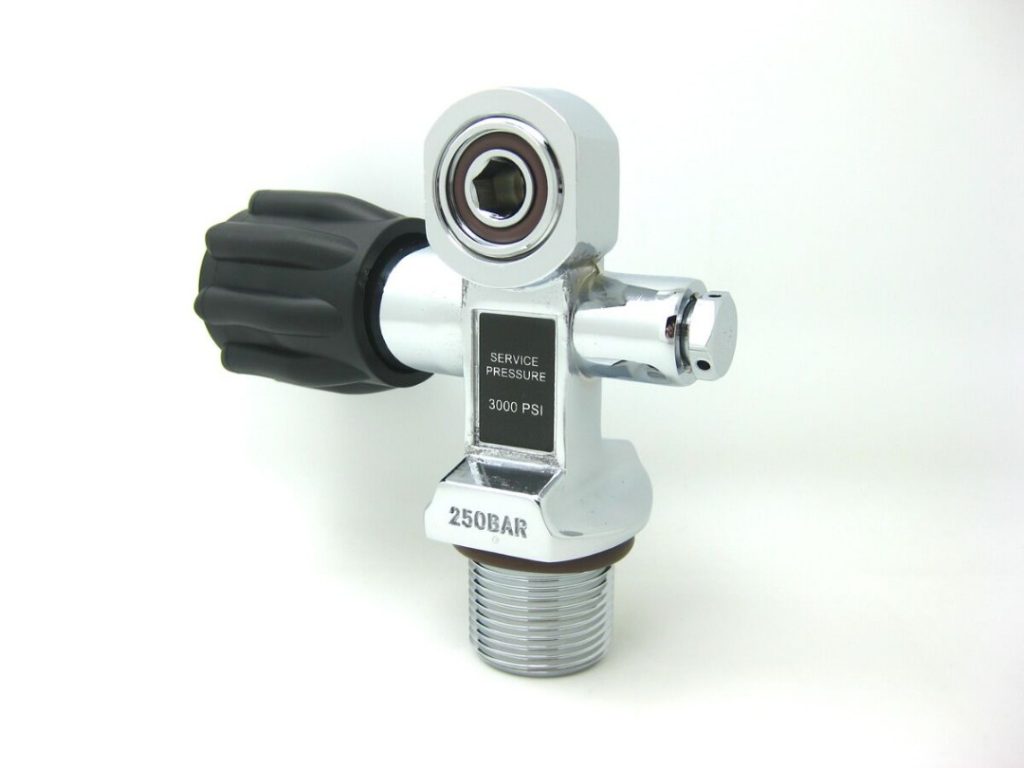
The valve is an essential part of the scuba tank in that it allows for the controlled release of air and interfaces with the regulator, which supplies the diver with breathing gas. Valves are usually manufactured from **brass** because this allows very good resistance to corrosion, especially when coated with chrome.
Modern valves are designed with systems like **DIN (Deutsche Industrie Norm)** and **Yoke (A-clamp)**. DIN valves screw in, thus offering a tighter seal that holds under higher pressures-just the thing to do a bit of technical or deep-sea diving. Yoke valves are the common valves in recreational diving. A little simpler but perhaps not as able to handle very high-pressure ratings as is the DIN valve.
Also, modern valves are able to support modular attachments such as dual-outlet manifolds for multiple regulators or configurations that can be used by divers for redundancy, widely encountered in technical diving.
The Future of Scuba Tank Engineering
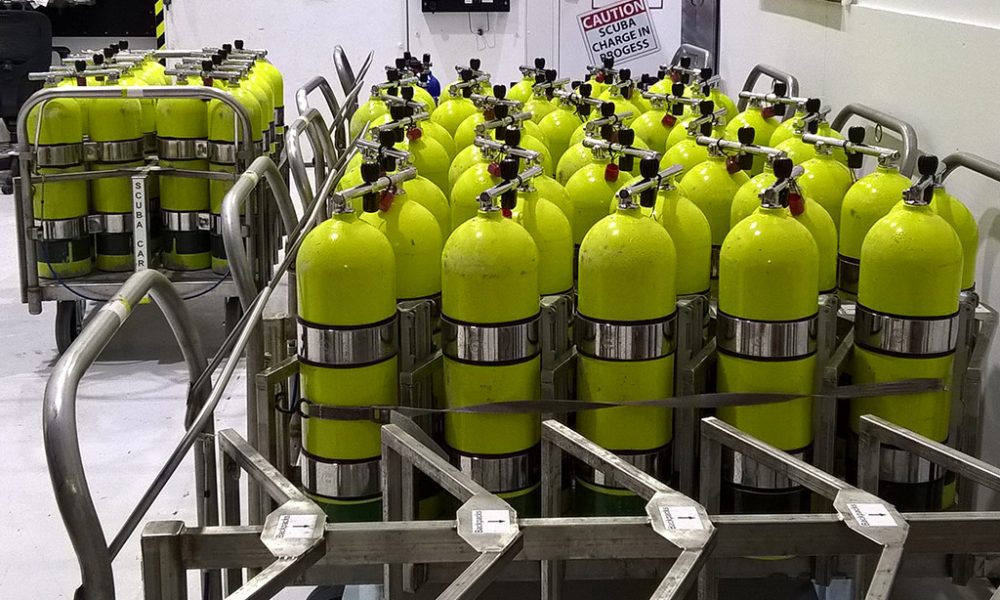
Engineering scuba tanks are constantly improved with new materials, enhanced safety features, and better designs to support most advanced diving needs. The research in the field of **nanostructured materials** could result in lighter, stronger, more corrosion-resistant tanks to allow much longer, safer dives with minimal maintenance.
In addition, as diving continues to be an increasingly popular sport, other types of tanks being researched feature **smart monitoring systems**. In such a tank, sensors would track pressure, temperature, and integrity, and could automatically warn a diver about any potential problems well before they could become actual dangers. Again, this is just another enhancement to divers’ safety.
A scuba diving tank is much more than a container of air; it is complex, high-performance gear made with precision engineering and carefully selected materials. Those made from aluminum, steel, or advanced composites bring essential life support to divers while exploring underwater environments. Continuing advancements in material science and structural engineering will allow scuba diving tanks to remain in step with the challenging performance requirements set by modern diving.