The moment you take a deep breath and slip beneath the surface, your body begins an incredible transformation. Freediving triggers ancient survival reflexes that slow your heartbeat, redirect blood flow, and unlock hidden reserves of strength and calm.
What feels like silence and stillness on the outside is, in reality, a fascinating symphony of changes within. In this article, we’ll dive into **The body’s reaction to freediving**—and why these natural adaptations make the sport both mesmerizing and uniquely human.
The Physiology of Freediving
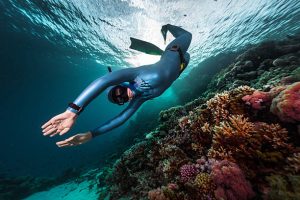
Training for elite-level freediving depends on a complicated set of factors, including mental readiness, genetics, and physiological manipulations. Before deciding to delve into this adventure , it’s essential to understand The body’s reaction to freediving and the physiological changes during a breath-hold dive:
Lowered Heart Rate
A lowering in the heart rate, which is referred to as bradycardia, is considered part of the “mammalian diving reflex” — which dolphins and whales depend on for their extended breath-hold diving. Freedivers who practice relaxed breath-hold diving, their metabolic rate is reduced to conserve oxygen stores.
Fluid Shift
When your body immersed in water (even at the surface) fluid shifts from extremities which raise the amount of blood volume in the chest. That, in turn, helps protect the lungs by counteracting the squeeze that occurs as gas volumes compress during a vertical dive.
Prioritized Blood Flow
When you minimize physical effort, blood flow and gas exchange are directed to the brain rather than working muscles.
Body Cooling
Metabolic rate is closely related to the temperature of the tissue. Low exercise intensity and cooler peripheral tissues slow the metabolic rate.
Take into considerations, though, that this effect can be reversed if cooling triggers shivering. Shivering can raise the metabolic rate up to five times above resting level.
Physiological Adaptations of Repetitive Freediving
- Increased CO2 Tolerance: Practicing freediving regularly improves the ability of your body to handle high levels of carbon dioxide, which enables you to take longer breath-holds.
- Increased Lung Capacity: The lungs adjust to hold more air, but only up to a limit.
- Enhanced Oxygen Management: The body improves its ability to use and transport oxygen.
- Stronger Underwater Vision: The eye muscles adapt to constrict pupils besides increasing light refraction, which in turn increases vision underwater.
Mental and Physical Effects of Freediving
Freediving doesn’t just test the body—it also shapes the mind. Here’s how it impacts you both physically and mentally.
Reduced Stress:
The focus and immersion of freediving offer a mental reset, easing stress and working like a digital detox.
Improved Flexibility and Joint Health:
The water’s hydrostatic pressure evenly distributes pressure. This in turn reduce strain on joints and improving range of motion.
Increased Fitness:
The physical requirements of freediving can help you acquire overall fitness and a longer, healthier life.