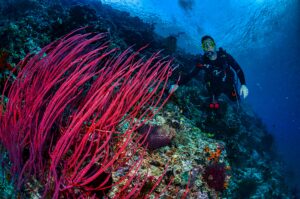
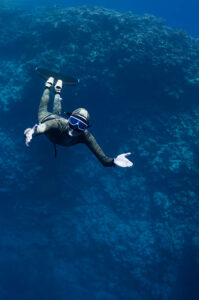
The more you discover about scuba diving, you shall find out that it’s less dangerous compared to a lot of non-water sports. People might think it’s safer than that! Like skydiving for example. And believe it or not, among the most thrilling and adventurous sports, scuba diving is the least of the fatal deaths statistics.
You could hurt yourself while playing soccer, riding a bike, using a skateboard or even riding a speed race car! So irreplicable, it’s not life threatening to take up scuba diving as your thrilling hobby!
So far diving is not a rigorous sport. Divers do not participate in dangerous activities. you do not have to be in fantastic shape to participate. Being a competent swimmer helps you control your buoyancy and be more stable underwater as it will help you more in emergency situations. Therefore, athleticism is important in this situation. However, it is frequently avoidable.
Diving is a precise sobriety sport, when it comes to adhering to a set of scuba diving regulations to ensure your safety. The deaths of accidents while diving have been linked to poor, dangerous decisions and lack of communication with your diving mates.
As a diver, you will know how valuable your breathing equipment is. That’s why an open water diving course is designed for diving beginners, and why diving requires specialised, rigorous training before you can go there alone. The training is quite beneficial. If you keep your efficiency in check! This will ensure your protection.
And now after you get some tidbit about the real fact about how dangerous scuba diving is, we shall accompany you to diving common risks, diseases and how to avoid it!
DCS (decompression sickness)
DCS affects the diver if the pressure surrounding the body drops rapidly and suddenly, then bubbles formed due to nitrogen begin to flow in the bloodstream, and either these bubbles grow in the blood tissues and cause local pain, or they enter the bloodstream through the lungs, in which case they can These bubbles can cause blockage of the arteries and bloody tissues.
DCS does not only affect divers, but also affects anyone who works in a high-pressure environment, such as pilots, astronauts, and even pressure room workers in laboratories and others.
Flaws that increase your DCS possibilities:
- Rapid ascent without following safety regulations,and apply the standard safety stops.
- Diving while you feel fatigue. If the diver is anxious and encounters a strong stream, his pressure will drop.
- There are several factors that cause injury and make some people more vulnerable to DCS than others, such as people who are obese and dehydrated, or those who have chest diseases and have difficulty breathing, and sometimes environmental factors also affect, such as diving in cold water or within a strong stream, which exposes the diver to exertion.
treatment :
- You will learn in the Padi dive courses, if someone around you’s diagnosis with DCS is confirmed, call the emergency unit.
- Then you can perform quick treatment and the necessary first aid. The treatment of DCS is by exposing the patient to oxygen.
- In some cases, if the injury is mild and from a low level, the patient is given oxygen for a period of time until symptoms ease, and he must be presented to a doctor to examine the gases in the blood through blood gas analysis, and he may need x-rays to show the gases and nitrogen bubbles in the blood vessels
- In other cases, the patient must enter the pressure room to measure blood gases and X-rays that determine the level of injury.
Lungs rupture (arterial air embolism)
- Rupture of the lungs occurs when the pressure of the body changes quickly and suddenly, which is what happens when the diver decides to ascend to the top quickly, and stop breathing at any time during the dive may also lead to rupture of the lungs, so it is necessary not to stop breathing in any case .
- When the pressure changes during ascent, the lungs expand, and if the diver decides to stop breathing during ascent, the lungs may rupture or even explode!
- you will learn in diving courses, the example of a balloon, if we inflate a balloon with air and descend to a depth, the balloon’s volume will shrink due to the pressure of the gas inside it, and vice versa during ascent it will explode due to the expansion of the gas.
- The depth increases and during the ascent the air expands and it must come out regularly during its expansion.
- So the diver must ascend slowly and not stop breathing regularly because stifling the breath will cause the lung to explode due to the expansion of the air inside it, which leads to damage to the air sacs and the exit of air from the lung, and the risk of injury may reach the mixing of air in the bloodstream, or swellings appear in the neck and chest, they are visible and require direct assistance to the injured
- The damage varies from one person to another according to the speed of the ascent, the depth and its suppression of the breath. The damage may be very simple, represented by pain in the chest.
- The damage may be great, which causes coughing and blood flow or even leads to death.
treatment :
- Diagnosing these cases requires divers with an advanced level at the diving site. Immediately call an ambulance and transfer the injured to the nearest medical care unit and carry out the necessary treatment for him.
- Lung rupture injuries are among the most dangerous injuries that divers are exposed to, and novice divers are often exposed to mild degrees of lung rupture. Due to their lack of control over stifling the breath, due to their lack of focus in the first dives, the trainers must constantly pay attention to the student’s performance in breathing in the first training dives and always direct to not stifle the breath and quickly climb.
External Diving Hazards
In addition to the physical risks of diving to the diver, there are external diving risks in the underwater environment. Divers must take care to avoid the dangers of diving and learn how to treat them underwater, to avoid any undesirable surprises. The main dangers in facing an underwater diver are the marine environment and the wild creatures there, like jellyfish bites and etc.
Equipment
It is very important that the equipment be maintained and tested before each dive. The last thing you want when you are 30 metres underwater is a failure of the breathing apparatus or the buoyancy control device. To injury or death, the diver must ensure the safety of the equipment and check it periodically.
- Just like in the jungle, the ocean is a place full of surprises, some of which are unpleasant, so the diver must take care and caution in dealing with marine life, just as the fisherman must take care and caution in dealing with animals in the forest, not only to avoid harm from them, but even to avoid injuring them. harming the environment.
- You must be aware that the diver is in constant danger, this does not mean, of course, that the fish are looking for divers to harm them, but the fact that there are large numbers of poisonous and dangerous fish that can injure the diver with just one touch, regardless of whether the touch was intended or not.
- Besides marine life, the diver can get wounds from rocks and coral reefs, which will lead to loss of pleasure in the dive due to the pain and blood coming out of the wounds, and the way to avoid them is very simple, just wear complete protective equipment, such as gloves, suit and shoes, and in this simplicity avoid bruises and wounds from collision with rocks and coral reefs.
- Avoid tampering with marine life and do not try to feed the creatures or tamper with the nature of the marine environment.
If you reach this part, we want to thank you for sharing your diving passion, and being concerned about this amazing world to deep dive into it, and remeber always diving is a wothy adventure to taste once in your life! Stay safe and always dont hesitate to consult the Drar diving center blog about any questions that pop up to your mind!