It is not the first time to talk about the importance of a good dive buddy and the buddy dive system. But in such a crucial topic, repetition is necessary. As a novice diver, having a dive buddy is a must.
Actually, even if you are a professional diver, the presence of a good dive buddy can be a lifesaver in emergencies. Keep reading to be convinced about its importance and to know more about how to both find a good buddy and become a better buddy yourself.
The Dive Buddy System, What is it? And why is it Important?

The term “buddy” refers to that you are just diving with a partner, but why are we calling it the system? Actually, because it isn’t as a simple process as it may look, it is called a system because it consists of many interconnected processes and several components.
Finding a good buddy isn’t an easy step, as you must decide and agree on several points together, such as :
- Your dive plan underwater.
- Type of communication underwater and review the signals together.
- Emergency procedures.
- After diving you should also stick to the agreed course of action.
Before all of that, you both should know that the dive buddy system is based on responsibility and mutual trust.
As we mentioned before, novice scuba divers mustn’t dive without a dive partner and never exceed their training’s limits which never allow them to dive alone. If you are interested in solo diving, ensure you have covered the following points:
- Undergoing specialized training.
- Learning the technical peculiarities.
- Knowing all the safety precautions.
- Having the solo diver certification.
If you haven’t undergone this extra training and haven’t got an established good experience under your belt, you should adhere to the dive buddy system.
During scuba diving, unforeseen events may happen. These events can be resolved with a dive buddy at your side. For example, you may get entangled, lost, anxious, or even run out of air and because your safety is your responsibility, it is better to have a good dive buddy as a helping hand when you need it most.
With a good dive buddy, you will have an opportunity to learn from each other and to grow faster in diving together. Also, consider the extra fun you will have with someone to share your wonderful underwater adventure and marine life exploration with.
Last but not least, you can make a life-long friendship with unforgettable memories out of your regular dive buddy.
Finding a Good Dive Buddy
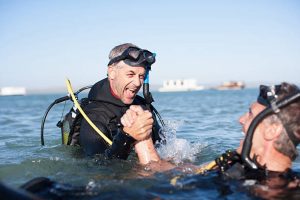
Finding a good dive buddy isn’t something easy. There are many things to consider before you choose the one who will be a perfect dive partner for you. Each case is different so, the first thing to keep in mind is to define the main quality and characteristics you need to be in your partner. Here are some generic guidelines to help you with something to start with.
- First off, diving with a closely matched experienced dive buddy is recommended to complement each other. if your buddy is more experienced than you, you will feel that you are pushed out of your comfort zone. On the other hand, if you have much experience such as your grip on your air consumption is much stronger, you shall be annoyed when you are forced to finish your dive with a half-full tank.
- The second thing to keep in mind is that your dive buddy has the same interests and dive goals as you. For example, if you are interested in being an underwater photographer, be sure to choose a partner who likes at least to observe and moves slowly and it is great to be an underwater photographer too. Budding up with a diver with another interest, he may hate you for your stopping and breaking the dive pace frequently to make a shot. Don’t let your interests make you forget about your responsibilities as a dive partner.
- Another important advice is to look for someone having a positive and calm attitude. You must buddy up with a diver who behaves rationally underwater and takes diving seriously. You will notice that when you discuss your dive plan and safety measures together. Remember that the calm demeanor on the surface hints that he will be less likely to panic underwater in emergencies.
- On looking for a good dive buddy, remember that the more you dive with someone, the better buddy pair you become. So, you need to find a person in your local dive center with the prospect of a long-term connection. The importance of this point lies in knowing each other’s strengths and weaknesses and building up trust and understanding between you. Another thing this won’t make you put so much effort into finding a good dive buddy before each dive.
How to Become a Better Dive Buddy

After understanding the importance of the dive buddy system and how to find a good dive buddy, you should now think about how you can become a better dive buddy yourself and what both of you can do to make a good buddy pair.
-
Create a Dive Plan Together
On creating a dive plan, you should go through it one more time before diving. The dive plane should include many things, such as:
- The maximum depth you will reach.
- The duration of the dive.
- The precautions and the type of communication underwater.
- Sharing your scuba fears.
You should find out each other peculiarities at the beginning. For example, if one of you has sensitive ears and needs to ascent slowly, you should create a dive plane in a dedicated blog post.
- Check your scuba diving equipment properly
One of the types of responsible attention towards each other is to always check each other’s equipment before diving and ensure that everything works properly and is ready for the dive no matter how confident you are about your equipment. This is an important step in the dive buddy system protocol. This is considered a key step to build strong and trustful collaboration.
-
Side-by-Side Swimming
The best positioning between you in a common dive is to swim side-by-side. In this formation, each one of you will have a good front view, the chance of separation decreases and the communication between you will be much easier. In the case of cave diving or diving in a narrow environment, it is better to use a leader-follower setup. Put into consideration the diver who will go first better to be:
- The less experienced diver, as the more advanced diver, in the back, will notice any first signs if any troubles occur.
- The diver has recently brought new gear such as a new computer because it may distract him while diving.
- You can change your positions regularly if you have the same experiences.
-
Good Communication
With a regular good dive buddy, You shouldn’t only understand hand signals, but also gestures, facial expressions, and signals through eye contact. At first, agree on the basic signals, and the rest will come on practicing it. On diving in low visibility, we recommend this article: What Types of Diver’s Communications in Low Visibility.
-
Dive Close to Each Other
That doesn’t mean swimming with your shoulders touching. Give your buddy some personal space that won’t need you more than 2 minutes to swim back to him.
-
Get Ready for Emergencies
You should agree on a strict separation protocol to follow in case of losing each other (unfortunately, separation happens quite often). Remember to search for him for a minute, if you still don’t see him, ascent back and inform the boat team.
Finally, always remember that you are a team and should stick to the plan. Make your safety a priority, follow the protocol, and share your feedback with each other. After reading all of this and following all the tips, make sure you will enjoy diving with the buddy system