The Orca has a bad reputation to be called “killer whales,” perhaps because of a late 1970s adventure film co-starring a doomed Bo Derek. But this is one of the intelligent aquatic creatures that are not likely to attack humans.
Actually, orcas are not actually considered whales but a member of the dolphin family, and are very social. They also travel in groups like dolphins. Each pod has a female leader. Keep reading to know cool facts about orcas and where to dive with orcas in their natural habitat.
Facts about Orcas
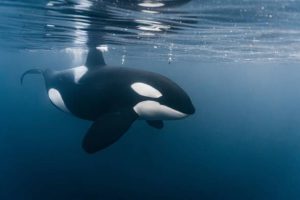
- Orcas are incredibly intelligent marine creatures that live in stable family groups, and are characterized to be sophisticated, highly social. Each pod uses different vocalization techniques, speaking different “languages” from each other. Orcas are similar to elephants and higher primates (including humans) in having complex social structures.
- Their dorsal fins can sometimes reach more than 6 feet in height. Its eyes have distinctive white patches above and behind it, sleek white undersides, and its back covered with a dark gray to black color.
- adult orcas can have more than 10 tons in weight and can reach 30 feet in length, with males bigger than females and having larger, more sharp fins.
- While juvenile killer whales are smaller, they weigh 400 pounds at birth and have the same color of their parents; They are occasionally mistaken for false killer whales or Risso’s dolphins. You can spot Pale gray to white killer whales in the far north Bering Sea, and also off the coast of Russia.
- These whales reach maturity around the age of 15, after that a female whale typically gives birth to a single calf every five years. The gestation period lasts between 15 and 18 months, and Adding to the species’ challenges, calf mortality is significant, with an estimated 37-50% of killer whale calves not surviving beyond the age of 8 months.
- Males wait until reaching 21 years old before breeding, and wild orcas typically live long lives, The average lifespan ranges from 35 to 50 years, though some individuals can live for as long as 80 to 90 years. Captive killer whales, however, typically do not enjoy this longevity.
- Killer whales are considered amazing hunters due to:
- The exceptional vision both above and below the water’s surface.
- Having a good sense of touch.
- The sophisticated echolocation abilities.
- Having very good hearing,
- These features make them be feared for a long time, however, Recent scientific research indicates that orcas typically do not attack humans. In fact, every recorded attack on humans has taken place in captivity. In the wild, orcas show curiosity towards scuba divers and often approach them closely, sometimes even making and maintaining eye contact.
- Humans have a great respect for these animals, this often appears in indigenous myths from a variety of cultures; Some people fear, considering them as ruthless killers, others believe they are inhabited by the spirits of human ancestors.
Where to Dive with Orcas
For those who are fascinated by the grace and majesty of orcas, there are certain dive sites around the globe where you can dive with orcas in their natural habitat..
New Zealand
Tutukaka in New Zealand is considered the gateway to the Islands of the Poor Knights which are one of the favorite dive destinations for Jacques. You can spot Orcas there at anytime of the year.

Costa Rica
Playas del Coco is a fantastic spot for bull shark fans, but you can see orcas swim in these waters too. During the colder fall and winter months, orcas gather in these nutrient-rich waters alongside rays, dolphins, and sea turtles.

Norway
If you want to have the opportunity to spot pods of orcas, fjords of Northern Norway are the perfect choice. In the cold and crystal clear waters there typically from October to late January, a huge number of killer whales have been seen, sometimes in pods that may exceed 200 members trying to follow the herring migration .
Remember, even though they are not known to attack humans without provocation, these formidable mammals are predators, so it’s essential to exercise caution when scuba diving or snorkeling in their presence.
They are found worldwide, but you can commonly see them in the Arctic and Antarctica, and also off the western coasts of Canada and the US.