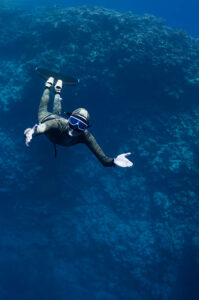
If you are eager enough to learn scuba diving, and passionate to start from scratch an enthusiastic scuba diving learning journey, then this article will be the perfect guide to you. We shall illustrate the most critical rules you should know about scuba diving basics, rules and what it takes to enjoy every dive to the max.
Is it hard to scuba dive?
There is a misconception about scuba diving that it is an extreme sport, which is so far from the truth. All the hardness starts in your head! We have a tendency to overthink about activities labelled as adventurous, when in fact, what is thrilling to one person may not be adventurous to another.
Scuba diving has become popular lately, and there are so many videos of it that we assume it is extremely difficult. But, like everything else in life, it is doable if you learn the techniques from a good instructor, wear the proper gear, and then dive for it. It all comes down to how you look at things.
A lot of scuba beginners came across one thing : mastering the basic skills is your easiest kick starter. The three diving fundamental skills include: floating, kicking, and breathing. Then you will gradually master the equipment, and learn scuba concepts and safety procedures.
Most people can learn the necessary skills quickly.You will learn about the effects of increased water pressure, and safe diving techniques during your scuba beginner class. You shall also practise equipment-related skills in a controlled water environment, until you feel comfortable, as well as what to do if things don’t go as planned.
Once you master diving, you will be overwhelmed by the treasure in the sea depth. Imagine yourself in the woods exploring the wild life, and hiking beside being leisurely and stress free. That’s what diving is looking like.
What are the rules of diving?
- Don’t hold your breath: this rule is a life saver rule for you underwater. Try to breathe normally as much as you can, and keep your airways open to avoid air swelling against your lungs walls. When you blow too much air into your lungs, they can tear or collapse, much like a balloon. Lung overexpansion can also result in air bubbles in your bloodstream or too much pressure on your heart, both of which can be fatal if not treated.
Don’t speed rush, when ascending to the water surface, the high ascending speed exceed 18 m/second could cause your lung collapse, and unbearable painful ear sensation
Equalise your ear, As you descend, increasing water pressure presses inward on your eardrums, hence compressing the surface-pressure air within your middle ear. You have to equalise your ears every 1 metre. This treatment involves opening the Eustachian tubes, which run from the back of your throat to the middle ear, to equalise the pressure on both sides of the eardrums. This is accomplished by pinching your nostrils shut, lifting your chin, and gently blowing out through your nose. Try it right now. The Eustachian tubes should open with a slight crackling sound. Some divers can achieve equalisation simply by moving their jaw or tongue.
- Don’t ever dive without your diving mate. Diving solo isn’t as much as diving with a mate, and it will also put you in a high risk situation underwater, if your equipment gets stuck, or suddenly loses your balance. There is also a common diagnostic case (nitrogen necrosis) or depth hangover, a common case where the diver acts like he is very drunk, so in this case he will need his mate to lift him up for at least 5 metres to gain his consciousness.
- The buddy check, one of the basic scuba diving skills, is to check your diving equipment with your diving buddy, beginning with your mask, weight, air tank and regulator. If you ever go diving for the first time don’t forget to have breakfast with rice and fish, your padi instructor will know!
How do I prepare for diving?
As we hint that your safety comes first, for beginners it’s highly recommended always, to prepare yourself mentally, physically, and psychologically for the new adventure, and here are some essential tips that might be useful for you:
- Make sure you don’t have any chronic disease that will hinder you from diving, and have a healthy medical record that enables you to dive safely.
What not to do before scuba diving
- Don’t over eat
- Don’t over drinking