The Gulf of Mexico, ranking as the ninth largest body of water globally, is known for its rich marine biodiversity. It hosts nearly 30 species of marine mammals, five species of sea turtles, and 50 species of sharks.
Among these, some of the largest, including migratory whales and sharks, stand out as the Gulf’s most fascinating marine inhabitants. Let’s explore together five of the largest whales in the Gulf of Mexico.
Largest Whales in the Gulf of Mexico
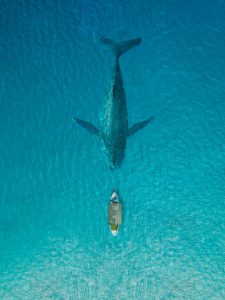
The Gulf of Mexico is home to some of the most awe-inspiring marine giants on Earth. Among its diverse marine life, several species of whales stand out due to their immense size and captivating presence. This article will take you through the 5 of the largest whales in the Gulf of Mexico, including:
- Fin Whale
- Sperm Whale
- Humpback Whale
- Sei Whale
- Whale Shark
Fin Whale
The fin whale, which is the second only to the majestic blue whale in size, can reach lengths of up to 88 feet and 76 tons in weights, making it the largest whales in the Gulf of Mexico. Females are typically slightly larger than males. These whales are believed to have a lifespan of 80 to 90 years.
The fin whale derives its name from the distinctive hooked dorsal fin located near its tail, about two-thirds of the way down its body.
It features a v-shaped head and notable coloration, with a back and sides in shades of black, gray, or brown, and a white underside. The whale also displays asymmetrical coloring on the jaw, with the lower right side being white and the lower left side dark gray.
Fin whales produce some of the loudest natural sounds in the ocean, often captured by seismic monitoring OBS stations. Male fin whales, thought to utilize these sounds for breeding purposes, produce one-second calls spaced up to 40 seconds apart, continuing for as long as 10 hours. These vocalizations can be heard over 30 kilometers (18.6 miles) away.
The fin whale is categorized as vulnerable on the IUCN Red List. Between 1996 and 2018, it was classified as endangered, reflecting partial recovery. The number of individuals in the population appears to be on the rise.
Sperm Whale
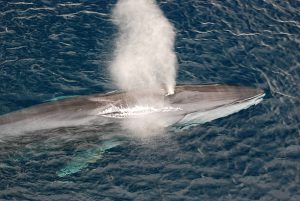
Although Sperm whales aren’t considered the largest whales in the gulf of Mexico, they are the largest toothed whales in the world. The Gulf of Mexico hosts a population of female sperm whales, and sightings of them with calves are common. These majestic creatures are most frequently seen off the coasts of Louisiana and Texas.
Male sperm whales can reach lengths of up to 60 feet, while females can grow to 40 feet. Renowned for their diving abilities, these whales can descend as deep as two miles and remain submerged for up to an hour. Their primary prey includes squid, notably the giant squid.
Sperm whales derive their name from the waxy substance “spermaceti” in their heads. This spermaceti, an oil sac, aids them to focus the sound. Historically, spermaceti was used in oil lamps, lubricants, and candles.
From 1800 to 1987, sperm whales were heavily targeted by the commercial whaling industry, nearly leading to their extinction. Although whaling is no longer a significant threat, sperm whale populations are still recovering.
They are classified as endangered under the Endangered Species Act and depleted under the Marine Mammal Protection Act.

Humpback Whale
Humpback whales frequently steal the show during whale-watching tours. They are one of the largest whales in the Gulf of Mexico that can grow up to 51 feet in length and as much as 37.5 tons in weight.
Humpback whales, often referred to as “singing whales,” are famous for their songs and their acrobatic displays, which include breaching and striking the water with their massive flukes.
The humpback whale is named after the characteristic hump on its back. Its long pectoral fins inspired the scientific name Megaptera, meaning “big-winged,” and novaeangliae, referring to New England, where European whalers first encountered them.
Prior to the 1985 ban on commercial whaling, humpback whale populations had been decimated, with more than 95 percent of them wiped out. While their numbers are increasing in many areas, they still face threats from fishing gear entanglement, vessel strikes, vessel-based harassment, and underwater noise.

Sei Whale
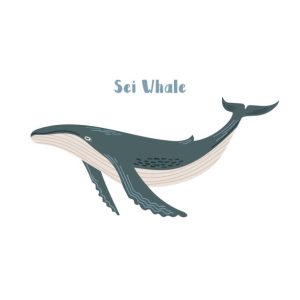
The sei whale, which is categorized under baleen species, can reach impressive lengths of 40 to 60 feet, with females typically outgrowing the males. Remarkably, they are the speed demons of the whale world, capable of reaching speeds up to 34.5 miles per hour.
The name “sei” originates from the Norwegian word for pollock, “seje.” During the 19th and 20th centuries, the global sei whale population was drastically reduced by commercial whaling, with approximately 300,000 sei whales killed for their meat and oil.
While whaling is no longer a major threat, some whaling of sei whales still occurs in Japan. Today, vessel strikes and entanglement are the primary dangers they face. The sei whale holds the endangered status under the Endangered Species Act and is recognized as depleted under the Marine Mammal Protection Act.
Whale Shark
Whale sharks make their way to the Gulf of Mexico during the summer. As the world’s largest fish, they are aptly named. The largest recorded whale shark was 40 feet long, though they are believed to grow even larger.
On average, these magnificent creatures grow to about 32.8 feet long and weigh roughly 26. They also feed on plankton.
Similar to human fingerprints, whale sharks have unique spot patterns that enable individual identification. By photographing and cataloging these patterns, WWF has identified 458 distinct whale sharks in the Philippines.