Suppose you are plunging into a watery abyss and your regulator is leaking water, compromising your life support system. The ability to operate the regulator clearly becomes more than just a talent in these situations; it becomes a lifeline, a beacon of safety, and evidence of the resiliency of people who dare to venture into the unknown. Come learn the value of learning the regulator clear, a crucial ability for open-water scuba diving classes, as we dive into the core of scuba diving instruction.
Revealing the Regulator
Let’s discuss the regulator’s function in the diver’s equipment ensemble before getting into the specifics of the regulator. The regulator is a sophisticated apparatus that permits regulated breathing underwater and is frequently referred to as a diver’s lifeline. It is made up of two stages: the primary regulator, which is the second stage that divers breathe through, and the first stage which is attached to the tank valve. The main purpose of the regulator is to provide ambient pressure air from the scuba tank to the diver’s lungs, enabling safe and pleasant breathing in the water.

Recognizing the Need for Clearing
A diver’s regulator may occasionally be harmed by water infiltration when scuba diving. Numerous things, such as unintentional submersion, regulator dislodgement, or unfavorable underwater circumstances, might cause this. Because water in the regulator can impede airflow and make it difficult for the diver to breathe, it is extremely dangerous. Scuba training companies stress the value of the regulator clear method as a fundamental element of diver readiness since they are aware of this risk.
The Method Deconstructed
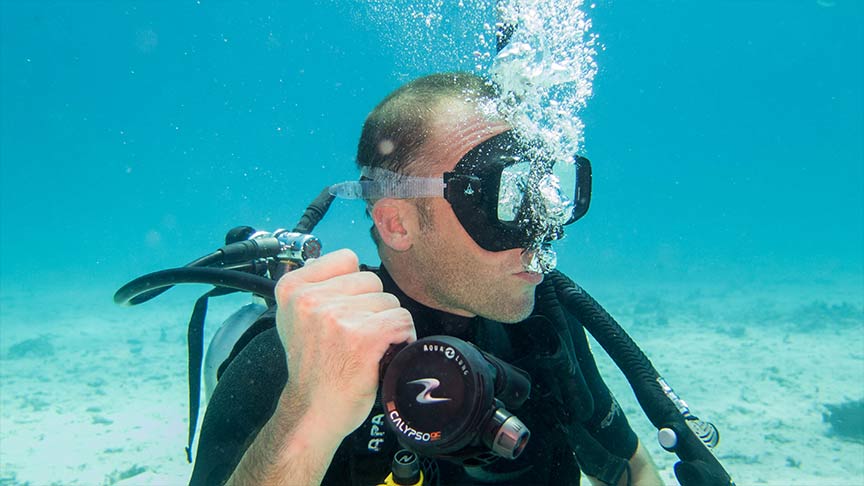
A simple yet essential technique that every open-water diver has to learn is the regulator clear method. When the diver notices water in the regulator, they begin the cleaning procedure by performing a series of exact movements:
-
Signal Recognition: When breathing, the diver often detects the presence of water in the regulator by an odd sensation or sound.
-
Pause and Assess: To be calm and avoid fear, the diver temporarily stops breathing when they see water intrusion.
-
Exhalation: The diver clears the regulator’s chamber of water by forcing a forceful yet controlled exhale through the mouthpiece. This hard release of breath pushes the water aside, enabling continuous ventilation.
-
Verification: The diver takes a quick breath after the clearing technique to make sure the airflow has returned. The removal of any remaining water released after exhale guarantees the best possible regulator performance.
Including in Training Programs
In their open-water courses, scuba diving certification organizations like Scuba Schools International (SSI) and the Professional Association of Diving Instructors (PADI) place a high priority on teaching and practicing the regulator clear method. Novice divers go through extensive training programs that include classroom instruction, real-world examples, and practical training in controlled underwater settings.
Throughout the regulator’s simple protocol, instructors carefully walk students through it, stressing proper form, respiratory control, and situational awareness. Divers build muscle memory and confidence in their ability to perform the move well under duress via repeated training and realistic scenarios.
Practical Uses
The regulator clear has an importance that goes beyond training pools and classroom environments. Divers face a wide range of environmental difficulties in the erratic world of open-water diving, from strong currents to encounters with marine life. Gaining proficiency with the regulator clear enables divers to reduce the hazards related to water intrusion, which promotes confidence and readiness in the face of difficulty.
The regulator stands out as a fundamental ability in the fabric of scuba diving instruction as it embodies the values of resilience, competence, and safety. Learning this basic technique is a great way to equip aspiring divers to navigate the depths with confidence and style as they set out on their underwater voyage. By means of rigorous instruction, careful application, and steadfast adherence to safety procedures, divers welcome the life-changing experience of exploration while preserving their safety below the surface. Happy and safe diving!